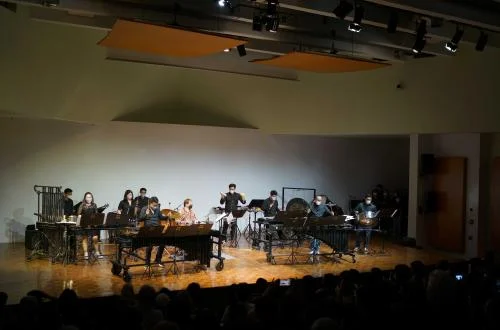
Indonesia’s rich and deeply ingrained percussion tradition, a vibrant tapestry woven through its diverse cultural landscape, stands poised to become a beacon for the global evolution of percussion music. However, this immense potential has, until recently, remained largely untapped. In a significant stride towards rectifying this, the Yayasan Musik Amadeus Indonesia (YMAI), or Amadeus Music Foundation of Indonesia, has launched a series of groundbreaking initiatives, culminating in the landmark "Kenopsia" percussion concert. This event marks a pivotal moment, not only for the foundation, celebrating its 30th anniversary, but also for the burgeoning Indonesian percussion scene.
"Kenopsia": A Milestone in Indonesian Percussion
"Kenopsia," a term evoking the haunting beauty of an empty, familiar place, aptly describes the ambitious nature of this full-scale percussion concert, the first of its kind in the 30-year history of the Amadeus Music Foundation. The concert featured the Amadeus Percussion Ensemble (Ampere) and showcased the talents of internationally acclaimed Austrian percussionist Adi Schober. Held at the prestigious GoetheHaus in Jakarta on a recent weekend, the event transcended a mere performance, serving as a platform for the world premiere of works commissioned through YMAI’s Indonesia Percussion Composition Competition (IPECC).
The program itself was a testament to the breadth and depth of contemporary percussion repertoire. It opened with "Novena" by James Swearingen, masterfully arranged by I Nyoman Trieswra Minartha, setting a powerful and engaging tone. This was followed by the eagerly anticipated world premieres from the IPECC. The pieces presented—"Dialektika, Dualitas, Kontradiksi" by Arya Pugala Kitti and Lucy Freia, "Restrained" by Andre, "March 16th" by Jeremia Saputra, and the titular "Kenopsia" by Regina Budiyanto Sutisno—highlighted the innovative spirit and diverse compositional voices emerging within Indonesia.
The second half of the concert offered a compelling journey through established and new works. It featured "Blue Samba" by Murray Houllif, a piece renowned for its rhythmic complexity and infectious energy. Adi Schober then presented his own composition, "Solo," demonstrating his virtuosity and unique artistic vision. The ensemble’s rendition of "The Music of James Bond," arranged by I Nyoman Trieswara Minartha, brought a popular and exciting cinematic flair to the stage. "Mambo Africano" by Alice Gomez and Marily Rife added a vibrant Afro-Latin flavor, before the program culminated with David Mancini’s "Suite for Solo Drumset and Percussion Ensemble," featuring Adi Schober as the distinguished soloist.
A Foundation Built on Musical Excellence and Global Connection
The Yayasan Musik Amadeus Indonesia, and its affiliated Sekolah Musik Amadeus (SMA), or Amadeus Music School, were established in 1992 by Grace Soedargo. Since its inception, the school has been dedicated to fostering musical talent across all age groups, beginning with students as young as two years old. Today, SMA educates over 200 students in a comprehensive range of instruments, including piano, strings, woodwinds, and, notably, percussion. With a dedicated faculty of 25 instructors, SMA actively promotes classical music education in Indonesia, not only through classroom instruction but also by providing invaluable performance opportunities through various student orchestras and ensembles.
A significant aspect of SMA’s commitment to global musical standards is its unique affiliation with the Johann Sebastian Bach Musikschule (JSBM) in Vienna, Austria. This partnership, a first for a music school in Southeast Asia, ensures that SMA’s curriculum and pedagogical approaches are aligned with internationally recognized excellence in music education.
Addressing the Percussion Gap: IPECC and IPM
The "Kenopsia" concert was not an isolated event but rather the apex of a multi-faceted approach by YMAI to elevate Indonesian percussion. Prior to the concert, the foundation successfully organized the Indonesia Percussion Composition Competition (IPECC) and the Indonesia Percussion Meeting (IPM).
The IPECC served as a crucial catalyst for composers, encouraging the creation of new works for percussion ensembles. By offering a platform for world premieres, YMAI directly addressed the need for contemporary repertoire, providing Indonesian composers with invaluable exposure and recognition. The competition attracted submissions from a wide range of talents, underscoring a growing interest in percussion composition within the country. The selection of winning pieces for the "Kenopsia" concert ensured that these new compositions were performed to the highest standards, reaching a significant audience.
The IPM, a meeting or symposium component, likely provided a crucial forum for discussion, knowledge exchange, and networking among percussionists, educators, composers, and enthusiasts. Such gatherings are vital for fostering a collaborative environment, sharing best practices, and identifying future directions for the field. While specific details of the IPM’s agenda are not elaborated in the original report, its inclusion alongside the competition and concert suggests a holistic strategy to nurture the percussion community.
A Vision for Global Standards
Grace Soedargo, the visionary founder of YMAI and SMA, articulated the foundation’s overarching ambition: "By organizing IPECC, IPM, and the ‘Kenopsia’ concert, Amadeus intends to make a breakthrough in percussion music in Indonesia." Her hope is that these initiatives will serve as a powerful inspiration for Indonesian percussionists, igniting their passion and encouraging them to develop their skills to meet global standards. This sentiment reflects a broader national aspiration to see Indonesian artists compete and excel on the international stage.
The success of these events is not merely anecdotal; it represents a tangible investment in the future of Indonesian music. By commissioning new works, providing performance opportunities, and fostering international collaboration, YMAI is actively building the infrastructure necessary for percussion to flourish.
Spotlight on Adi Schober: A Master Percussionist’s Contribution
The presence of Adi Schober, a distinguished percussionist from Austria, was a significant draw and a key element in the "Kenopsia" concert’s international appeal. Schober’s extensive background and multifaceted career underscore the caliber of talent that YMAI sought to bring to Indonesia.
Born in 1967 in Holabrunn, Austria, Schober displayed prodigious musical talent from a young age, beginning his percussion studies at five and also mastering piano, organ, and trumpet. His formal education was rigorous, including studies at the Hochschule für Musik und darstellende Kunst Wien under Prof. Horst Berger, further training in drumset and percussion with Prof. Fritz Ozmec, and specialized jazz percussion studies at the Konservatorium der Stadt Wien with Prof. Walter Grassmann. His pedagogical expertise was honed through percussion pedagogy studies with Prof. Kurt Prihoda.
Schober’s professional career has been marked by extensive teaching across Austria, leadership in his ensemble "Adi Schober Quintett," and significant contributions to orchestral and big band performances. He has also served as music director for various festivals, demonstrating his broad impact on the Austrian music scene. Beyond performance and education, Schober has been at the forefront of therapeutic applications of rhythm, collaborating since 2009 with Dr. Kurt Sindermann and Dr. Barbara Schaffer on rhythm therapy for individuals with mental health challenges. His private recording studio further highlights his commitment to creative output and the documentation of his improvisational work, also serving as a facility for esteemed organizations like the "Internationale Ignaz J Pleyel Gesellschaft" and recording labels such as "Gramola" and "Apollon."
Schober’s involvement in "Kenopsia," both as a performer and through his solo piece, provided Indonesian musicians with direct exposure to an artist of international repute. His masterclass or workshops, though not explicitly detailed, would have been invaluable learning experiences for aspiring percussionists. His performance alongside the Amadeus Percussion Ensemble would have offered a clear demonstration of advanced ensemble playing and soloistic prowess.
The Amadeus Percussion Ensemble (Ampere): A New Generation of Talent
The Amadeus Percussion Ensemble (Ampere) itself is a testament to YMAI’s commitment to developing specialized talent. Formed in August 2017, coinciding with the silver jubilee of YMAI and SMA, Ampere’s establishment directly followed the creation of SMA’s dedicated percussion department earlier that same year. Under the leadership of Ryan Saputro, the department and its ensemble are explicitly tasked with cultivating internationally competitive percussionists. The "Kenopsia" concert served as a significant milestone for Ampere, providing them with a high-profile platform to showcase their progress and artistry alongside an international guest.
Broader Implications for Indonesian Music
The initiatives spearheaded by the Amadeus Music Foundation, particularly the "Kenopsia" concert and its accompanying competitions and meetings, carry significant implications for the broader Indonesian music landscape.
1. Elevating Percussion’s Status: Historically, percussion in many cultures has been perceived as a foundational or supportive element. By dedicating a full concert and significant resources to percussion, YMAI is helping to elevate its status as a sophisticated and complex art form in its own right. This can inspire greater academic and public interest, leading to more specialized training and performance opportunities.
2. Fostering a National Percussion Identity: While Indonesia possesses a rich array of traditional percussion instruments and styles, the development of a cohesive contemporary percussion scene requires the integration of global techniques and repertoire alongside indigenous influences. The IPECC and IPM provide crucial spaces for this dialogue to occur, encouraging composers and performers to explore this fusion.
3. Economic and Cultural Diplomacy: The successful execution of such international collaborations, like the one with Adi Schober, not only benefits the participating artists but also enhances Indonesia’s cultural standing on the global stage. This can open doors for future exchanges, collaborations, and tourism related to the arts.
4. Educational Advancement: The establishment of dedicated percussion departments and affiliations with international institutions like JSBM directly addresses the need for advanced music education. This ensures that the next generation of Indonesian musicians is equipped with the skills and knowledge necessary to thrive in a competitive global environment.
5. Inspiration for Youth: The visibility of events like "Kenopsia" and the success of competitions like IPECC can serve as powerful motivators for young Indonesians to pursue musical careers, particularly in less traditionally dominant fields like percussion. The presence of accomplished local and international artists demonstrates that a career in music is a viable and rewarding path.
The "Kenopsia" concert and the comprehensive efforts of the Yayasan Musik Amadeus Indonesia represent a vital turning point for percussion music in Indonesia. By strategically investing in education, composition, performance, and international collaboration, YMAI is not just celebrating its own achievements; it is actively forging a brighter, more resonant future for Indonesian percussion, aiming to position it as a leading voice in the global musical conversation. The echoes of "Kenopsia" are likely to resonate for years to come, inspiring a new wave of creativity and excellence in this dynamic field.