The 42nd commemoration of National Children’s Day on July 23, 2026, served as a pivotal moment for PT Jasa Raharja (Persero) to reiterate and amplify its unwavering commitment to cultivating a robust traffic safety culture among Indonesia’s youngest generations. Faced with persistently high rates of road accidents involving the nation’s productive age demographic and student population, the state-owned enterprise underscores the critical importance of preventive education as a strategic, long-term investment in safeguarding the future leaders and innovators of Indonesia. Jasa Raharja’s initiatives reflect a broader transformation within the company, moving beyond its traditional role of providing accident compensation to proactively fostering public awareness and preventive measures designed to mitigate road fatalities and injuries before they occur. This strategic pivot highlights a comprehensive approach to road safety, acknowledging that genuine protection extends far beyond post-incident support, embedding safety consciousness from early childhood through adolescence and into young adulthood.
The Mandate of Jasa Raharja: A Shift Towards Proactive Prevention
For decades, PT Jasa Raharja has been an indispensable pillar in Indonesia’s social security framework, mandated by law to provide compulsory insurance for victims of traffic accidents. This crucial role ensures that individuals affected by road incidents receive timely medical aid and financial compensation, alleviating immediate burdens on families and healthcare systems. However, the escalating human and economic toll of road accidents, particularly those involving young people, has prompted Jasa Raharja to evolve its mandate. The company’s current strategic transformation emphasizes a preventive paradigm, recognizing that the most effective way to protect citizens is to reduce the incidence of accidents altogether. This shift is not merely an operational adjustment but a fundamental redefinition of corporate social responsibility, aligning Jasa Raharja with national goals for sustainable development and public welfare. By integrating robust educational programs into its core operations, Jasa Raharja aims to instigate a profound cultural change, transforming road users from passive recipients of safety regulations into active proponents of responsible road behavior. This forward-looking approach seeks to break the cycle of preventable accidents, fostering a safer environment for all, particularly for vulnerable groups like children and young adults who represent the nation’s demographic dividend.
National Children’s Day: A Platform for Protection and Empowerment
National Children’s Day (Hari Anak Nasional), observed annually on July 23rd in Indonesia, carries profound significance as a day dedicated to upholding the rights, welfare, and protection of every child. Established through Presidential Decree No. 44 of 1984, the day serves as a national reminder of the collective responsibility of the state, communities, and families to ensure that children grow and develop in a safe, nurturing, and supportive environment. The 42nd commemoration in 2026 provided an opportune moment for Jasa Raharja to align its road safety agenda with the broader objectives of child protection. As Muhammad Awaluddin, President Director of Jasa Raharja, emphasized, "Every child deserves to grow and thrive in a safe environment, including during their activities on the road. National Children’s Day reminds us that the safety of children is our shared responsibility. Therefore, education for students and university learners will continue to be strengthened as a long-term investment to create a generation more aware and concerned about traffic safety." This statement encapsulates the synergy between Jasa Raharja’s mission and the spirit of National Children’s Day, framing road safety not just as a matter of public order but as a fundamental child right that requires collective advocacy and proactive intervention. The day serves to amplify the message that safeguarding children extends beyond physical security to encompass their journey through life, including their interactions with the transportation ecosystem.
Indonesia’s Road Safety Challenge: A Sobering Reality
The urgency behind Jasa Raharja’s intensified safety campaigns is underscored by Indonesia’s persistent struggle with high traffic accident rates. According to data consistently reported by the National Police Traffic Corps (Korlantas Polri) and the Ministry of Transportation, road accidents remain a leading cause of death and injury, particularly among the productive age group (15-64 years old) and students. While specific figures for 2026 are still being compiled, historical trends indicate that thousands of lives are lost annually, with many more sustaining severe injuries that lead to long-term disabilities, placing immense strain on healthcare infrastructure and family finances. A significant proportion of these incidents involve motorcyclists, often young individuals, who are disproportionately represented in accident statistics due to factors such as lack of proper licensing, insufficient adherence to safety gear like helmets, speeding, and general inexperience. The economic cost of these accidents is staggering, encompassing medical expenses, lost productivity, property damage, and administrative costs, collectively amounting to billions of Rupiahs each year. Beyond the statistics, there is the immeasurable human cost – the grief of families, the shattered dreams of young victims, and the societal impact of losing potential contributors to the nation’s progress. This grim reality reinforces the imperative for comprehensive and sustained educational interventions, making Jasa Raharja’s focus on early and continuous safety education not just commendable, but absolutely critical for the nation’s future well-being.
A Multi-Layered Educational Strategy for Future Generations
Recognizing the varying cognitive and behavioral stages of development, Jasa Raharja has meticulously crafted a multi-layered educational strategy that adapts its safety messages to different age groups. As Awaluddin elaborated, "Safety education needs to be carried out hierarchically, following the growth phases of children." This philosophy underpins Jasa Raharja’s commitment to accompanying students from their earliest educational experiences through their entry into higher education, ensuring that the content and delivery methods are tailored to resonate effectively with each specific demographic.
For the youngest learners, those in kindergarten (TK) and elementary school (SD), the focus is on introducing fundamental safety concepts in an engaging and age-appropriate manner. This includes teaching pedestrian safety rules, the importance of being visible, understanding basic traffic signs, and the role of adults in ensuring their safety. These early interventions aim to instill a foundational understanding of road risks and responsible behavior before habits become ingrained. In the period from January to July 2026, Jasa Raharja successfully conducted Safety Campaigns at 8 TK and SD institutions, reaching 198 participants. These sessions often incorporate interactive games, storytelling, and visual aids to make learning about safety an enjoyable and memorable experience, thereby nurturing a safety-conscious mindset from a very tender age.
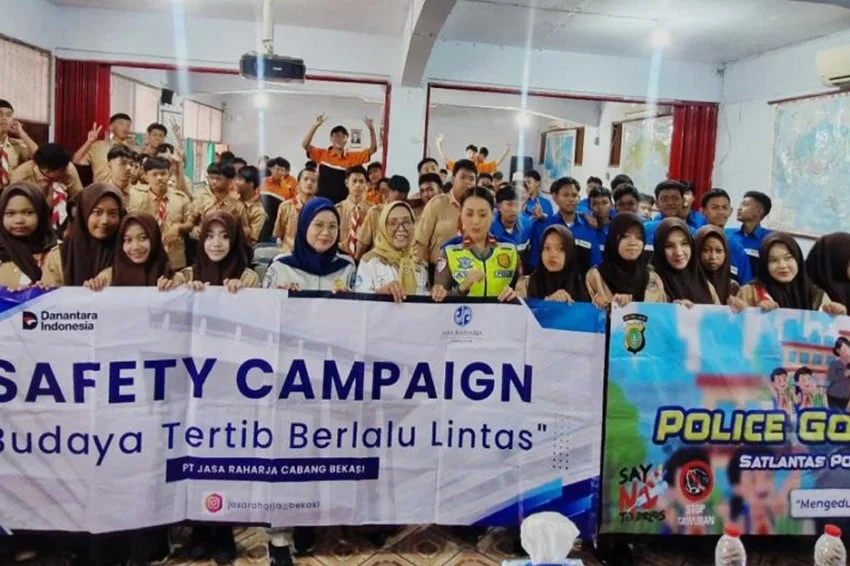
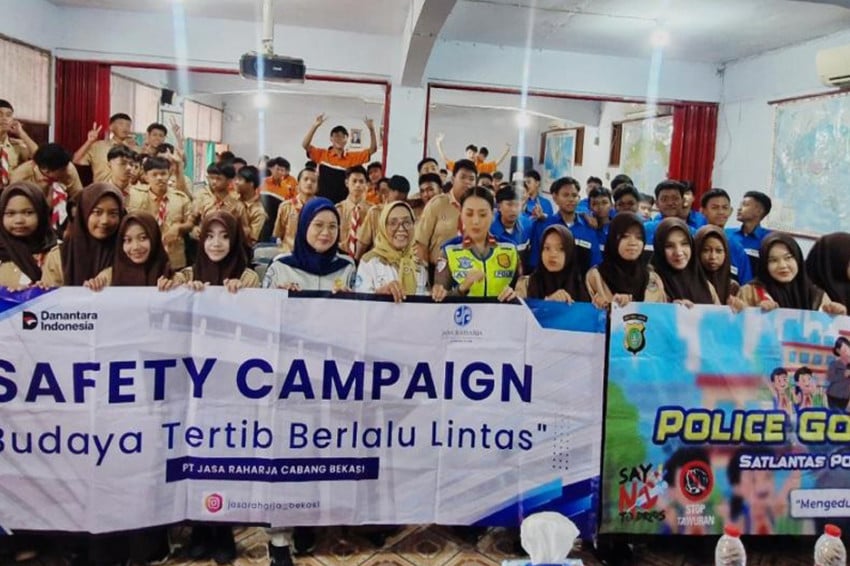
Moving up the educational ladder, the programs for secondary school students and university undergraduates are designed to address the complexities associated with independent mobility. This demographic, often comprising new drivers and motorcyclists, is at a higher risk due to a combination of factors including increased exposure to road environments, developing risk perception, and sometimes, peer influence. Jasa Raharja’s campaigns for this group delve into more advanced topics such as defensive driving techniques, the dangers of distracted driving (e.g., mobile phone use), the consequences of driving under the influence, the critical importance of wearing helmets and seatbelts, and understanding traffic laws in detail. From January to July 2026, Jasa Raharja executed Safety Campaigns across 139 secondary schools and universities, engaging a substantial 13,095 students and young adults. These programs often feature testimonials from accident survivors, interactive workshops, and simulations to vividly demonstrate the potential repercussions of unsafe road practices, thereby empowering young people to become not just safe road users, but also advocates for safety among their peers and communities.
Broader Stakeholder Engagement and Synergy for Collective Impact
The efficacy of Jasa Raharja’s safety initiatives is significantly amplified through collaboration and synergy with a broad spectrum of stakeholders. While Jasa Raharja spearheads these campaigns, their ultimate success hinges on a concerted national effort. The Ministry of Transportation, for instance, plays a crucial role in formulating and enforcing traffic regulations, conducting broader public awareness campaigns, and developing infrastructure that promotes safety. Their ongoing support and collaboration provide a vital regulatory and operational framework for Jasa Raharja’s educational outreach.
Similarly, the Ministry of Women’s Empowerment and Child Protection (Kementerian Pemberdayaan Perempuan dan Perlindungan Anak – KPPPA) is an essential partner. Their mandate to protect children’s rights inherently aligns with ensuring children’s physical safety, including on the roads. By working in tandem, these entities can integrate road safety messages into broader child protection programs, ensuring a holistic approach to safeguarding the nation’s youth. Educational institutions themselves – from school principals to university rectors – are pivotal collaborators, facilitating access to students and integrating safety curricula into their educational ecosystems. Their willingness to host safety campaigns and embed these lessons into daily school life creates a powerful echo chamber for Jasa Raharja’s messages.
Beyond governmental bodies and educational institutions, the role of parents and communities cannot be overstated. Parents are the primary educators, modeling safe behavior and reinforcing lessons learned in school. Community leaders and local organizations can help disseminate information and foster a collective sense of responsibility for road safety. This multi-stakeholder approach ensures that safety messages are not isolated but rather form part of a comprehensive societal effort, creating a supportive environment where children and young adults are continuously reminded of the importance of safe practices. The cumulative impact of these collaborations extends beyond individual behavioral change, fostering a culture of collective vigilance and shared responsibility that is essential for long-term road safety improvements across the archipelago.
Long-Term Vision and Societal Implications
Jasa Raharja’s unwavering commitment to traffic safety education for children and youth on National Children’s Day is more than just an annual observance; it represents a strategic investment with profound long-term societal and economic implications for Indonesia. By nurturing a safety-conscious generation, these programs aim to significantly reduce the incidence of road accidents, thereby mitigating the immense human suffering and economic burden they impose. A reduction in fatalities and severe injuries among the productive age group translates directly into a healthier, more vibrant workforce, bolstering national productivity and economic growth. Less strain on public healthcare systems, fewer lost workdays, and reduced insurance payouts collectively contribute to a more efficient allocation of national resources.
Beyond the quantifiable benefits, these initiatives foster a fundamental shift in national culture. By embedding values of caution, responsibility, and empathy from an early age, Jasa Raharja is contributing to the development of a more considerate and disciplined citizenry. Children who learn about safety early are more likely to become responsible drivers, passengers, and pedestrians as adults, propagating these values through future generations. This cultural transformation holds the promise of making Indonesian roads safer for everyone, creating a more secure and predictable environment for daily commuting and economic activities. The initiative also serves as a powerful example of how state-owned enterprises can leverage their resources and expertise to drive significant social impact, moving beyond profit motives to become true agents of positive change. Ultimately, Jasa Raharja’s proactive stance on road safety education is a testament to its vision for a future where Indonesia’s children can grow, learn, and contribute to society without the pervasive threat of preventable road accidents, thereby securing a brighter and safer tomorrow for the entire nation.