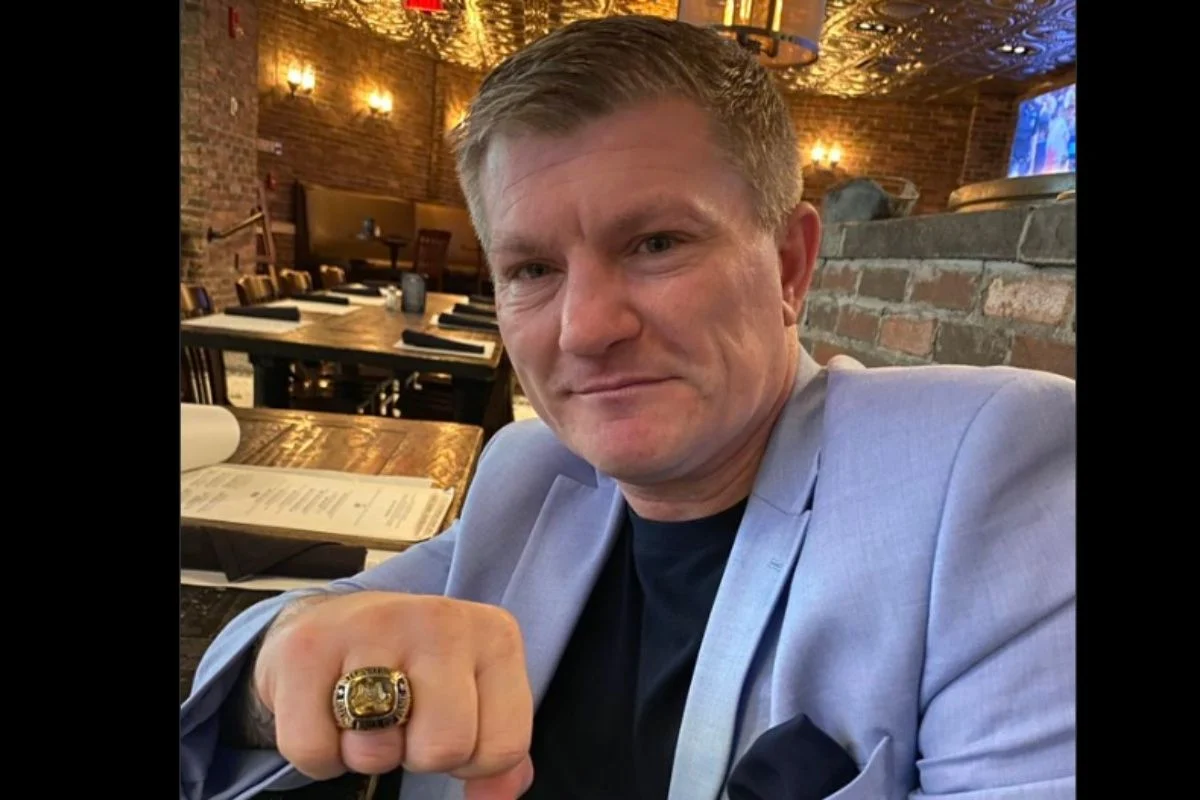
The global sporting community is in deep mourning following the sudden and tragic passing of Ricky "The Hitman" Hatton, one of Britain’s most beloved, tenacious, and celebrated boxing icons. The former multiple-division world champion was discovered lifeless at his residential property in Hyde, Greater Manchester, on Sunday morning, September 14, at approximately 6:45 local time. Emergency services and law enforcement rushed to the scene, but the charismatic brawler could not be revived, leaving millions of fans, peers, and family members grappling with an irreplaceable loss.
Greater Manchester Police issued a formal statement shortly after the discovery, confirming the grim reality that sent shockwaves through the international sports landscape. Authorities noted that a body was recovered at an address on Bowlacre Road in Gee Cross during the early morning hours. Crucially, the police explicitly stated that the death is not being treated as suspicious, alleviating immediate concerns of foul play while local coroners prepare to conduct standard investigative procedures to determine the exact medical cause of death.
The unexpected demise of the 46-year-old athlete brings an abrupt and sorrowful end to a complex life defined by monumental athletic triumphs, fierce in-ring bravery, and deeply personal, highly publicized battles outside the squared circle. Hatton was not merely a former world champion; he was a cultural phenomenon whose aggressive fighting style, relentless pressure, and working-class Manchester roots transformed him into a transcendent figure in modern boxing history.
A Meteoric Rise: From Stockport Amateur to Global Super-Stardom
Born in Stockport on October 6, 1978, Ricky Hatton displayed an innate toughness and affinity for combat sports from an early age. He entered the amateur boxing scene in the late 1990s, quickly demonstrating the extraordinary stamina and relentless body-punching prowess that would later become his trademark. Transitioning to the professional ranks in 1997, Hatton embarked on a relentless march toward global recognition, captivating British sports fans with his fierce work ethic and electric charisma.
Over a glittering 15-year professional career, Hatton compiled an astonishing record of 45 victories against only 3 defeats. Of his 45 wins, an impressive 32 came by way of knockout, illustrating the concussive power hidden behind his relentless forward-moving onslaught. Fighting primarily out of Manchester, he galvanized a loyal army of supporters known as the "Hatton Battalion," who famously traveled by the tens of thousands to foreign arenas—particularly Las Vegas—turning his bouts into massive, boisterous carnivals of British sporting pride.
Hatton’s career reached its zenith in June 2005 during a career-defining showdown against the undefeated, pound-for-pound elite fighter Kostya Tszyu. Entering the bout as an underdog against the fearsome Russian-Australian champion, Hatton executed a suffocating, high-pressure game plan at the Manchester Evening News Arena. The relentless body attack wore Tszyu down to the point where his corner was forced to pull him out before the 12th round. This monumental upset captured the IBF light-welterweight world championship, instantly elevating Hatton into the upper echelons of the global boxing hierarchy and cementing his legacy as an all-time great.
Expanding the Legacy: Multi-Division Dominance and High-Stakes Battles
Following his historic victory over Tszyu, Hatton continued to etch his name into boxing lore by conquering multiple weight classes and facing the finest fighters of his generation. In 2006, he claimed the WBA welterweight title by defeating Carlos Maussa, further expanding his championship credentials.
His undefeated streak eventually led him to the pinnacle of pay-per-view boxing, setting up mega-fights against legendary undefeated champions Floyd Mayweather Jr. in December 2007 and Manny Pacquiao in May 2009. Although Hatton suffered the first defeats of his professional career against these two generational greats—showcasing the brutal realities of elite-level combat sports—his courage under fire and the magnitude of those events further amplified his international fame.
After a period of inactivity and retirement considerations, Hatton attempted a comeback in November 2012 against Vyacheslav Senchenko, which unfortunately ended in a ninth-round knockout defeat. Following this bout, Hatton permanently hung up his gloves, transitioning into a promotional and coaching role to foster the next generation of British boxing talent through Hatton Promotions.
Battles Outside the Ring: Mental Health Advocacy and Resilience
While Hatton’s professional accomplishments inside the ring were celebrated worldwide, his personal life following retirement was fraught with significant emotional and psychological challenges. For years, the former champion spoke with raw, admirable candor about his intense battles with severe clinical depression, anxiety, and alcohol abuse. The sudden void left by walking away from the sport that defined his entire identity triggered a downward spiral that tested his resilience to the absolute limit.
Despite these harrowing personal struggles, Hatton consistently demonstrated the same fighting spirit outside the ring that made him a legend inside it. He sought professional help, actively championed mental health awareness within the athletic community, and used his platform to encourage other athletes and men struggling in silence to seek support. By transforming his vulnerability into a tool for advocacy, Hatton arguably saved as many lives outside the ring as the inspiration he provided inside it.
In a poignant testament to his enduring passion for the sport, Hatton had recently begun plotting a return to physical conditioning and athletic endeavors. Just days prior to his untimely passing, he shared a video clip of his training regimen on his official Instagram account (@rickyhitmanhatton), showcasing his continued dedication to physical fitness and martial arts culture. This active engagement makes the news of his sudden death all the more jarring to his global fanbase, who viewed his recent recovery and outlook as a symbol of ongoing triumph over adversity.
Tributes and Broad Implications for the Boxing Community
As news of his passing reverberated across the globe, tributes poured in instantaneously from legendary fighters, promoters, sports organizations, and devoted fans alike. Former opponents, contemporaries, and current champions took to social media and broadcast networks to express their profound grief, highlighting not only his formidable skill as a fighter but his infectious warmth, humility, and accessibility outside the ring. Promoters praised his contributions to British boxing, noting how his massive drawing power single-handedly revitalized the domestic fight scene and paved the way for modern British pay-per-view success.
From a broader sociological perspective, Hatton’s life and tragic end cast a sharp light on the critical need for comprehensive mental health infrastructure within combat sports. Experts and sports psychologists emphasize that the abrupt transition from the intense adulation and adrenaline of professional fighting to post-retirement obscurity remains one of the most perilous psychological hazards for elite athletes. Hatton’s legacy, therefore, extends far beyond his championship belts and knockout statistics; it serves as a enduring reminder of the human cost of combat sports and the imperative to support athletes long after the referee has waved off their final fight.
As Greater Manchester Police finalize their procedural reports and forensic investigations conclude, the sporting world is left to mourn a warrior who gave every ounce of his being to the sport he loved. Ricky "The Hitman" Hatton leaves behind a legacy defined by courage, championship glory, vulnerability, and an unshakeable connection to the working-class fans who chanted his name through decades of triumph and turmoil. His memory will forever remain etched in the annals of boxing history as the embodiment of British grit and fighting heart.