Mazda has officially reinforced its footprint in the competitive Indonesian automotive market with the introduction of two sophisticated sport utility vehicles (SUVs): the third-generation All-New Mazda CX-5 and the refreshed Mazda CX-30. The unveiling took place during the "Mazda Drive: Mission Is Possible" event on November 10, 2026, where the automaker demonstrated the distinct positioning of both vehicles in the mid-size and compact crossover segments. By updating its lineup, Mazda aims to address the shifting demands of Indonesian urban motorists who increasingly prioritize a blend of Kodo design philosophy, premium interior ergonomics, and high-performance engineering.
Event Context and Testing Conditions
The launch event, held in the vibrant infrastructure of Pantai Indah Kapuk (PIK) 2, Tangerang, served as a dynamic platform for journalists to experience the vehicles firsthand. The testing route was strategically selected to mimic real-world usage patterns, encompassing congested city traffic, high-speed urban toll roads, and the smooth, open boulevards of the PIK 2 development. This diverse terrain allowed for an objective assessment of the vehicles’ suspension tuning, transmission responsiveness, and overall cabin insulation—hallmarks that have come to define the Mazda brand in the premium-mass market segment.
The All-New Mazda CX-5: A Legacy Refined
The All-New Mazda CX-5 represents a significant evolution for the brand’s best-selling SUV. As the third generation of the nameplate, the vehicle enters a market space dominated by competitors such as the Honda CR-V and the Toyota RAV4. However, Mazda has sought to differentiate the CX-5 by emphasizing its "Human-Centric" engineering approach.
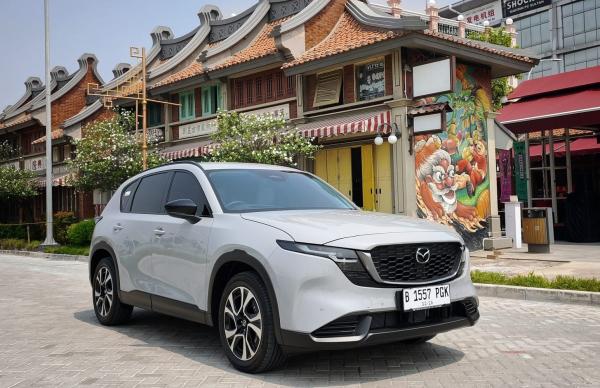
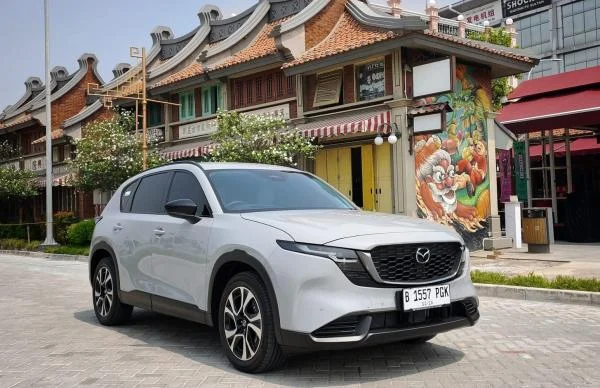
The exterior design follows the latest iteration of the Kodo: Soul of Motion language. The body dimensions have been subtly increased, granting the vehicle a more commanding presence on the road. The front fascia features a more aggressive, sharpened grille and slimmer LED headlamp clusters that integrate seamlessly into the body lines.
Inside the cabin, the CX-5 reflects a move toward digitalization and minimalist luxury. The test unit—a Sport trim variant—showcased a horizontal dashboard layout that creates an expansive sense of space. Mazda has moved away from traditional analog clutter, replacing it with a 12.9-inch high-resolution infotainment touchscreen. This is complemented by a 10.25-inch digital instrument cluster, which provides the driver with essential vehicle data without distraction. Perhaps the most notable upgrade is the inclusion of the "Capacitive Steering Commander Control," which allows for intuitive navigation of the car’s systems while keeping the driver’s focus on the road.
Performance and Engineering Specifications
At the heart of the All-New CX-5 lies the proven SKYACTIV-G 2.5-liter engine. This naturally aspirated power plant is a deliberate choice by Mazda, catering to drivers who prefer the linear, predictable power delivery of a traditional engine over the often-laggy nature of smaller, turbocharged alternatives.
The engine produces 179 PS and a peak torque of 240 Nm. During the test drive, the power delivery proved to be exceptionally smooth. When traversing the toll roads of Jakarta, the transmission shifted with minimal hesitation, and the engine provided immediate response during overtaking maneuvers. This performance profile is further bolstered by Mazda’s G-Vectoring Control Plus (GVC Plus), which adjusts engine torque to optimize vertical load on each wheel, resulting in a more stable and refined ride through corners.

The Mazda CX-30: Precision for the Urban Jungle
While the CX-5 targets the family-oriented SUV segment, the Mazda CX-30 serves a younger, more design-conscious demographic. Sitting between the CX-3 and the CX-5, the CX-30 is designed specifically for those who find the CX-5 too bulky for tight city parking yet desire more refinement and ground clearance than a standard hatchback.
The CX-30’s charm lies in its "Sleek and Bold" duality. It retains the rugged lower-body cladding of an SUV but pairs it with a sloping, coupe-like roofline. For 2026, the model receives updated safety technology and cabin materials that align with the brand’s push toward the premium luxury segment. The interior experience is intimate, often described by automotive journalists as a "cockpit" rather than just a cabin, designed to wrap around the driver for a more engaging connection between human and machine.
Industry Implications and Market Positioning
The launch of these two models occurs at a critical juncture for the Indonesian automotive sector. As the country moves toward a post-pandemic economic recovery, consumer preferences are polarizing between budget-friendly electric vehicles (EVs) and high-end, internal combustion engine (ICE) vehicles that offer high build quality and driving pleasure.
Mazda’s strategy appears to be one of "Premium Value." By refusing to compromise on materials—utilizing soft-touch leathers, brushed metals, and noise-dampening glass—the company is positioning its vehicles as an attainable luxury alternative to premium German brands.

Furthermore, the introduction of these vehicles at the tail end of 2026 suggests that Mazda is preparing for a strong sales performance in 2027. With the automotive industry facing supply chain complexities and fluctuating raw material costs, the reliability of the SKYACTIV platform remains a strategic advantage. It allows Mazda to maintain consistent manufacturing cycles without relying on the scarce semiconductor components required for complex, fully autonomous driving systems.
Official Perspective and Future Outlook
While specific sales targets for the Indonesian market were not disclosed at the launch, the tone from Mazda representatives was one of optimistic confidence. The "Mission Is Possible" campaign name reflects the company’s ambition to redefine what a mid-size SUV can offer in terms of driving dynamics.
Industry analysts suggest that the success of these models will hinge on after-sales service and the availability of spare parts, areas where Mazda has invested heavily in Indonesia over the past decade. With the rapid expansion of the charging infrastructure in Indonesia, the continued investment in high-efficiency ICE engines is a calculated risk. Mazda is banking on the fact that for many long-distance travelers and families, the range and refueling convenience of a high-performance petrol engine remain superior to current EV limitations in regional provinces.
Comparative Analysis: Why CX-5 and CX-30?
The decision to market both models simultaneously highlights a clear segmentation strategy:
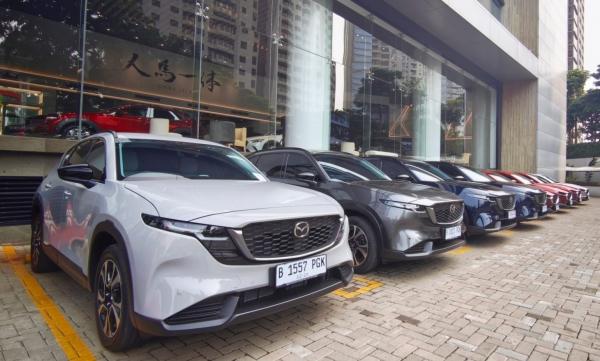
- The CX-5 is positioned as the flagship for the Indonesian family. It offers the space, safety ratings, and cargo capacity necessary for long-distance travel and daily school runs.
- The CX-30 serves the "urban professional" demographic. It prioritizes aesthetics, ease of parking, and modern connectivity, making it an ideal companion for the dense, traffic-heavy landscape of Jakarta.
By offering these two distinct options, Mazda ensures that it does not lose customers who might otherwise look to rivals like the Mitsubishi Outlander or the Hyundai Tucson.
Conclusion: The Road Ahead
The "Mazda Drive: Mission Is Possible" event served as more than just a product showcase; it was a statement of intent. As the automotive world tilts toward electrification, Mazda is carving out a niche for itself by perfecting the traditional driving experience. The 2026 models of the CX-5 and CX-30 demonstrate that there is still significant room for innovation within the gasoline-powered vehicle segment.
For the Indonesian consumer, these cars represent a balance of form and function. Whether through the increased cargo space and refined cabin of the CX-5 or the agile handling and sleek silhouette of the CX-30, Mazda is continuing its commitment to "Jinba-Ittai"—the feeling of oneness between horse and rider. As these vehicles begin to hit the streets of Indonesia, their performance in real-world conditions will ultimately determine if they can capture a larger share of the country’s discerning middle-to-upper-class market.
The integration of advanced infotainment systems and the retention of reliable, powerful engines position the 2026 Mazda lineup as a formidable contender in the coming year. As competition intensifies, the brand’s focus on driver experience over mere utility will likely remain its strongest selling point in a market that is increasingly demanding more than just a way to get from point A to point B.