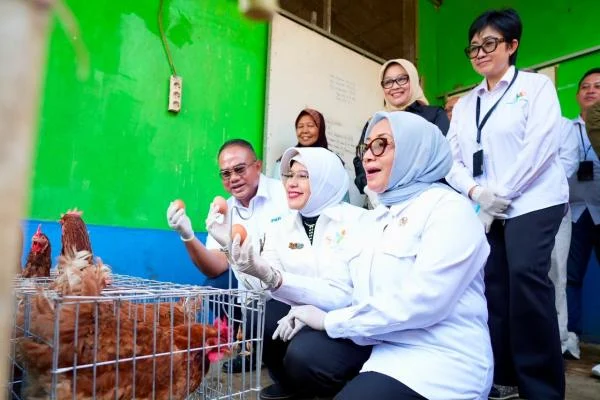
BANDUNG – The Minister of Women’s Empowerment and Child Protection (PPPA), Arifah Fauzi, alongside the Head of the Central Statistics Agency (BPS), Amalia Adininggar Widyasanti, recently lauded the transformative impact of the Permodalan Nasional Madani (PNM) Mekaar program. Their joint visit to a PNM Mekaar beneficiary in Bandung provided a direct glimpse into how the microfinance initiative is fostering women’s entrepreneurship, driving economic self-sufficiency, and promoting sustainable practices, particularly through the adoption of circular economy models. This high-profile visit underscores the government’s recognition of grassroots efforts in poverty alleviation and the critical role of women in national development.
Background of the Initiative and the Visit
The PNM Mekaar (Membina Ekonomi Keluarga Sejahtera) program is a flagship microfinance initiative launched by PT Permodalan Nasional Madani (Persero), a state-owned enterprise, aimed at empowering women from low-income households. It provides not only capital but also ongoing business assistance, financial literacy training, and group mentorship, fundamentally designed to uplift the economic standing of women entrepreneurs across Indonesia. The program targets ultra-micro businesses, predominantly operated by women who might otherwise lack access to formal financial services. Since its inception, PNM Mekaar has expanded its reach significantly, impacting millions of women nationwide and contributing substantially to the country’s economic resilience.
The Ministry of Women’s Empowerment and Child Protection (Kementerian PPPA) is a key governmental body dedicated to ensuring the protection and advancement of women and children’s rights, including their economic empowerment. Its involvement in this visit highlights the alignment of PNM Mekaar’s goals with the national agenda for gender equality and social welfare. The Central Statistics Agency (BPS), on the other hand, is the primary government institution responsible for collecting, processing, and disseminating statistical data. Its presence signifies the importance of data-driven insights in evaluating the effectiveness of such empowerment programs and informing future policy decisions.
The visit to Bandung was not merely a ceremonial event but a strategic opportunity for both high-ranking officials to witness firsthand the tangible outcomes of collaborative efforts between government bodies and state-owned enterprises in fostering inclusive economic growth. It aimed to showcase successful models that could be replicated and scaled across the archipelago, reinforcing the government’s commitment to empowering women as critical drivers of sustainable development.
The Transformative Story of Ibu Ema: A Circular Economy Pioneer
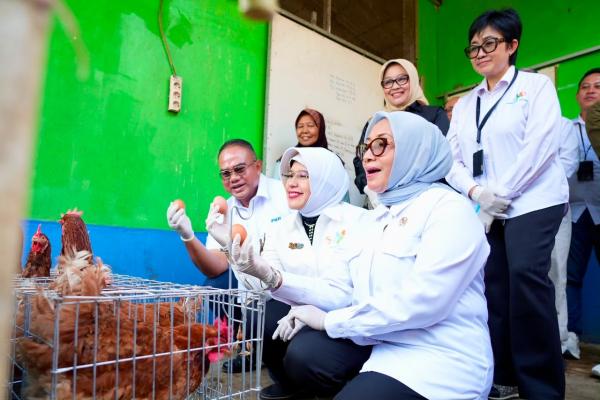
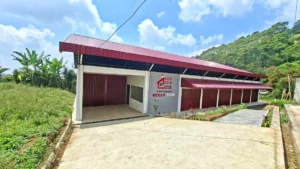
At the heart of the visit was the inspiring story of Ibu Ema, a PNM Mekaar beneficiary whose entrepreneurial journey exemplifies innovation and environmental consciousness. Ibu Ema has successfully established a business based on the principles of the circular economy, transforming waste into valuable resources and creating a self-sustaining ecosystem within her community. Her venture began with the utilization of organic and inorganic waste, a common challenge in many urban and semi-urban areas.
Ibu Ema’s innovative model starts with the cultivation of maggot, specifically Black Soldier Fly (BSF) larvae. These larvae are highly efficient decomposers of organic waste, converting food scraps and other biodegradable materials into biomass. This process not only reduces landfill waste but also produces a high-protein feed source. The maggot, in turn, is used as a primary feed for her aquaculture business, specifically for raising catfish (lele), and for her poultry farming operations. This integrated approach creates a closed-loop system where waste from one activity becomes a valuable input for another, minimizing external dependencies and maximizing resource efficiency. The byproducts, such as maggot frass (larvae excrement), can also be used as organic fertilizer, further enriching the soil for agricultural purposes or home gardening.
Minister Arifah Fauzi expressed profound admiration for Ibu Ema’s initiative, recognizing it as a powerful illustration of women’s immense capacity for driving positive change, not only within their families but also within their communities and the broader environment. "Mothers can emulate Ibu Ema’s business model because it ingeniously utilizes waste from the surrounding environment, both organic and inorganic, and processes it into a thriving ecosystem. This represents a significant effort to safeguard our environment while simultaneously generating economic value for families," Minister Fauzi stated during the visit. Her remarks underscored the dual benefits of such initiatives: environmental sustainability and economic upliftment.
Ibu Ema’s success story transcends mere income generation. It highlights how empowering women with access to capital and guidance can unlock their potential to innovate and contribute to larger societal goals, such as waste management and food security. Her business model serves as a practical, scalable example of how micro-enterprises can integrate principles of environmental sustainability, aligning with global efforts towards a greener economy.
The Broader Impact of PNM Mekaar on Women’s Empowerment
The PNM Mekaar program’s success, as exemplified by Ibu Ema, is rooted in its holistic approach to empowerment. It goes beyond simply providing loans, offering a comprehensive package that includes:
- Financial Inclusion: Reaching women in underserved communities who traditionally lack access to formal banking services.
- Business Mentorship and Training: Equipping beneficiaries with practical skills in business management, marketing, and financial literacy.
- Group Responsibility: Utilizing a group lending model that fosters mutual support, peer learning, and accountability among members.
- Social Capital Building: Strengthening community bonds and creating a network of empowered women entrepreneurs.
Statistical data consistently demonstrates the positive impact of such microfinance programs. According to various reports, including those from the Ministry of Finance and the World Bank, micro, small, and medium enterprises (MSMEs) contribute over 60% to Indonesia’s GDP and absorb over 97% of the workforce. Women-owned MSMEs, in particular, play a crucial role in household income generation and poverty reduction. Programs like PNM Mekaar directly fuel this sector, enabling women to become active economic agents, improve their families’ living standards, and invest in their children’s education and health.

The presence of the Head of BPS, Amalia Adininggar Widyasanti, during the visit further emphasizes the importance of data in measuring these impacts. BPS plays a crucial role in tracking various socio-economic indicators, including poverty rates, household income, employment figures, and gender equality metrics. By observing successful programs like PNM Mekaar firsthand, BPS can better understand the on-the-ground realities that translate into statistical trends. This qualitative insight complements quantitative data, providing a more comprehensive picture of the program’s effectiveness. BPS data helps policymakers assess the reach and depth of financial inclusion, the sustainability of micro-enterprises, and their contribution to national development goals, including the Sustainable Development Goals (SDGs), particularly SDG 1 (No Poverty), SDG 5 (Gender Equality), and SDG 8 (Decent Work and Economic Growth).
Official Responses and Strategic Implications
The joint endorsement from the Minister of PPPA and the Head of BPS carries significant weight. It signals strong governmental support for microfinance initiatives focused on women and sustainable practices.
Minister Arifah Fauzi reiterated the Ministry’s commitment to creating an enabling environment for women entrepreneurs. "Ibu Ema’s story is a testament to the fact that women, when given the right tools and opportunities, can not only uplift their families economically but also lead the way in environmental stewardship. This kind of initiative aligns perfectly with our vision for women’s empowerment, which extends beyond financial independence to include social and ecological responsibility," she remarked. The Minister also highlighted the importance of continuous capacity building and access to market information for these entrepreneurs to scale their businesses.
Amalia Adininggar Widyasanti from BPS underscored the statistical significance of such programs. "From a data perspective, programs like PNM Mekaar are invaluable. They provide critical insights into the dynamics of grassroots economic activity, inform our understanding of poverty reduction mechanisms, and help us measure progress towards national development targets. The success of entrepreneurs like Ibu Ema offers empirical evidence of the potential for sustainable economic growth when micro-entrepreneurs are supported effectively. BPS is committed to working with implementing agencies to ensure robust data collection and analysis that can further refine and scale these impactful programs," she explained. Her statement suggests a future where data-driven evaluation will play an even more central role in shaping government policy for micro-enterprises.
PNM representatives, while not explicitly quoted in the original brief, would likely emphasize their pride in beneficiaries like Ibu Ema. They would highlight their strategic focus on not just lending money but nurturing a supportive ecosystem that allows women to thrive. Their mission aligns with empowering the "unbanked" and "underbanked" segments of society, contributing to financial inclusion goals. They would also likely point to the broader multiplier effect of women’s economic empowerment, where increased household income often translates into better nutrition, healthcare, and education for children, creating a virtuous cycle of development.
Challenges and Future Outlook

While the success stories are compelling, challenges remain in scaling such programs nationally. These include:
- Geographical Reach: Extending services to remote areas with limited infrastructure.
- Digital Literacy: Ensuring beneficiaries can leverage digital tools for business growth and financial management.
- Market Access: Connecting micro-enterprises to broader markets and supply chains.
- Product Diversification: Developing new financial products and services tailored to evolving needs.
- Climate Resilience: Supporting businesses in adapting to and mitigating the impacts of climate change.
Despite these challenges, the outlook for women’s economic empowerment through microfinance in Indonesia remains optimistic. The government’s continued support, coupled with the proven effectiveness of programs like PNM Mekaar, suggests a future where more women will gain financial independence and contribute to sustainable development. The emphasis on circular economy models, as showcased by Ibu Ema, also points towards a growing recognition of the need for environmentally conscious business practices at all levels of the economy.
The collaboration between governmental bodies (Ministry of PPPA, BPS) and state-owned enterprises (PNM) is crucial. This synergy ensures that policies are informed by data, programs are effectively implemented, and the impact is consistently measured. The visit to Bandung serves as a powerful reminder of the tangible results achievable when such partnerships are strategically aligned towards common goals of poverty reduction, gender equality, and sustainable development.
Conclusion
The joint visit by the Minister of Women’s Empowerment and Child Protection and the Head of the Central Statistics Agency to a PNM Mekaar beneficiary in Bandung marks a significant moment in Indonesia’s journey towards inclusive and sustainable development. Ibu Ema’s circular economy enterprise stands as a beacon of innovation, demonstrating how empowered women can simultaneously uplift their families economically and champion environmental stewardship. This high-level recognition not only validates the effectiveness of the PNM Mekaar program but also underscores the government’s unwavering commitment to fostering women’s entrepreneurship and promoting sustainable business models across the nation. As Indonesia continues to strive for its development goals, the stories of women like Ibu Ema, supported by targeted microfinance initiatives and robust data-driven policies, will undoubtedly play a pivotal role in shaping a more prosperous, equitable, and sustainable future.