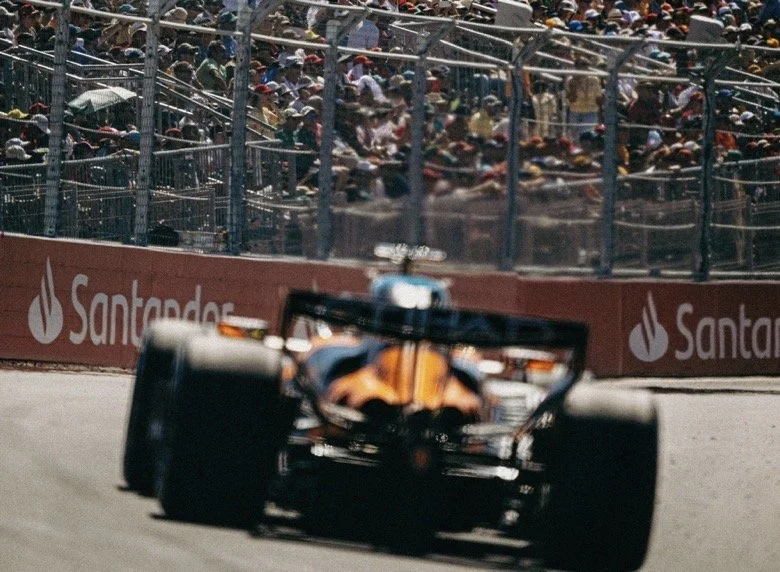
The introduction of the Madring Circuit to the FIA Formula One World Championship calendar was meant to usher in a new era of thrilling street-circuit racing in the heart of Spain. Instead, the 2026 Spanish Grand Prix held on Sunday, September 13, 2026, has erupted into a storm of heavy criticism, with high-ranking officials and motorsport experts labeling the inaugural event a complete disaster. The primary point of contention centers around the layout of the newly minted track, which drivers, teams, and spectators found severely lacking in overtaking opportunities, ultimately reducing the prestigious Grand Prix into a processional train from the opening lights to the checkered flag.
As the motorsport community reflects on the weekend’s events, questions are being raised regarding the viability of modern Formula One street circuits, regulatory design standards, and the future of the Spanish Grand Prix at its new home. With prominent political figures voicing their dissatisfaction publicly, the race has triggered a broader debate over whether aesthetics and commercial interests are superseding the core sporting spectacle of wheel-to-wheel combat.
Political Backlash and Public Outcry
The most scathing critiques of the event did not come from disgruntled fans on social media alone, but from the upper echelons of the Spanish government. Spain’s Minister of Transport, Oscar Puente, took to the social media platform X immediately following the conclusion of the race to voice his unfiltered assessment. Citing reports from specialized motorsport publication GP Blog, Puente did not mince words, famously categorizing the Grand Prix weekend as a "total disaster."
Puente’s critique focused heavily on the architectural layout of the Madring Circuit. According to the minister, the track’s geometry creates an environment where overtaking is practically impossible. In a striking analogy that resonated deeply with purists, Puente compared the Madring layout to "Monaco version two, but faster." Just like the historic Circuit de Monaco, where overtaking is notoriously difficult due to the tight and twisty nature of the principality’s streets, Madring allegedly offered zero margin for drivers to make aggressive moves under braking or through high-speed complexes.
The Minister of Transport further pointed out that any positional changes witnessed during the 57-lap encounter were strictly the byproduct of pit-stop strategies, tyre degradation management, and mechanical attrition, rather than genuine, heart-pounding on-track duels. For a sport that relies heavily on dramatic overtaking maneuvers to captivate global audiences, the absence of positional battles on the tarmac left a bitter taste for both local dignitaries and international observers.
Context and Background of the Madring Circuit
To understand the magnitude of the backlash, one must look at the immense hype and infrastructural investment that preceded the 2026 Spanish Grand Prix. For decades, the Circuit de Barcelona-Catalunya served as the traditional spiritual home of Formula One in Spain, hosting the race annually with mixed reviews regarding its own ability to produce thrilling races, though it offered a comprehensive technical test for the cars.
However, Formula One management, under the stewardship of Liberty Media, has increasingly leaned toward hosting Grands Prix in major metropolitan hubs to maximize tourism, local economic impact, and global entertainment value. This strategic pivot paved the way for the development of the Madring Circuit—a semi-permanent, hybrid street facility designed to weave through urban infrastructure while promising high speeds and dramatic elevation changes.
The inclusion of Madring on the 2026 calendar was hailed as a commercial triumph for regional promoters. Billions of euros in public and private capital were funneled into infrastructural upgrades, safety barrier installations, paddock construction, and local transport adjustments to accommodate the influx of hundreds of thousands of racing enthusiasts. Yet, while the logistical machinery operated smoothly, the fundamental product delivered on the track failed to meet the baseline expectations of modern Formula One racing.
The Anatomy of a Procession: Race Chronology and Dynamics
The problems plaguing the 2026 Spanish Grand Prix were subtly hinted at during Friday practice sessions, where drivers reported immense difficulty in following preceding cars closely through the second and third sectors. Clean air proved to be an absolute premium, with dirty air generated by the 2026-spec ground-effect aerodynamic packages exacerbating the inherent flaws of the narrow Madring asphalt.
By Saturday’s qualifying session, grid position became paramount. Engineers acknowledged in media briefings that qualifying effectively dictated the final finishing order, barring reliability failures or strategic masterstrokes in the pit lane.
When the lights went out on Sunday, September 13, 2026, the anticipated chaos of the opening lap dissolved into orderly single-file driving. Throughout the Grand Prix, DRS (Drag Reduction System) zones—which were heavily relied upon by the FIA to artificially stimulate passing—proved entirely ineffective against the aerodynamic wake and the geometric pinch points of the circuit. Drivers broadcasted their frustrations over team radio, noting that even with a significant tyre advantage, attempting a lunge up the inside was an exercise in extreme risk with a near-zero probability of success.
Consequently, the race transformed into a high-speed high-stakes endurance test of fuel saving and tyre preservation. The visual spectacle of Formula One cars operating at their absolute technical limits was undermined by the static nature of the race order, leading to widespread dissatisfaction among spectators who had paid premium prices for grandstand tickets.
Broader Implications for the 2026 Formula One Season
The debacle at the Madring Circuit arrives at a critical juncture for the sport. The 2026 Formula One season represents a massive technical reset, featuring entirely revised power unit regulations—with a 50-50 split between internal combustion and electrical power—alongside active aerodynamics designed to improve racing closeness and sustainability.
While the power units and chassis regulations were crafted to enhance competitiveness, the venue selection continues to expose a disconnect between circuit designers and sporting entertainment values. Tracks that prioritize real estate availability and municipal promotional partnerships over racing pedigree risk alienating the core fanbase.
Industry analysts suggest that the negative reception of the Madring GP will prompt urgent closed-door discussions between the FIA, Formula One Management (FOM), and the circuit promoters. Potential layout modifications, tweaking of DRS zones, and adjustments to entry/exit radii of specific corners will likely be evaluated ahead of the 2027 championship calendar. If structural adjustments are deemed impossible due to the urban nature of the facility, the long-term future of the race could face intense political scrutiny, especially given the vocal opposition from figures like Minister Oscar Puente.
Conclusion and Future Outlook
The inaugural F1 Grand Prix at the Madring Circuit was envisioned as a glittering showcase of modern Spanish infrastructure and motorsport passion. Instead, the 2026 event has delivered a harsh reality check regarding the complex engineering challenges of designing modern Formula One circuits.
As the circus packs up and moves to the next destination on the global calendar, the lasting memory of Madring’s debut will not be the champagne on the podium, but rather the stark imagery of a high-speed procession devoid of overtaking. For Formula One and its regulatory bodies, the challenge moving forward is clear: balancing the commercial allure of city-center street circuits with the fundamental athletic necessity of wheel-to-wheel combat, ensuring that future editions of the Spanish Grand Prix do not repeat the tactical stalemate witnessed in September 2026.