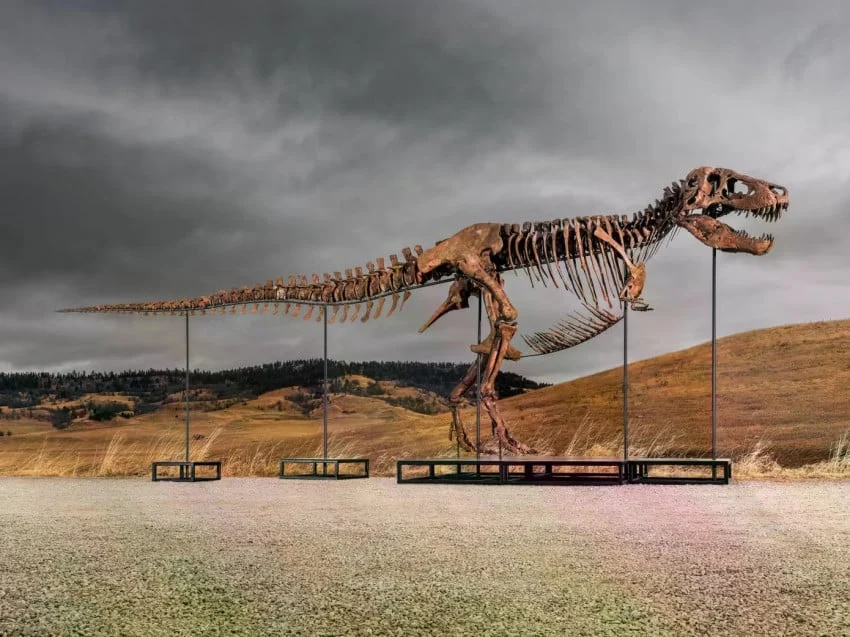
A colossal Tyrannosaurus rex fossil, identified as one of the largest and most complete specimens ever unearthed, has commanded a staggering $50.1 million at auction, purchased by an anonymous buyer. The record-shattering sale, facilitated by Sotheby’s in London, marks a new pinnacle in the market for prehistoric artifacts and underscores the intense global fascination with these ancient giants.
The 67-million-year-old specimen, affectionately nicknamed "Gus" by paleontologists and preparators, has now surpassed all previous records for dinosaur skeletons sold at auction. This remarkable acquisition eclipses the nearly $45 million fetched by a remarkably complete Stegosaurus skeleton in 2024, further cementing the immense commercial and scientific value attributed to exceptionally preserved dinosaur remains. Prior to Gus’s sale, the most expensive Tyrannosaurus rex skeleton was "Stan," which commanded nearly $32 million in a 2020 auction, highlighting a significant escalation in the market’s appetite for such rarities.
Cassandra Hatton, Vice President of Sotheby’s, expressed her satisfaction with the outcome, stating, "Gus is not only an extraordinary find, but it is a specimen that has been excavated, documented, prepared, and preserved in an exceptional manner. The market reacted positively when such a magnificent specimen is properly cared for." This sentiment suggests that the provenance and meticulous handling of the fossil significantly contributed to its desirability and ultimate price, indicating a discerning buyer base that values both scientific integrity and aesthetic presentation.
The Majesty of "Gus": A Glimpse into the Cretaceous Period
Standing an imposing 3.8 meters (approximately 12.5 feet) tall and stretching an impressive 11.5 meters (approximately 37.7 feet) in length, "Gus" presents a formidable silhouette. The fossil depicts the adult T. rex in a dynamic posture, poised with its tail extended and its right leg slightly lifted, hinting at movement and power. This lifelike presentation, coupled with its immense size, undoubtedly contributed to its allure for collectors and institutions alike.
The preservation of "Gus" is described as extraordinary, with approximately 61% of its fossilized remains intact. The skull, in particular, has been lauded by Sotheby’s as "exceptionally well-preserved," boasting strong dentition and a remarkably intact cranial structure. The fossil also includes clearly delineated legs and several rare bones, such as the clavicle, providing invaluable insights into the anatomy and physiology of this apex predator. The completeness of the skeleton allows for a more comprehensive understanding of its biomechanics, hunting strategies, and overall morphology.
A Deeper Dive into the Auction and its Precursors
The auction of "Gus" was not merely a singular event but the culmination of a complex process involving discovery, excavation, preparation, and marketing. While the exact location of discovery for "Gus" has not been publicly disclosed, the meticulous preparation process typically involves years of painstaking work by teams of paleontologists and fossil preparators. This often includes careful extraction from the earth, stabilization of fragile bones, removal of surrounding matrix (rock and sediment), and reconstruction of the skeleton for display. The cost and expertise involved in these stages are substantial, contributing to the final value of the specimen.
The history of dinosaur fossil auctions has seen a significant surge in recent decades. Driven by a combination of factors including increasing global wealth, a growing interest in natural history among private collectors, and the inherent rarity of well-preserved large dinosaur specimens, prices have escalated dramatically. The sale of "Stan" in 2020 was a watershed moment, demonstrating that dinosaur fossils could command prices comparable to high-value art. The "Gus" sale has now effectively doubled that benchmark, signaling a new era for the market.
The Buyer: An Enigma with Significant Resources
The anonymity of the buyer adds an element of intrigue to the transaction. While the motivations of such a high-profile collector remain speculative, several possibilities emerge. This individual may be a seasoned collector of natural history specimens, a philanthropic institution seeking to advance scientific research or public education, or even a private entity with a profound passion for paleontology. The substantial financial commitment suggests a buyer with considerable wealth and a deep appreciation for the scientific and historical significance of the fossil.
The decision to keep their identity private could stem from a desire to avoid public scrutiny, to protect the specimen from potential future disputes or security concerns, or simply to maintain a level of discretion in their collecting activities. Regardless of the reasons, the substantial sum paid indicates a belief in the intrinsic value of "Gus," not just as a commodity but as a tangible link to Earth’s ancient past.
Scientific and Educational Implications
The sale of "Gus" to a private collector, while a significant financial transaction, also raises important questions about the accessibility of such scientifically valuable specimens for research and public display. Historically, major paleontological discoveries were often housed in museums and research institutions, where they could be studied by scientists and viewed by the public. The increasing trend of private ownership, however, presents both opportunities and challenges.
On one hand, private collectors may possess the resources to provide state-of-the-art conservation and secure storage for these fragile artifacts, potentially ensuring their long-term preservation. They may also, in some cases, grant access to researchers or loan specimens for public exhibitions. However, there is also the concern that such fossils might be kept from public view indefinitely or that access for scientific study could be restricted, hindering the advancement of paleontological knowledge.
The scientific community often expresses a preference for specimens to reside in institutions where they can be continuously studied and shared. However, the reality of the current market means that private sales are likely to continue. The key, therefore, lies in fostering collaborations between private owners and scientific institutions to ensure that these invaluable windows into prehistory benefit both science and society.
Broader Market Trends and Future Prospects
The record-breaking sale of "Gus" is indicative of broader trends in the global art and collectibles market, where rare and historically significant items continue to fetch astronomical prices. The market for dinosaur fossils, in particular, has matured significantly, moving from a niche interest to a recognized segment of the high-end collectibles landscape.
The success of this auction is likely to encourage further exploration and excavation efforts, as well as more sophisticated marketing and preparation of newly discovered specimens. It also raises the bar for future sales, setting a new precedent for what can be achieved in the market. The demand for exceptionally preserved and scientifically significant dinosaur fossils appears to be robust and shows no signs of abating.
The story of "Gus" is more than just a financial transaction; it is a testament to the enduring allure of dinosaurs and the profound human desire to connect with the distant past. As the anonymous buyer integrates "Gus" into their collection, the scientific community and the public alike will await news of its future accessibility, hoping that this magnificent creature will continue to inspire awe and contribute to our understanding of life on Earth millions of years ago. The ongoing dialogue between private collectors and scientific institutions will be crucial in determining how these invaluable pieces of natural history are ultimately utilized for the benefit of all.