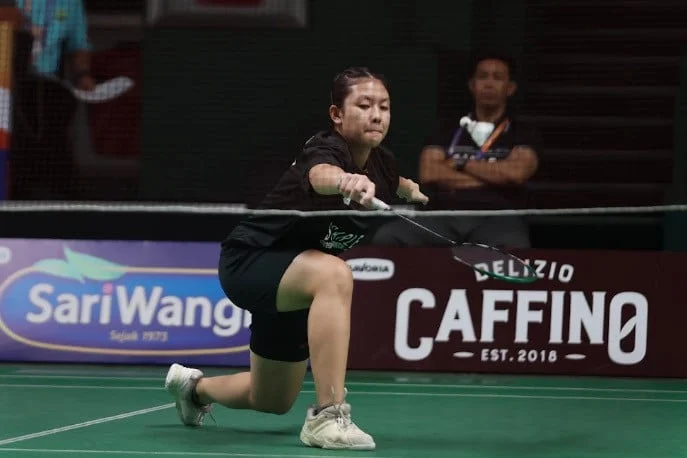
The second day of the MilkLife Indonesia Junior International Series 2026 witnessed a surge of optimism for the Indonesian badminton contingent as home-grown talents navigated the challenging waters of international competition. Held at the iconic Djarum Arena and GOR Djarum in Jati, Kudus, Central Java, the tournament has become a crucible for future stars, drawing nearly a thousand competitors from eight different nations. As the competition progresses, the resilience of young Indonesian athletes is being tested against a diverse international field, with Wednesday’s matches serving as a critical indicator of the current strength of the nation’s junior development pipeline.
High-Stakes Competition in the Heart of Kudus
The MilkLife Indonesia Junior International Series 2026 is not merely a regional tournament; it is a sanctioned event by the Badminton World Federation (BWF) and the Badminton Association of Indonesia (PBSI). The prestige associated with this event lies in the BWF Junior Ranking points on offer, which are vital for young players looking to secure spots in prestigious world junior championships. With 972 athletes representing nations from across the globe, the atmosphere in Kudus is charged with the intensity of high-level professional sports, despite the youth of the participants.
The tournament structure spans multiple age categories, with the Under-19 (U-19) division acting as the primary feeder system for the professional circuit. The decision to host the event in Kudus—a city widely regarded as one of the epicenters of Indonesian badminton—underscores the commitment to providing world-class infrastructure for developmental athletes.
Tactical Resilience: The Case of Yudha Rendra Wijaya
Among the standout performances on Wednesday, November 11, was that of Yudha Rendra Wijaya. As the top seed in the U-19 men’s singles category, Wijaya faced the arduous task of competing against a familiar face, Calvin Kennedy Chendrawinata, a fellow athlete from the PB Djarum club. This internal rivalry added an extra layer of psychological pressure, as both players are intimately acquainted with each other’s playing styles and tactical tendencies.
The match, which lasted three grueling games, highlighted the nuances of professional badminton strategy. In the opening game, Wijaya appeared sluggish, struggling to synchronize his movement with the drift and shuttle speed within the arena. Trailing in the early stages, Wijaya relied on his tactical discipline to grind out a 21-18 victory.
However, the second game demonstrated the volatility of the sport. Chendrawinata adjusted his approach, capitalizing on favorable wind conditions to play an aggressive, attacking game that forced Wijaya into defensive errors. The 16-21 loss in the second game was a stark reminder of the margins in competitive play. "On the second game, Calvin was more advantaged by the direction of the wind and played more aggressively," Wijaya remarked in a post-match interview. "I was surprised by the tempo shift and failed to adapt quickly enough, which allowed him to dictate the pace from the start."
The third and final game saw a recalibrated Wijaya. By adjusting his footwork and tightening his shot selection, he neutralized Chendrawinata’s offensive rhythm, eventually securing a decisive 21-13 win. For Wijaya, a native of Lubuk Linggau, South Sumatra, this victory was more than just a step toward the next round—it was a necessary demonstration of mental fortitude. His career ambition, which includes capturing his first international title, has seen him come close before, notably reaching the semifinals in a previous international event in Thailand.
Strengthening the National Pipeline
The success of players like Wijaya and the U-19 mixed doubles pair, Muhammad Luthfi Habibi and Dian Ramadhani Mukti, reflects the broader strategic goals of the Indonesian badminton program. By hosting tournaments of this caliber, the PBSI and partners like MilkLife aim to bridge the gap between national-level junior play and the international professional arena.
Data from the tournament organizers indicates that the influx of international players from seven other countries—including rising powerhouses from East and Southeast Asia—has forced Indonesian juniors to adapt to varying styles of play. From the aggressive, high-speed tactical play favored by many East Asian competitors to the endurance-based strategies often seen in European junior circuits, the diversity of the field is providing invaluable experience for local talent.
Strategic Implications for Indonesian Badminton
The implications of the MilkLife Indonesia Junior International Series 2026 extend beyond the individual podiums. For the national governing body, the tournament serves as a scouting ground for the next generation of Sudirman Cup and Thomas & Uber Cup squads. The ability of young players to maintain composure under the pressure of a home crowd and high-stakes international competition is a primary metric used to evaluate their readiness for the senior national training center in Cipayung.
Furthermore, the involvement of corporate partners like MilkLife highlights a shifting paradigm in sports sponsorship in Indonesia. By investing in the junior level, these partnerships ensure that young athletes have access to regular, high-quality competitive platforms, which are essential for maintaining the nation’s status as a global badminton power. The consistent investment in facilities such as the Djarum Arena ensures that athletes do not suffer from the "home advantage" being neutralized by poor playing conditions, as the courts are maintained to international standards.
Looking Ahead: The Path to the Finals
As the tournament moves toward the quarter-finals and beyond, the focus will shift to how the Indonesian contingent manages fatigue and tactical scouting. In a tournament of this magnitude, the physical toll of back-to-back matches is significant. The medical and recovery teams supporting the athletes are currently as critical as the coaching staff, as they work to ensure that players like Wijaya remain in peak physical condition for the latter stages of the week.
The international participants are also expected to ramp up their intensity. Historically, the middle rounds of these international series often see the most significant upsets, as the top seeds become primary targets for international challengers looking to boost their own world rankings. The scouting reports on players like Wijaya will be updated daily, forcing the top seeds to innovate their game plans to remain ahead of the field.
Analysis of Developmental Progress
Experts in the sport note that the technical proficiency of Indonesian junior players has increased significantly over the last three years. The emphasis on "Total Badminton"—a blend of physical power, technical precision, and tactical awareness—is evident in the way the current U-19 cohort approaches their matches. Unlike previous generations that relied heavily on natural flair, the modern Indonesian junior is trained in rigorous data analysis and video review, a trend facilitated by the availability of high-level tournaments like the one currently unfolding in Kudus.
The MilkLife Indonesia Junior International Series 2026 is, therefore, a snapshot of an evolving sport. It captures the transition of young athletes from promising amateurs to professionals. As the event continues through the end of the week, the community will be watching closely to see if local talents can translate their early-round successes into a championship performance.
For the Indonesian badminton federation, the objective remains clear: to ensure that the transition from junior to senior is as seamless as possible. Whether or not Yudha Rendra Wijaya or the mixed doubles pair of Habibi and Mukti go on to lift the trophy, the experience gained during these five days in Kudus will remain a cornerstone of their development as they look toward the global stage of the senior circuit in the years to come. The tournament continues to serve as a beacon for the future of the sport, proving that while talent is universal, the path to greatness is paved by the consistent, disciplined competition found in these international series.