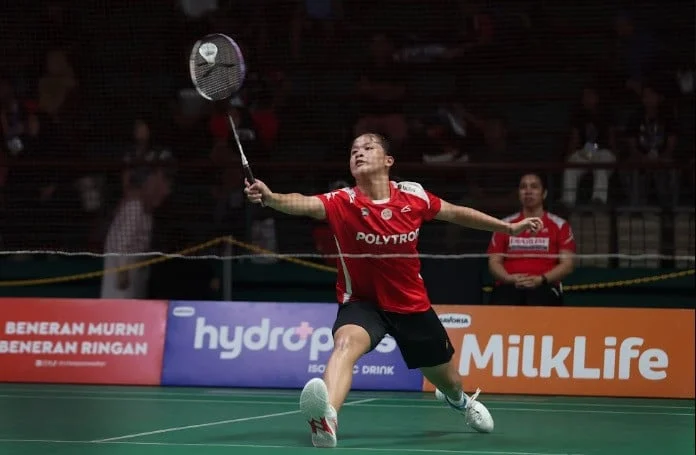
The Djarum Arena in Kudus, Central Java, has transformed into a high-stakes battleground this week as the MilkLife Indonesia Junior International Series 2026 reaches its critical semifinal stage. With a heavy concentration of Indonesian talent advancing through the brackets, the tournament has become a pivotal inflection point for the nation’s youth badminton prospects. As the competition progresses toward the finals, the significance of these matches extends far beyond the immediate podium, serving as a vital mechanism for young athletes to secure essential Badminton World Federation (BWF) ranking points.
A Surge of Local Dominance
The quarterfinal rounds, concluded on Friday, November 13, saw a commanding performance by Indonesian representatives across the U-19 categories. In the men’s singles, women’s singles, and mixed doubles sectors, the home-grown talent effectively neutralized international challengers, ensuring a heavy Indonesian presence in the final four.
One of the most notable performances came from Fathurachman, representing the Sarwendah Badminton Club. Seeded third in the men’s singles U-19 division, Fathurachman faced a significant test against Chi Chen Lin of Chinese Taipei, the last remaining international competitor in his draw. Demonstrating tactical maturity beyond his years, Fathurachman dictated the tempo of the match, clinching a straight-sets victory with scores of 21-17, 21-16. This win not only propelled him into the semifinals but also underscored the technical depth currently being developed within Indonesia’s regional club ecosystem.
The Strategic Importance of BWF Ranking Points
The MilkLife Indonesia Junior International Series is more than a developmental showcase; it is a critical infrastructure project for the future of Indonesian badminton. Yuni Kartika, Chairperson of the Organizing Committee and a distinguished veteran who helped Indonesia secure the 1994 Uber Cup, emphasized that the tournament serves as a corrective measure for a long-standing structural disadvantage.
"Observing the results from the quarterfinals, it is evident that our players are seizing the opportunity to climb the BWF ladder," Yuni stated following the conclusion of Friday’s matches. "This is not merely about winning a tournament; it is about building a foundation for the Asian Junior Championships (AJC) and the World Junior Championships (WJC)."
For years, Indonesian junior athletes have struggled with a "participation gap." While elite prospects from countries in East Asia and Europe could participate in a high volume of BWF-sanctioned events within their respective regions, Indonesian players were often restricted by the limited number of international-grade tournaments hosted domestically. Previously, the lack of recurring BWF-sanctioned junior events forced Indonesian athletes to travel extensively, incurring high costs and logistical challenges, or face the reality of lower world rankings regardless of their actual skill levels.
Historical Context and Tournament Evolution
The return of the MilkLife Indonesia Junior International Series in 2026 marks a resurgence for youth badminton in the country after a six-year hiatus. Historically, the absence of these events created a "ranking ceiling." When seeding for major events like the World Junior Championships is determined, the BWF relies heavily on current world rankings. Because Indonesian players had fewer opportunities to compete in sanctioned events, they were often unseeded or lower-seeded, forcing them to face top-ranked opponents in the early rounds of major international tournaments.
"Previously, because we only had one such tournament, our players could not accumulate enough points to be seeded in major international competitions," Yuni explained. "This resulted in a perception that our players were not at the same level as their counterparts from other nations. However, the reality was simply a lack of access to points. With the addition of this series, Indonesia now hosts two BWF-sanctioned junior tournaments, effectively doubling the home-court advantage for our rising stars."
Technical Analysis: The Impact on Player Development
The influx of international competitors—even in small numbers—provides the necessary "pressure testing" for local players. In the sport of badminton, tactical nuance and the ability to adapt to different playing styles are cultivated through exposure to diverse international playstyles. By hosting this series in Kudus, the organizers are creating an environment where domestic players must demonstrate consistency against foreign tactical frameworks.
The implications for the Indonesian national team setup are significant. With more players securing higher BWF rankings, the national selection process for the Asian Junior Championships and World Junior Championships becomes more data-driven and meritocratic. Furthermore, the presence of ranking points acts as a catalyst for professional development; younger players are incentivized to maintain high-intensity training regimes year-round to protect and improve their status on the global stage.
Looking Toward the Future
The tournament structure for 2026 has been refined to ensure that it meets the rigorous standards of the BWF. By providing a platform where athletes can earn points that count toward their global standing, the MilkLife Indonesia Junior International Series is effectively bridging the gap between amateur club badminton and the professional circuit.
As the tournament moves into the final stages, the focus will shift to how these young athletes manage the mental load of high-stakes competition. The semifinal matches are expected to be particularly grueling, as players are not just fighting for a trophy, but for the ranking points that could determine their seeding for the 2027 season.
The broader impact of this initiative suggests that Indonesia is shifting its strategy from a reactive approach—where players were sent abroad to seek points—to a proactive one, where the global badminton community is invited to compete on Indonesian soil. This shift not only benefits the top-tier U-19 prospects but also provides exposure for younger players who attend the event, observing the intensity required to compete at the international level.
Broader Implications for Indonesian Badminton
The resurgence of this tournament series reflects a wider trend in sports management, where nations are increasingly focusing on hosting international events to bolster their domestic programs. By hosting multiple sanctioned events, Indonesia is signaling its intent to dominate the youth landscape in the coming decade.
Economically and logistically, hosting these events at the Djarum Arena in Kudus provides a stable environment for young athletes, reducing the physical fatigue associated with international travel. This allows players to focus exclusively on their performance, recovery, and technical execution.
As the MilkLife Indonesia Junior International Series 2026 enters its final days, the outcomes will be analyzed closely by national team scouts and international observers alike. For the young players like Fathurachman and their peers, the tournament is a gateway. If the current trend of Indonesian dominance continues through the semifinals and finals, it will be a clear indicator that the domestic investment in youth infrastructure is beginning to yield significant dividends on the world stage.
With the next iteration of the Asian Junior Championships on the horizon, the pressure on these athletes will only increase. However, the success of the current series provides them with the essential tool they have long lacked: a legitimate, home-based pathway to climb the BWF rankings and prove that their talent is second to none in the international arena. The remainder of the tournament will serve as a definitive test of whether these athletes can translate their domestic momentum into a sustainable, world-class career trajectory.