The government of Bengkulu Province demonstrated an innovative approach to local economic development and social cohesion by acquiring the entire inventory of micro, small, and medium enterprises (UMKM) products showcased at the FIFA World Cup 2026 final public viewing event. Held on Sunday, July 19, at the bustling Simpang Lima area in Bengkulu City, the event saw thousands of these products subsequently distributed free of charge to the eager public in attendance. This strategic initiative, spearheaded by Governor Helmi Hasan, transcended a mere sporting spectacle, transforming it into a powerful platform for economic stimulus and community engagement.
Governor Helmi Hasan articulated the dual objective behind the provincial government’s bold move. "A moment like this does not just bring togetherness; it also has the power to move the wheels of the regional economy through the activities of our UMKM actors," Helmi Hasan stated in Bengkulu on Sunday. His remarks underscored the administration’s commitment to leveraging high-profile public gatherings for broader socio-economic benefits, ensuring that the excitement of a global event directly translated into tangible support for local businesses and communities. The grand final, featuring a highly anticipated clash between Spain and Argentina, captivated thousands who flocked to Simpang Lima, creating an atmosphere of shared enthusiasm and camaraderie that transcended demographic boundaries.
Deep Dive into the Initiative: Beyond the Game
The decision to purchase all UMKM products was a deliberate and calculated strategy by the Bengkulu Provincial Government, designed to offer immediate and substantial support to local entrepreneurs. This was not merely a gesture of goodwill but a direct economic intervention aimed at injecting capital into the local economy and providing invaluable market exposure to often-overlooked businesses. The array of products ranged from traditional Bengkulu snacks and beverages to handcrafted goods and local agricultural produce, all reflecting the rich cultural and economic diversity of the region. By distributing these products freely, the government not only cleared the vendors’ stock but also introduced their offerings to a wide audience, potentially cultivating new customer bases and fostering future demand. This approach exemplifies a forward-thinking governance model that integrates popular culture events with tangible economic development goals.
The initiative also served as a powerful testament to the provincial government’s understanding of the critical role UMKM play in the broader Indonesian economic landscape. Nationally, UMKM contribute significantly to the GDP and employment figures, often serving as the backbone of local economies, particularly in provinces like Bengkulu where traditional sectors like agriculture and fisheries are prominent. However, these businesses frequently face challenges related to market access, capital limitations, and intense competition. The public viewing event provided a unique, high-traffic venue that mitigated these challenges, offering a direct sales opportunity coupled with unprecedented public relations.
The Global Spectacle, Local Impact: FIFA World Cup 2026 in Bengkulu
The FIFA World Cup, held every four years, stands as the most prestigious football tournament globally, captivating billions of viewers worldwide. The 2026 edition, uniquely co-hosted by the United States, Canada, and Mexico, promised to be the largest in history with an expanded format, further amplifying its global appeal. In Indonesia, a nation renowned for its fervent football fan base, public viewing events for the World Cup are a cherished tradition. These "nobar" (nonton bareng) gatherings transform public spaces into vibrant arenas of collective excitement, fostering a strong sense of community and national identity, even when supporting international teams.
In Bengkulu City, the Simpang Lima area, a central hub, was meticulously prepared to accommodate the thousands of spectators. Large LED screens broadcasted the final match, ensuring optimal viewing for the sprawling crowd. The atmosphere was electric, a mosaic of cheers, gasps, and collective anticipation as fans from all walks of life, donning jerseys of their favorite teams or simply showing national colors, united under the banner of football. The palpable energy underscored the universal appeal of the sport and its capacity to bring people together, an aspect the Bengkulu Provincial Government masterfully harnessed for its broader objectives.
Empowering Micro, Small, and Medium Enterprises (UMKM): A Strategic Investment
UMKM are indispensable to Bengkulu’s economic vitality. They are vital engines for job creation, particularly in rural areas, and contribute significantly to poverty reduction and local economic resilience. In Bengkulu, where the economy relies heavily on agriculture, plantation, and marine resources, UMKM often process raw materials into value-added products, supporting local supply chains and creating unique regional specialties.
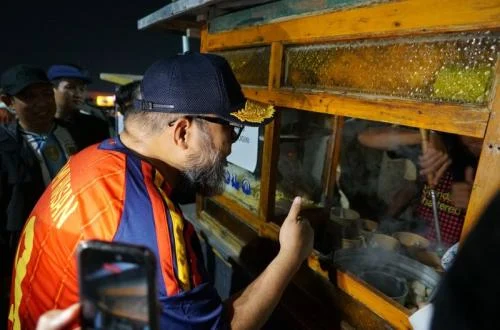
However, many UMKM in Bengkulu struggle with limited capital, restricted access to broader markets, and intense competition from larger enterprises. The provincial government’s intervention at the World Cup viewing event directly addressed these critical pain points. By purchasing all available products, the government provided an immediate cash injection, bolstering the financial liquidity of these small businesses. More importantly, the free distribution of these products served as a powerful marketing campaign, exposing a diverse range of local goods to thousands of potential new customers. Vendors, who typically face significant hurdles in advertising and market penetration, received unparalleled exposure.
"This is an incredible blessing for us," expressed Ibu Siti Aminah, a vendor specializing in traditional Bengkulu ‘kue bay tat’ (a local cake), her stall completely emptied by the government’s purchase. "Normally, it takes days to sell this much. Tonight, it’s all gone, and people have tasted our products. We are so grateful for this support." Similar sentiments resonated among other vendors, highlighting the immediate and positive impact of the initiative on their livelihoods and morale. This strategic investment not only provided a financial boost but also instilled a sense of confidence and recognition among the UMKM community.
A Tapestry of Community Engagement: Social Welfare and Solidarity
Beyond the economic impetus, the event was meticulously designed to weave a tapestry of social welfare and solidarity. Prior to the kick-off of the final match, the Bengkulu Provincial Government, in collaboration with the Mayor of Bengkulu and members of the Regional Leadership Coordination Forum (Forkopimda), distributed staple food packages (sembako) to hundreds of underprivileged families (kaum dhuafa). This act of charity underscored the government’s commitment to inclusive development, ensuring that even festive occasions served as opportunities to extend a helping hand to those in need.
The distribution of sembako packages was met with heartfelt appreciation from the beneficiaries. "These packages are a great help for my family," remarked Pak Herman, an elderly resident from a nearby neighborhood, clutching his package. "It’s wonderful to see the government thinking of us, especially during such a big event." Such initiatives are crucial in fostering a sense of belonging and ensuring that the benefits of public gatherings are shared across all segments of society.
Furthermore, a series of doorprizes were distributed to the general public, adding an element of excitement and appreciation for their participation. These prizes, ranging from electronic gadgets to household items, further enhanced the festive atmosphere and encouraged greater public engagement. This multi-faceted approach – combining economic support, social welfare, and community entertainment – created a truly holistic event that resonated deeply with the people of Bengkulu.
Chronology of a Memorable Night: Planning and Execution
The success of the public viewing event was the culmination of meticulous planning and robust inter-agency collaboration. Preparations began weeks in advance, involving multiple provincial departments, local authorities, and key partners. The Bengkulu Provincial Government, led by the Governor’s office, coordinated with the Bengkulu City Government to secure the venue, manage logistics, and ensure public safety.
In the days leading up to July 19, the Simpang Lima area underwent significant transformation. Large screens were erected, sound systems tested, and security perimeters established. UMKM vendors were carefully selected and provided with designated spaces, ensuring a diverse representation of local products. On the day of the event, activities commenced in the late afternoon, with initial crowds gathering, vendors setting up, and the distribution of sembako packages taking place in an orderly fashion. Official speeches by Governor Helmi Hasan, the Mayor, and other Forkopimda members preceded the match, setting the tone for an evening of sportsmanship and community spirit.
The coordination extended to critical infrastructure and public services. TVRI Bengkulu, as the primary broadcaster, collaborated extensively with RRI Bengkulu, LKBN ANTARA Bengkulu Bureau, Telkomsel, PLN (State Electricity Company), the Indonesian National Armed Forces (TNI), and the National Police (Polri). This comprehensive partnership ensured stable power supply, robust telecommunications, accurate reporting, and, crucially, stringent security measures. "We worked hand-in-hand with all stakeholders to ensure a smooth and safe experience for everyone," stated a representative from the Bengkulu City Police, highlighting the seamless execution of the security plan that maintained order among the thousands of attendees. The collaborative synergy underscored the government’s capacity to orchestrate large-scale events with precision and public welfare at its core.
Provincial Reach: A Network of Enthusiasm
The enthusiasm for the FIFA World Cup 2026 final was not confined to Bengkulu City alone. TVRI Bengkulu, the provincial public television broadcaster, played a pivotal role in facilitating and tracking public viewing events across the entire province. Jusarman, the Head of the Planning and Business Development Control Team and PIC for the Bola Gembira (Joyful Football) World Cup Nobar Registration at TVRI Bengkulu, reported an impressive network of over 120 public viewing points scattered throughout all regencies and cities within Bengkulu Province.
This extensive reach indicated a widespread public appetite for the global football spectacle. Jusarman noted that preliminary data collected by TVRI’s system showed a significant surge in public interest leading up to the final match. "During the semifinals, the number of viewers at locations facilitated by TVRI Bengkulu alone exceeded 1,000 people," Jusarman explained. "We anticipated a further increase for the final, correlating with the expansion of viewing points across various regions." This projection proved accurate, with anecdotal reports from different areas indicating packed venues and fervent celebrations.
The widespread nature of these viewing parties amplified the social and economic impact across the province. Local businesses in smaller towns and districts also benefited from increased foot traffic and sales, albeit on a smaller scale than the main event in Simpang Lima. The comprehensive data collection by TVRI Bengkulu, alongside their collaboration with police and PLN to ensure security and electricity supply at all registered locations, demonstrated a strategic effort to manage and support this province-wide phenomenon effectively.
Official Voices and Collaborative Spirit
The event served as a powerful testament to the leadership and vision of Governor Helmi Hasan. His active participation, from overseeing the preparations to mingling with the crowd and engaging with UMKM vendors, reinforced the government’s commitment to its citizens. His choice of supporting Spain, a light-hearted personal touch, added to the relaxed and communal atmosphere.
The presence of the entire Forkopimda, including the Provincial Police Chief, Military Commander, and Public Prosecutor, alongside the Mayor of Bengkulu and heads of various provincial and city organizational units (OPD), underscored the unified approach to governance. Their collective presence symbolized a shared commitment to public welfare, security, and economic development.
"This is what a responsive government looks like," remarked a senior official from the Bengkulu City Government, who preferred to remain unnamed. "We don’t just provide entertainment; we create opportunities. The synergy between all levels of government and our partners ensures that events like these have a lasting positive impact." The collaborative spirit extended beyond officialdom, encompassing media partners like RRI and ANTARA, and essential service providers like Telkomsel and PLN, all working in concert to deliver a seamless and memorable experience for the public.
Analysis: A Model for Regional Development and Social Cohesion
The Bengkulu Provincial Government’s approach to the FIFA World Cup 2026 final public viewing event offers a compelling model for regional development and social cohesion. Economically, the direct purchase of UMKM products provided an immediate, substantial boost to local businesses, addressing critical challenges related to market access and capital. This innovative strategy serves as a practical example of how governments can leverage popular cultural events to deliver tangible economic benefits, potentially inspiring similar initiatives in other regions of Indonesia and beyond. The enhanced visibility and exposure for UMKM products are likely to have a ripple effect, fostering brand recognition and potentially leading to sustained sales growth in the long term.
Socially, the event successfully fostered a strong sense of community and shared identity. In an increasingly fragmented world, large public gatherings centered around common interests, such as football, play a vital role in bridging social divides and strengthening communal bonds. The distribution of sembako packages and doorprizes further solidified the government’s image as a caring and responsive entity, promoting inclusivity and ensuring that the benefits of public celebrations reached vulnerable populations. The safe and orderly conduct of the event, facilitated by robust inter-agency cooperation, also reinforced public trust in governmental institutions.
From a governance perspective, the event showcased effective leadership and strategic planning. Governor Helmi Hasan’s vision to integrate economic development with public entertainment demonstrates an understanding of holistic governance. By transforming a global sporting event into a local economic stimulus package and a social welfare initiative, the Bengkulu Provincial Government has set a precedent for leveraging popular culture for the greater public good. This approach not only boosts the local economy but also strengthens community ties, enhances civic engagement, and projects a positive image of a government that actively works to improve the lives of its citizens. The success of this initiative suggests a promising future for Bengkulu, where public events are increasingly viewed not just as celebrations, but as strategic opportunities for sustainable regional development and collective prosperity.