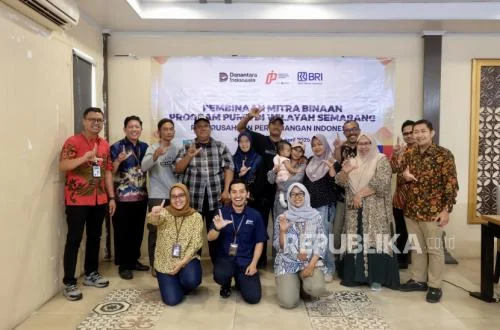
In a significant move on Wednesday, April 15, 2026, PT Perusahaan Perdagangan Indonesia (PPI) reinforced its commitment to bolstering the backbone of the Indonesian economy by intensifying its Micro, Small, and Medium Enterprises (MSME) development initiatives. This strategic enhancement is being realized through a series of engaging sharing sessions and comprehensive mentorship programs for beneficiaries of the Micro and Small Business Funding Program (PUMK). The latest iteration of this vital program was jointly organized with PT Bank Rakyat Indonesia (Persero) Tbk (BRI), a state-owned banking giant renowned for its deep penetration into the MSME sector, and took place in Semarang, Central Java, underscoring a concerted effort to reach and empower local entrepreneurs.
A Strategic Alliance for Economic Empowerment
The collaboration between PPI and BRI represents a powerful synergy between two prominent State-Owned Enterprises (BUMNs), each bringing distinct strengths to the table. PT Perusahaan Perdagangan Indonesia (PPI), established in 2003, is a state-owned trading company primarily involved in commodity trading, distribution, and logistics, playing a crucial role in stabilizing national supply chains and ensuring market access for various products. Its mandate extends beyond mere commerce to include contributing to national economic development, particularly through fostering local industries and empowering small businesses. On the other hand, PT Bank Rakyat Indonesia (Persero) Tbk (BRI) stands as one of Indonesia’s largest banks, with an unparalleled focus on the micro, small, and medium segments. With its vast network reaching remote corners of the archipelago and decades of experience in microfinance, BRI possesses invaluable expertise in financial inclusion, credit disbursement, and risk management tailored for grassroots enterprises. This partnership, therefore, leverages PPI’s strategic position in trade and distribution with BRI’s financial prowess and extensive reach, creating a robust ecosystem for MSME growth.
The initiative in Semarang is not an isolated event but rather part of an ongoing commitment by PPI and BRI to nurture the entrepreneurial spirit across Indonesia. The program is designed to transcend mere financial assistance, aiming instead for holistic development that addresses various facets of business operations. It reflects a shared vision to not only provide capital but also to equip MSMEs with the knowledge, skills, and networks necessary for sustainable growth and competitiveness in an increasingly dynamic market.
Understanding the PUMK Program: Beyond Capital
Ira Berlianty Aziz, Head of Corporate Secretariat and TJSL (Social and Environmental Responsibility) at PT PPI, emphasized the critical importance of conducting routine and consistent coaching and mentorship activities to ensure the program’s effectiveness. "This is a strategic step to monitor the business development of our fostered partners, while also ensuring that the utilization of disbursed funding yields tangible impacts on business growth," Ira stated in a written declaration from Jakarta. Her remarks underscore that the PUMK program is fundamentally about long-term sustainability rather than short-term relief. It’s a comprehensive framework designed to elevate MSMEs from various stages of development to higher levels of operational maturity and market presence.
The PUMK program operates on the principle that financial access alone is often insufficient for MSMEs to thrive. Many small businesses face challenges related to management skills, marketing strategies, product development, legal compliance, and access to broader markets. Recognizing these multifaceted needs, the PUMK initiative integrates several key components:
- Financial Support: Providing accessible and appropriate funding to MSMEs, often tailored to their specific needs and growth stages. This includes working capital loans, investment loans, and other financial instruments.
- Capacity Building: Offering training modules, workshops, and sharing sessions on topics such as financial literacy, bookkeeping, digital marketing, product innovation, quality control, and human resource management.
- Mentorship and Business Consulting: Pairing MSMEs with experienced mentors who provide personalized guidance, help identify challenges, and formulate strategic solutions. This often involves one-on-one consultations and peer-to-peer learning.
- Market Access Facilitation: Connecting MSMEs with potential buyers, distributors, and larger supply chains, including through digital platforms and participation in trade fairs.
- Monitoring and Evaluation: Regularly tracking the progress of fostered MSMEs, assessing the impact of interventions, and adapting strategies based on feedback and performance data.
Ira further elaborated that mentorship is the cornerstone of this approach, ensuring that MSMEs not only gain access to financing but also enhance their overall business capacity. PPI, in this context, acts as a strategic partner, actively encouraging entrepreneurs to develop and "level up" their businesses. "Through the PUMK Program, we are not merely present as funding providers, but also as partners who accompany entrepreneurs to possess competitiveness and sustainability," Ira affirmed, highlighting the program’s holistic and supportive nature. This philosophy is crucial for fostering resilient businesses that can withstand economic fluctuations and contribute consistently to the national economy.
The Semarang Initiative: A Deep Dive into Mentorship
The recent event in Semarang served as a focal point for the PUMK program’s operational implementation. The selection of Semarang, a vibrant economic hub in Central Java, reflects a strategic choice to impact a region with a diverse MSME landscape and significant growth potential. The activities conducted during this session were meticulously planned to provide maximum value to the participating MSMEs.
The "sharing session" component allowed entrepreneurs to exchange experiences, best practices, and challenges in a collaborative environment. These sessions often feature presentations from successful MSME owners, industry experts, and PPI/BRI officials, covering topics pertinent to current market trends and operational efficiency. For instance, discussions might have revolved around leveraging digital platforms for sales, optimizing supply chain management, or navigating regulatory requirements.
The "pendampingan mitra binaan" (mentorship for fostered partners) involved more personalized interactions. PPI and BRI representatives engaged directly with individual MSMEs, reviewing their business plans, analyzing financial statements, and providing tailored advice. This could include assistance in preparing loan applications, developing marketing strategies, or improving product packaging. The hands-on approach ensures that the guidance provided is relevant and directly applicable to the specific needs and contexts of each business.
A critical aspect of the Semarang initiative, as highlighted by Ira Berlianty Aziz, was the opportunity to identify the real-world challenges faced by MSMEs on the ground. This direct feedback mechanism is invaluable for PPI and BRI. The insights gathered from these interactions form the basis for refining future coaching programs, ensuring they are more targeted, relevant, and impactful. For example, if many MSMEs express difficulties in accessing raw materials, future programs might focus on establishing procurement cooperatives or connecting them with reliable suppliers. If digital literacy is a common issue, more intensive training on e-commerce platforms might be prioritized.
The Vital Role of MSMEs in Indonesia’s Economy
The emphasis placed on MSMEs by PPI and BRI is well-founded, given their monumental contribution to the Indonesian economy. MSMEs are the bedrock of the nation’s economic stability and growth.
- GDP Contribution: MSMEs account for approximately 60-65% of Indonesia’s Gross Domestic Product (GDP), a figure that has remained consistently high over the years. This substantial share underscores their critical role in wealth creation and economic output.
- Employment Generation: These businesses are massive job creators, absorbing around 97% of the national workforce. With over 64 million MSMEs operating across various sectors, they provide livelihoods for millions of Indonesians, playing a crucial role in poverty alleviation and income distribution.
- Economic Resilience: During economic downturns, MSMEs often demonstrate greater resilience compared to larger corporations due to their adaptability, lower overheads, and ability to cater to local demand. Their diverse nature helps cushion the economy against shocks.
- Innovation and Local Development: MSMEs are often incubators for innovation, introducing new products, services, and business models that cater to specific local needs. They foster local economies, promote regional development, and preserve traditional crafts and industries.
- Export Potential: While historically focused on domestic markets, there is increasing potential for MSMEs to contribute to Indonesia’s export volume, particularly in sectors like creative industries, food and beverage, and handicraft.
Despite their vital contributions, Indonesian MSMEs face numerous hurdles. Access to finance remains a significant challenge, with a substantial credit gap that conventional banks sometimes struggle to fill. Other obstacles include limited access to technology, lack of marketing expertise, inadequate management skills, and difficulties in navigating complex regulatory environments. The PUMK program, through its multifaceted approach, directly aims to address these systemic issues, thereby unlocking the full potential of these enterprises.
Voices from the Field: Stakeholder Perspectives
The success of the PPI-BRI partnership and the PUMK program is best understood through the perspectives of its various stakeholders.
From PPI’s perspective, Ira Berlianty Aziz reiterated the company’s broader commitment. "PPI, through this initiative, is committed to supporting inclusive and sustainable economic development, while strengthening the contribution of micro and small businesses in Indonesia," she stated. This reflects PPI’s mandate as a BUMN to contribute to national development beyond its core trading activities, aligning with the government’s agenda for equitable growth.
A representative from BRI, speaking on the condition of anonymity due to internal protocol regarding program-specific statements, emphasized the bank’s long-standing dedication to the MSME sector. "BRI’s mission has always been deeply intertwined with the prosperity of MSMEs. Our collaboration with PPI on the PUMK program allows us to combine our financial expertise and extensive network with PPI’s strategic insights into trade and distribution. This synergy is crucial for creating a more robust support system, ensuring that capital is not just disbursed, but also effectively utilized to foster sustainable business growth," the representative commented. This highlights BRI’s strategic view of the partnership as an amplification of its core mission.
Local government officials in Central Java have also lauded the initiative. A spokesperson for the Central Java Provincial Government’s Department of Cooperatives and MSMEs remarked, "We welcome and highly appreciate the collaborative efforts of PPI and BRI in supporting our local MSMEs. Programs like PUMK are indispensable for stimulating regional economic activity, creating jobs, and enhancing the overall welfare of our communities. Such focused mentorship and funding initiatives are vital complements to our provincial development plans." This indicates strong governmental support and recognition of the program’s regional impact.
Most importantly, the beneficiaries themselves express tangible benefits. Ms. Retno Wulandari, owner of a batik handicraft business in Semarang and a participant in the PUMK program, shared her experience: "Before joining this program, I struggled with managing my finances and reaching a wider market. The mentorship sessions from PPI and BRI taught me how to properly record my transactions, understand profit margins, and even utilize social media for marketing. The funding allowed me to invest in new equipment, and now my production capacity has increased, and my products are reaching customers beyond Semarang. This program has truly transformed my business." Such testimonials underscore the direct, positive impact on individual entrepreneurs and their ventures.
Identifying Challenges and Paving the Way Forward
The Semarang event also served as a crucial platform for identifying and analyzing the challenges that MSMEs encounter in their daily operations. This proactive approach to problem-solving is integral to the PUMK program’s adaptive nature. The results of these evaluations directly inform PPI’s strategy for designing more targeted and effective coaching and support initiatives in the future.
Common challenges frequently identified include:
- Limited Digital Literacy: Many MSMEs, especially those in traditional sectors, struggle with adopting digital tools for marketing, sales, and operational efficiency.
- Access to Quality Raw Materials: Ensuring a consistent supply of affordable and high-quality raw materials can be a logistical and financial hurdle.
- Branding and Packaging: Developing appealing and competitive branding and packaging is often beyond the capacity of small businesses without professional guidance.
- Market Access: Breaking into new markets, both domestic and international, requires significant networking and understanding of distribution channels.
- Compliance and Legal Issues: Navigating complex business regulations, permits, and intellectual property rights can be daunting.
By systematically gathering this information, PPI and BRI can tailor future interventions. For example, if a significant number of MSMEs in a particular region face difficulties in digital marketing, subsequent training programs could feature intensive workshops on e-commerce platforms, social media advertising, and search engine optimization. If access to finance remains a bottleneck, new funding mechanisms or easier application processes might be explored. This iterative process of assessment, intervention, and re-evaluation ensures the program remains relevant and impactful.
Broader Implications and the Vision for Inclusive Growth
Ira Berlianty Aziz reiterated that this program is expected to broaden market access and enhance the business capacity of fostered partners. This vision extends beyond individual business success to encompass a broader impact on national economic development.
The implications of such a comprehensive MSME development program are far-reaching:
- Inclusive Economic Growth: By empowering MSMEs, the program contributes to a more equitable distribution of wealth and opportunities, reducing economic disparities between regions and social groups.
- Job Creation and Poverty Reduction: The expansion of MSMEs directly translates into more jobs, providing stable incomes and improving the livelihoods of countless families, thereby alleviating poverty.
- Strengthened Economic Resilience: A vibrant and diverse MSME sector enhances the nation’s ability to withstand economic shocks, as diversified small businesses are less susceptible to single-industry downturns.
- Innovation and Competitiveness: Through mentorship and capacity building, MSMEs are encouraged to innovate, improve product quality, and adopt modern business practices, making them more competitive in both domestic and international markets.
- Digital Transformation: The program can accelerate the digital transformation of MSMEs, integrating them into the digital economy and unlocking new avenues for growth and efficiency.
Ultimately, the PPI-BRI partnership for the PUMK program is more than just a collaboration; it is a blueprint for BUMN synergy aimed at achieving national development goals. By combining their respective strengths, these state-owned enterprises are setting a precedent for how public sector entities can work together to foster a robust, inclusive, and sustainable economic future for Indonesia, with MSMEs at its heart. The ongoing commitment, as exemplified by the Semarang initiative, ensures that this vital segment of the economy continues to receive the support it needs to thrive and contribute significantly to the nation’s prosperity.