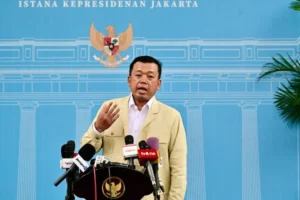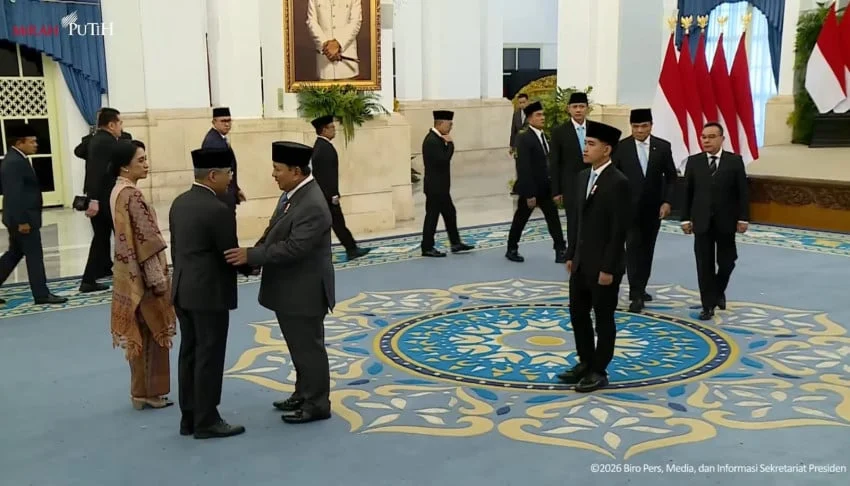
JAKARTA — The political landscape of Indonesia experienced another significant shift as President Prabowo Subianto executed yet another structural adjustment within the executive branch. Suahasil Nazara was officially sworn in as the new Minister of Finance on Monday, September 14, 2026, stepping into the role under high-pressure economic circumstances. This transition marks a critical juncture for the administration’s economic governance, occurring just over a year after the previous finance chief assumed office.
The latest change at the helm of the Ministry of Finance highlights a period of intense administrative agility and continuous evaluation under the current government. Since the official formation and inauguration of the Red and White Cabinet in October 2024, President Prabowo has demonstrated a willingness to frequently adjust his ministerial lineup to align with shifting domestic priorities, macroeconomic challenges, and strategic governance goals.
The High-Profile Departure of Purbaya Yudhi Sadewa
The transition of power within the Ministry of Finance caught both financial markets and political observers by surprise. The former Minister of Finance, Purbaya Yudhi Sadewa, whose tenure began on September 8, 2025, had his term cut short abruptly while he was actively participating in a working meeting at the Regional Representative Council (DPD RI) on Monday, September 14, 2026. The sudden nature of the recall underscored the fast-paced and demanding oversight maintained by the executive leadership over key economic portfolios.
Purbaya had originally stepped into the role following the departure of long-serving technocrat Sri Mulyani Indrawati in September 2025. During his brief tenure, Purbaya focused on navigating complex fiscal policies, managing state revenues, and addressing post-pandemic budgetary constraints. However, mounting pressures regarding national economic performance and fiscal execution ultimately led to a swift executive decision to restructure leadership at the ministry.
Stepping into the vacancy is Suahasil Nazara, a seasoned bureaucrat and economist who previously served as the Deputy Minister of Finance. His promotion to the top cabinet post is viewed by financial analysts as a move toward administrative continuity. Having worked closely within the ministry’s core leadership structure, Nazara possesses an intimate understanding of ongoing fiscal reforms, state budget negotiations with the House of Representatives (DPR), and the intricate mechanisms of national financial planning.
A Chronology of Red and White Cabinet Reshuffles
The departure of Purbaya Yudhi Sadewa and the subsequent elevation of Suahasil Nazara represent the seventh cabinet reshuffle since President Prabowo Subianto took office in October 2024. The frequency of these structural adjustments reflects an administration prioritizing performance, responsiveness, and ideological alignment across all state sectors. Below is the comprehensive timeline of major cabinet realignments that have shaped the Red and White Cabinet.
The First Reshuffle: February 2025
The initial test of cabinet stability occurred on Wednesday, February 19, 2025. President Prabowo executed his first targeted replacement by altering the leadership of the Ministry of Higher Education, Science, and Technology (Mendiktisaintek). Satryo Soemantri Brodjonegoro stepped down from the ministerial post and was succeeded by Brian Yuliarto. This early change signaled the administration’s intent to closely monitor institutional performance in the education and research sectors, which are vital for human capital development.
The Second Reshuffle: September 8, 2025
A major turning point for the Red and White Cabinet occurred on Monday, September 8, 2025, when President Prabowo orchestrated a sweeping overhaul involving four ministerial positions and one high-level vice-ministerial post. This reshuffle aimed to revitalize key economic, social, and religious portfolios.
The prominent changes included the appointment of Purbaya Yudhi Sadewa as Minister of Finance, taking over from Sri Mulyani. In the same decree, Mukhtarudin was installed as the Minister of Migrant Worker Protection and Head of the Indonesian Migrant Worker Protection Agency, replacing Abdul Kadir Karding. Furthermore, Ferry Joko Yuliantono was appointed Minister of Cooperatives, succeeding Budi Arie Setiadi. The religious sector also saw expansion with the establishment and staffing of the Ministry of Haji and Umrah, featuring Mochamad Irfan Yusuf as Minister and Dahnil Anzar Simanjuntak as Vice Minister.
The Third Reshuffle: September 17, 2025
Barely ten days after the substantial September 8 overhaul, a third wave of adjustments took place on September 17, 2025. This round addressed national security and youth affairs, alongside targeted replacements in sub-cabinet leadership.
Djamari Chaniago was brought in as the new Coordinating Minister for Political and Security Affairs (Menko Polkam), taking over the critical security portfolio from Budi Gunawan. Concurrently, Erick Thohir transitioned to lead the Ministry of Youth and Sports, succeeding Dito Ariotedjo.
In addition to the cabinet-level shifts, three vice-ministerial positions were reassigned. Afriansyah Noor took office as the Deputy Minister of Manpower, replacing Immanuel Ebenezer. Rohmat Marzuki was appointed Deputy Minister of Forestry, succeeding Sulaiman Umar. Finally, Farida Farichah assumed the role of Deputy Minister of Cooperatives, stepping in for Ferry Joko Yuliantono, who had been promoted to full minister just weeks prior.
Macroeconomic Implications and Market Reactions
The rapid succession of leadership changes at the Ministry of Finance naturally invites scrutiny from international rating agencies, foreign investors, and domestic economic stakeholders. Financial markets inherently value stability and predictability, particularly regarding fiscal policy, sovereign debt management, and the national budget deficit.
The appointment of Suahasil Nazara, however, has provided a degree of reassurance to the financial sector. Because Nazara is a familiar face to international financial institutions, central bank officials, and market analysts, his ascension minimizes the friction typically associated with sudden ministerial transitions. His academic background in economics and extensive experience within the Ministry of Finance ensure that policy formulation regarding tax reform, state expenditure, and economic stimulus packages will face minimal interruption.
Economic analysts note that the new Finance Minister faces a demanding checklist. Indonesia continues to navigate global economic uncertainties, fluctuating commodity prices, and inflationary pressures. Maintaining fiscal discipline while ensuring adequate funding for the government’s flagship social and infrastructure programs will be Nazara’s primary challenge. Furthermore, coordinating closely with Bank Indonesia to maintain monetary and fiscal synergy remains paramount as the nation targets sustainable economic growth.
Political Context and Governance Dynamics
The frequent reshuffling within the Red and White Cabinet underscores President Prabowo’s hands-on management style. Political observers suggest that the administration is operating with a low tolerance for administrative stagnation, preferring to replace officials immediately if performance metrics or policy execution fall short of expectations.
While frequent cabinet changes can sometimes be interpreted as political instability, in the context of the current administration, they are largely viewed as a mechanism of continuous calibration. President Prabowo has consistently emphasized the need for a "gotong royong" (mutual cooperation) cabinet capable of delivering tangible results to the public rapidly.
The inclusion of experienced technocrats like Suahasil Nazara alongside political appointees reflects a pragmatic balancing act. The government aims to maintain strong political coalition support in the legislature while simultaneously placing competent professionals at the helm of technical ministries that dictate the nation’s financial and economic health.
Outlook for the Ministry of Finance
As Suahasil Nazara assumes his duties as Minister of Finance, all eyes will be on the upcoming fiscal quarters and the execution of the state budget. The ministry must balance ambitious state development agendas with prudent debt management and revenue optimization.
With international markets closely monitoring Indonesia’s fiscal stance, Nazara’s immediate priority will be to project confidence, ensure regulatory transparency, and maintain open communication channels with domestic and global investors. The success of his tenure will ultimately be measured by his ability to safeguard Indonesia’s economic resilience amidst a complex and rapidly evolving global financial landscape.