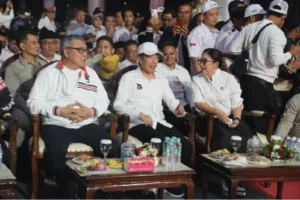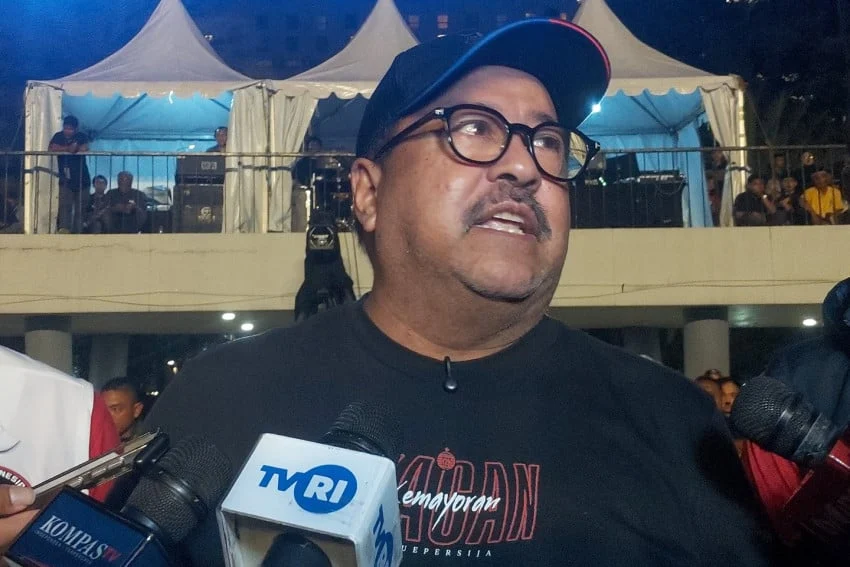
Jakarta, Indonesia – As the global football community eagerly awaits the climax of the FIFA World Cup 2026, Deputy Governor of DKI Jakarta, Rano Karno, has publicly declared his pick for the coveted trophy, throwing his support behind Spain in what he anticipates will be a fiercely contested final against Argentina. Speaking at the "Festival Rakyat Bola Gembira" public viewing event held at Lapangan Banteng, Central Jakarta, on Sunday, July 19, 2026, Karno, affectionately known as "Bang Doel," predicted a slender margin of victory for the Spanish squad in the highly anticipated match scheduled for Monday, July 20, 2026, early morning. His endorsement adds a notable voice to the chorus of predictions from fans and pundits worldwide, underscoring the universal excitement surrounding the pinnacle of international football.
A Public Figure’s Prediction Amidst National Fervor
Rano Karno, a prominent figure in Indonesian public life known for his illustrious acting career before transitioning into politics, including his current role as Deputy Governor, articulated his preference for Spain to emerge victorious. "I support Spain," Karno stated clearly during the event, drawing attention to his choice amidst a sea of passionate football enthusiasts. His prediction of a "narrow victory" for the "Matador" squad reflects an acknowledgment of Argentina’s formidable strength and the high stakes of a World Cup final, suggesting a match likely to be decided by fine margins, potentially even extending into extra time or a penalty shootout. Such public declarations by influential figures like Karno often serve to amplify the national discussion and engagement surrounding major sporting events, connecting with the populace on a shared passion.
The "Festival Rakyat Bola Gembira" event itself was a testament to Indonesia’s profound love for football. Lapangan Banteng, a significant public space in Jakarta, was transformed into a vibrant hub of communal celebration, drawing thousands of spectators eager to experience the final together. Large screens, food stalls, and entertainment created an electrifying atmosphere, characteristic of the unique Indonesian "nobar" (nonton bareng, or watching together) culture. These events are not merely about watching a game; they are social phenomena that foster community spirit, allowing diverse groups of people to unite under the banner of sports. The presence of public officials like Rano Karno at such gatherings further legitimizes and celebrates this communal aspect, demonstrating governmental support for public engagement and recreational activities.
The FIFA World Cup 2026: A Tournament of Historic Proportions
The FIFA World Cup 2026, co-hosted across three North American nations—the United States, Canada, and Mexico—stands as a landmark event in the tournament’s history. It is the first World Cup to feature an expanded format with 48 participating nations, a significant increase from the previous 32. This expansion has led to a more extensive group stage, promising even greater global representation and a broader array of competitive matches. The tournament’s scale, spanning multiple time zones and cultures, presents unprecedented logistical challenges but also offers immense opportunities for global engagement and economic impact. From the initial group stage clashes to the tense knockout rounds, the path to the final for both Spain and Argentina would have been arduous, demanding peak performance, tactical brilliance, and unwavering resilience.
The journey of Spain to the final, as hypothetically envisioned leading to Rano Karno’s prediction, would likely have been characterized by their traditional strengths: meticulous ball possession, intricate passing, and a strong emphasis on technical prowess. Under the guidance of their coaching staff, Spain would have navigated through a challenging group stage, showcasing their blend of seasoned veterans and emerging young talents. Their knockout stage progression might have seen them overcome European powerhouses and resilient South American contenders, demonstrating an evolution of their "tiki-taka" style, adapting it to modern football’s demands for speed and defensive solidity. Key players, both experienced maestros and breakout stars, would have been instrumental in their campaign, delivering crucial goals and defensive masterclasses. Their path would symbolize a renaissance of Spanish football, aiming to recapture the glory of their 2010 triumph.
Argentina’s route to the final, on the other hand, would invariably have revolved around the enduring brilliance of their talismanic captain, Lionel Messi, alongside a robust and tactically astute squad. Building on their recent successes, including potentially defending their Copa América title or even their 2022 World Cup crown, Argentina would have demonstrated a blend of defensive solidity, explosive counter-attacks, and individual moments of genius. Their journey would have seen them overcome physical European teams and cunning African sides, relying on their collective spirit and Messi’s unparalleled ability to unlock defenses. The narrative surrounding Argentina would undoubtedly be steeped in the pursuit of further glory for Messi, cementing his legacy as arguably the greatest player of all time, potentially leading his nation to another historic victory on the global stage. The emotional weight carried by the Argentine squad, driven by their passionate fan base, would have been a significant factor throughout their campaign.
The Grand Finale: A Tactical Preview of Spain vs. Argentina
The hypothetical final between Spain and Argentina, as anticipated by Rano Karno, presents a fascinating tactical clash. Spain’s likely approach would involve dominating possession, controlling the tempo of the game through their midfield, and patiently probing for openings. Their strength would lie in their ability to circulate the ball quickly, drawing opponents out of position, and exploiting spaces with incisive passes. The challenge for Spain would be to break down Argentina’s potentially compact and disciplined defense, while also being wary of their rapid transitions and counter-attacking threats. The Spanish defense, likely built on solid partnerships and tactical awareness, would need to be vigilant against the individual brilliance of Argentine forwards.
Argentina, conversely, would likely adopt a more pragmatic approach, potentially ceding possession for periods and looking to hit Spain on the break. Their strategy would heavily rely on the creative genius of Messi, who could drop deep to orchestrate attacks or surge forward to finish chances. The defensive discipline of Argentina’s midfield and backline would be crucial in stifling Spain’s intricate play, forcing them into wider areas or hurried passes. Set pieces would also represent a significant opportunity for Argentina, given their aerial prowess and Messi’s delivery. The "narrow victory" predicted by Karno could materialize through a single moment of individual brilliance, a perfectly executed set-piece, or even a late goal in extra time, reflecting the finely balanced nature of two top-tier national teams vying for the ultimate prize. The psychological battle, especially if the game remains goalless or evenly matched for extended periods, would be as critical as the tactical one.
Indonesia’s Enduring Passion for Football and its Broader Impact
Indonesia, a nation of over 270 million people, possesses an insatiable appetite for football. The FIFA World Cup, in particular, transcends mere sport to become a significant cultural event, unifying people from all walks of life. Despite the substantial time differences that often see matches played in the early hours of the morning, millions of Indonesians faithfully tune in, gathering in homes, cafes, and public viewing centers. This collective passion fuels a vibrant football culture, where discussions about tactics, player performances, and predictions dominate conversations for weeks. The World Cup serves as a powerful reminder of football’s ability to bridge divides and create a sense of shared national experience, even when supporting foreign teams.
The "nobar" phenomenon, exemplified by the "Festival Rakyat Bola Gembira" at Lapangan Banteng, is a cornerstone of this passion. These events provide not just entertainment but also significant economic boosts to local communities. Vendors selling food, drinks, and merchandise thrive during such periods. Event organizers invest in infrastructure, creating temporary jobs and stimulating local economies. Beyond the immediate economic impact, these gatherings strengthen social bonds, allowing individuals to connect with their neighbors and broader community members over a shared interest. For public officials, attending and supporting such events is a way to engage directly with constituents, demonstrating accessibility and a connection to popular culture.
The World Cup 2026, with its expanded format and global reach, is projected to break previous viewership records, further solidifying football’s status as the world’s most popular sport. In Indonesia, this translates into unprecedented engagement, from grassroots football clubs to national media outlets. The implications extend beyond sports, touching on national identity, public health (through promoting sports), and international relations. The tournament becomes a global stage not just for footballing prowess but also for cultural exchange and diplomatic soft power. For the host nations, the economic benefits from tourism, infrastructure development, and increased international profile are immense, estimated to be in the billions of dollars.
Official Responses and Anticipated Public Sentiment
While Rano Karno’s statement was the primary official reaction cited, it is reasonable to infer that other government officials and event organizers would express similar sentiments of excitement and community engagement. Organizers of the "Festival Rakyat Bola Gembira" would likely highlight the overwhelming success of the event, emphasizing the peaceful and joyful atmosphere. Statements would likely praise the enthusiasm of the Indonesian public and reiterate the importance of such events for fostering national unity and recreational well-being. Security forces would also likely issue statements confirming smooth operations and public safety throughout the mass gathering.
Public sentiment leading up to a World Cup final is typically a mix of intense anticipation, nervous excitement, and a fervent hope for a memorable match. Social media would be abuzz with debates, memes, and real-time reactions. For many, the final is more than just a game; it is a cultural moment, a shared experience that will be remembered and discussed for years to come. The "narrow victory" prediction by Rano Karno would likely resonate with many fans, as it acknowledges the high quality of both teams and the inherent unpredictability of a major final. It adds a layer of intrigue, reinforcing the idea that this will be a contest of champions, with every moment carrying immense significance.
Broader Implications and the Legacy of the World Cup
The FIFA World Cup 2026, regardless of the eventual winner, will leave a lasting legacy. For the co-host nations, it will be a testament to their capacity to stage an event of monumental scale and complexity. For FIFA, it represents a bold step towards a more inclusive and globally representative tournament. For the participating nations, it is a chance to etch their names in history, inspire future generations of footballers, and unite their citizens in celebration.
Rano Karno’s simple prediction for Spain, delivered from a public stage in Jakarta, encapsulates the global reach and emotional resonance of the World Cup. It underscores how deeply interwoven international football is with local cultures and political figures, transforming a sporting event into a shared global narrative. As the clock ticks down to kick-off, the world holds its breath, ready to witness whether the "Matador" will indeed secure that predicted narrow victory, or if Argentina will once again defy expectations and lift the coveted golden trophy. The outcome will be debated, celebrated, or commiserated over, but the shared experience of the FIFA World Cup 2026 final will undoubtedly be a memorable chapter in the annals of sporting history.