Jakarta (ANTARA) – Queen Máxima of the Netherlands recently concluded a significant working visit to Indonesia, spanning from Monday, November 24, to Thursday, November 27, 2025. Her presence in the archipelago was not in her capacity as the reigning monarch of the Netherlands but rather as the United Nations Secretary-General’s Special Advocate (UNSGSA) for Inclusive Finance for Development, a role she has passionately championed for over a decade. This crucial mission underscored her unwavering commitment to promoting financial health, resilience, and economic empowerment across the globe, with a particular focus on developing nations like Indonesia, which stand at the forefront of digital financial innovation and inclusion efforts.
The visit, her fifth to Indonesia in total and fourth as UNSGSA, was meticulously structured to engage with a diverse array of stakeholders, from grassroots communities and small and medium-sized enterprises (SMEs) to high-level government officials and international development organizations. The overarching goal was to assess progress, identify remaining challenges, and advocate for policies and innovations that further deepen financial inclusion, ensuring that more individuals and businesses have access to and effectively utilize beneficial financial products and services. Her itinerary traversed key economic hubs and burgeoning communities, including the industrial heartlands of Sragen and Bekasi in West Java, the cultural and entrepreneurial vibrant city of Solo in Central Java, and the political and financial epicentre of Jakarta. This multi-city approach allowed Queen Máxima to gain a comprehensive understanding of Indonesia’s varied landscape in financial inclusion, observing both its successes and areas ripe for further development.
The Mandate of the UNSGSA: A Global Call for Financial Health
As UNSGSA, Queen Máxima plays a pivotal role in advocating for global financial inclusion, working to raise awareness, encourage partnerships, and promote action to achieve universal access to and responsible use of financial services. Her mandate extends beyond mere access to financial products; it encompasses the broader concept of "financial health," which refers to the ability to manage daily finances, cope with financial shocks, and invest in the future. This holistic approach recognizes that true financial inclusion contributes directly to several United Nations Sustainable Development Goals (SDGs), including poverty reduction (SDG 1), gender equality (SDG 5), decent work and economic growth (SDG 8), and reducing inequalities (SDG 10).
Since her appointment in 2009, Queen Máxima has been a tireless advocate, leveraging her unique position to convene leaders, share best practices, and champion policy reforms that enable more people, particularly women, rural populations, and micro-entrepreneurs, to participate in the formal financial system. Her previous UNSGSA visits to Indonesia in 2012, 2016, and 2018 have built a strong foundation of engagement, allowing for a continuous dialogue on the nation’s progress and evolving strategies in this critical area. Her state visit with King Willem-Alexander in 2020, though focused on broader bilateral relations, also touched upon economic cooperation and sustainable development, further solidifying the Netherlands’ commitment to Indonesia’s prosperity.
Indonesia, with its vast archipelago, diverse demographics, and rapidly digitizing economy, presents both significant opportunities and complex challenges for financial inclusion. According to the Global Findex Database, while Indonesia has made commendable strides in increasing financial account ownership, a substantial portion of its adult population remains unbanked or underbanked. Many still rely heavily on informal financial mechanisms, which often lack the security, transparency, and growth potential offered by formal financial services. The government, through institutions like the Financial Services Authority (OJK) and Bank Indonesia (BI), has launched ambitious national strategies to accelerate financial inclusion, recognizing its vital role in fostering economic growth, reducing inequality, and strengthening resilience against economic shocks. Queen Máxima’s visit served to acknowledge these efforts, offer international perspectives, and explore avenues for enhanced collaboration.
Chronology of a Mission: A Deep Dive into Indonesia’s Financial Landscape
The three-day working visit was packed with strategic engagements, demonstrating Queen Máxima’s hands-on approach and dedication to understanding local contexts.
Tuesday, November 25: Central Java’s Economic Pulse and Women’s Empowerment
Queen Máxima commenced her itinerary in Central Java, a region celebrated for its vibrant manufacturing and traditional crafts. Her first stop was a garment factory in Sragen Regency, a critical sector employing a large number of women. Here, the focus was on understanding the financial realities of factory workers, many of whom are migrants or have limited access to formal financial services. Discussions revolved around the importance of wage digitization, access to micro-savings accounts, and basic financial literacy programs that empower employees to manage their earnings effectively, plan for emergencies, and build long-term financial stability. She engaged directly with workers, listening to their experiences and learning about the impact of digital payment solutions on their daily lives. A factory representative stated, "Her Majesty’s visit truly highlighted the importance of financial education for our employees. We are exploring initiatives to integrate financial literacy into our training programs, ensuring our workforce can better manage their hard-earned money."
Following this, Queen Máxima traveled to Kampung Batik Laweyan in Solo, a renowned hub for traditional batik production and a thriving ecosystem of micro, small, and medium-sized enterprises (MSMEs). This visit was designed to explore how financial services can support the growth and resilience of these culturally significant businesses. Discussions focused on access to affordable credit for working capital, digital payment solutions for sales and procurement, and the potential of e-commerce platforms to expand market reach for batik artisans. The Queen observed firsthand how digital financial tools could help these traditional businesses overcome liquidity challenges and connect to broader markets, thereby preserving cultural heritage while fostering economic growth. A local batik entrepreneur remarked, "Access to digital payments has transformed how we do business, especially after the pandemic. Queen Máxima’s interest shows that our efforts here resonate globally."
The day culminated with her attendance at a Women’s World Banking event held at the majestic Pura Mangkunegaran in Solo. This high-profile gathering brought together young professionals, university students, and female entrepreneurs, providing a platform for direct engagement with Queen Máxima. The discussions were dynamic, centering on personal experiences with financial products and services, the challenges women face in accessing finance, and innovative solutions to bridge these gaps. Topics included gender-responsive financial product design, digital literacy for women, and the role of mentorship in fostering female entrepreneurship. Queen Máxima emphasized the transformative power of financial inclusion for women, stating, "When women are financially empowered, entire communities thrive. It is crucial to design financial services that truly meet their unique needs and aspirations."
Wednesday, November 26: Jakarta’s Policy Dialogue and Bekasi’s Innovative Solutions
The second day of the visit shifted focus to policy dialogue and innovative housing solutions. In the morning, Queen Máxima participated in a roundtable discussion with various development organizations at the local United Nations office in Jakarta. This session served as a critical forum for aligning strategies, sharing data, and coordinating efforts to advance financial inclusion in Indonesia. Representatives from UN agencies, international non-governmental organizations, and local development partners discussed their ongoing projects, challenges in implementation, and opportunities for greater impact through collaborative initiatives. The dialogue also touched upon the role of financial inclusion in achieving the broader Sustainable Development Goals, particularly in post-pandemic recovery efforts. A UN official noted the value of the Queen’s advocacy: "Her Majesty’s ability to convene diverse stakeholders is invaluable in driving forward the financial inclusion agenda, ensuring that policies are impactful and inclusive."
Subsequently, Queen Máxima visited the International Finance Corporation (IFC), a member of the World Bank Group, in Jakarta. The discussions with IFC leadership centred on the development of innovative lending products and investment strategies that contribute to sustainable economic growth and improved financial health. Key areas of focus included financing for MSMEs, green financing initiatives, and leveraging private sector investment to expand access to finance for underserved populations. The IFC highlighted its ongoing efforts to support digital infrastructure and financial technology (fintech) innovations in Indonesia, which are crucial for scaling financial inclusion. An IFC spokesperson underlined the corporation’s commitment: "Our partnership with Indonesia is robust, and Queen Máxima’s insights help us refine our approach to creating more inclusive and sustainable financial markets."
A highlight of the day was Queen Máxima’s visit to the Gran Harmoni Cibitung subsidized housing complex in Bekasi Regency, West Java. This innovative development provides low-emission homes for low and middle-income communities, addressing the critical need for affordable housing. During her visit, Queen Máxima personally toured a resident’s home and interacted with representatives of first-time homebuyers, hearing their stories and understanding the financial mechanisms that enabled them to achieve homeownership.
Crucially, she also observed a unique local innovation: a "bank sampah" (waste bank) system that allows residents to pay housing installments using sorted recyclable waste. This ingenious model not only promotes environmental sustainability but also provides an accessible and flexible payment method for residents, especially those with irregular incomes. The Queen also witnessed the contract signing process for dozens of prospective homeowners, symbolizing the realization of their dreams. This visit underscored the potential of integrating financial services with environmental and social objectives, creating holistic solutions for community development. The developer expressed pride in the initiative: "The ‘bank sampah’ system is a testament to how local innovation can bridge financial access and environmental responsibility, and we were honored to share it with Her Majesty."
In the afternoon, Queen Máxima visited Deloitte Indonesia to engage with employers on their role in fostering the financial health of their employees and clients. Discussions focused on corporate responsibility in promoting financial literacy, offering employee benefits that enhance financial well-being, and integrating financial health considerations into client services. This engagement highlighted the private sector’s crucial role in creating an ecosystem that supports broader financial inclusion beyond traditional banking services. A Deloitte representative commented, "We believe businesses have a vital role in nurturing the financial health of their ecosystem, and Queen Máxima’s advocacy strengthens this conviction."
Thursday, November 27: High-Level Policy Engagement and Presidential Audience
The final day of Queen Máxima’s visit was dedicated to high-level policy discussions and an audience with Indonesia’s President. She participated in a pivotal agenda on financial literacy with key regulatory and monetary authorities: the Financial Services Authority (OJK), Bank Indonesia (BI), and the Ministry of Finance (Kemenkeu) of the Republic of Indonesia. These meetings provided an opportunity to discuss national strategies for financial literacy and inclusion, the regulatory framework supporting digital financial innovation, and the challenges of reaching remote populations. The discussions likely touched upon the implementation of the National Strategy for Financial Inclusion (SNKI), progress in digital financial services adoption, and future policy directions to ensure equitable and responsible financial access. OJK officials reportedly shared data on the increasing penetration of financial services, while acknowledging the need for continuous education to prevent financial fraud and promote informed decision-making.
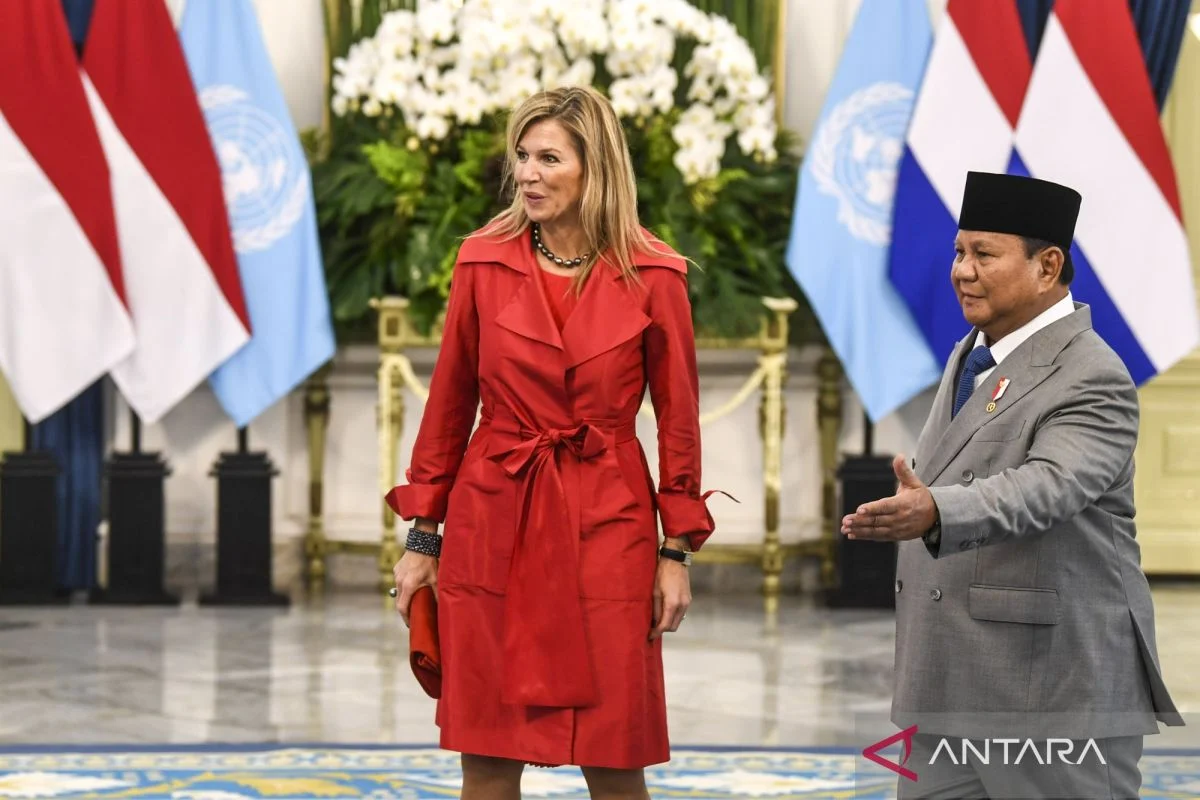
The culmination of her visit was a meeting with President Prabowo Subianto at the Merdeka Palace in Jakarta. This high-level engagement allowed Queen Máxima to convey her findings and impressions from her extensive tour, offering insights gathered from grassroots interactions and policy discussions. The meeting, which included a private one-on-one session and a luncheon, served to reinforce the strong bilateral ties between the Netherlands and Indonesia and to underscore the shared commitment to advancing financial inclusion as a cornerstone of sustainable development. President Prabowo likely reiterated Indonesia’s dedication to improving the welfare of its citizens through inclusive economic policies and expressed gratitude for Queen Máxima’s consistent advocacy. Such a high-profile endorsement from both sides signifies a mutual understanding of the profound impact financial inclusion has on national prosperity and social equity. A statement from the Presidential Palace confirmed that the discussions were constructive, focusing on pathways for continued cooperation in financial sector development and poverty alleviation.
Broader Impact and Implications: A Catalyst for Progress
Queen Máxima’s visit to Indonesia as UNSGSA carries significant implications. Firstly, it provides a powerful international endorsement of Indonesia’s ongoing efforts in financial inclusion. Her advocacy helps to shine a global spotlight on the country’s innovations, such as the "bank sampah" initiative, which could inspire similar models elsewhere. Secondly, the visit facilitates direct dialogue between international best practices and local realities, potentially leading to the refinement of national policies and strategies. The interactions with OJK, BI, and Kemenkeu are crucial for ensuring that regulatory frameworks are conducive to innovation while safeguarding consumer interests.
Thirdly, her engagements with diverse stakeholders – from factory workers to entrepreneurs and development organizations – foster a multi-pronged approach to financial inclusion. It highlights that progress requires collaboration across government, private sector, and civil society. The focus on women’s financial empowerment and youth engagement is particularly vital, given their potential to drive future economic growth and social change.
Finally, the consistent high-level engagement from Queen Máxima reinforces the long-standing bilateral relationship between the Netherlands and Indonesia. While her role is distinct from her royal duties, her visits inevitably strengthen diplomatic ties and open doors for further cooperation in various sectors, including sustainable development and economic partnership. Her presence serves as a catalyst, not just for policy discussions, but also for inspiring a renewed sense of urgency and collaboration in the collective journey towards a financially inclusive world, where every individual has the opportunity to build a better future.