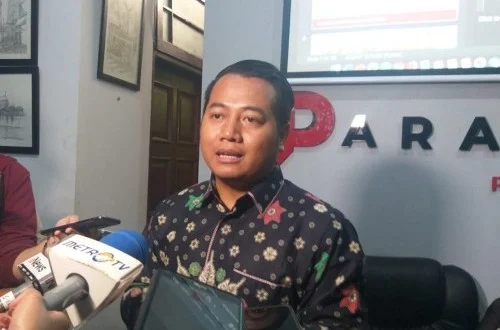
REPUBLIKA.CO.ID, JAKARTA – Former Central Java Deputy Governor for the 2018-2023 term, Taj Yasin Maimoen, has emerged as the most popular figure in the early preliminary polls for the Central Java gubernatorial election. This finding was revealed by the survey institution Parameter Politik Indonesia, based on data collected between May 15 and May 21, 2024. The results, presented by Executive Director of Parameter Politik Indonesia, Adi Prayitno, in an online release viewed from Jakarta on Wednesday, May 29, 2024, indicate a dynamic start to the race for one of Indonesia’s most politically significant provinces.
Adi Prayitno detailed the methodology and results, stating, "We asked respondents one by one, ‘Sir, Madam, are you familiar with the following figure?’ So, we asked each respondent, and approximately 52.1 percent of them stated that they recognized the name Taj Yasin." This direct approach aimed to gauge raw public recognition, a crucial initial metric in political surveys. The survey’s early timing underscores the fluid nature of pre-election dynamics, offering a preliminary glimpse into public sentiment as political parties gear up for candidate selection and coalition formation.
Following Taj Yasin Maimoen, Hendrar Prihadi, who currently serves as the Head of the Government Procurement Policy Agency (LKPP), secured the second position with a recognition rate of 40 percent. Bupati Kendal, Dico Ganinduto, rounded out the top three, registering a popularity score of 38.1 percent. Adi Prayitno emphasized that these individuals are considered to have significant potential, frequently discussed or linked to the prospect of running in the Central Java gubernatorial election. "These are the people whom we believe have potential or are often talked about, or are always associated with the possibility of advancing in the Central Java Pilkada. So, if we calculate them one by one, this is the general picture of their popularity," he added, clarifying the rationale behind selecting these figures for the survey.
Despite these initial findings, Prayitno cautioned that none of the popular figures have yet achieved a "shining" or overwhelmingly dominant status. This suggests a wide-open race where public perception remains highly malleable, and substantial shifts could occur as the election cycle progresses, formal candidacies are announced, and campaign activities intensify. The absence of a clear frontrunner with an exceptionally high popularity rating indicates that voters in Central Java are still in the process of evaluating potential leaders, setting the stage for a potentially competitive and engaging election.
The Strategic Importance of Central Java in Indonesian Politics
Central Java is not merely one of Indonesia’s 38 provinces; it is a vital political battleground, often referred to as a barometer for national political trends. With a population exceeding 37 million, it is the second most populous province in Indonesia, after West Java. Historically, Central Java has been a stronghold of the PDI-P (Indonesian Democratic Party of Struggle), consistently delivering significant votes for the party in both legislative and presidential elections. The province is also a bedrock for Nahdlatul Ulama (NU), the largest Islamic organization in Indonesia, which wields immense social and political influence through its vast network of pesantren (Islamic boarding schools) and community organizations.
The interplay between secular-nationalist parties like PDI-P and the religiously conservative yet moderate NU base creates a unique political dynamic. Candidates often seek to bridge these two major voting blocs, either by aligning with parties that represent these ideologies or by selecting running mates who can appeal to the complementary segment. The outcome of the Central Java gubernatorial election (Pilkada) is therefore closely watched, not only for its regional implications but also for its potential ripple effect on national politics and the future trajectory of major political parties. The 2024 Pilkada, held simultaneously across Indonesia, takes on added significance as it follows closely on the heels of the hotly contested presidential and legislative elections, reflecting shifting political alliances and power dynamics.
Unpacking the Survey Methodology and Context
Parameter Politik Indonesia’s survey, conducted from May 15-21, 2024, employed a direct interview method to gauge public recognition. While specific details such as sample size, margin of error, and multi-stage random sampling methods were not explicitly detailed in the initial report, reputable survey institutions in Indonesia typically adhere to scientific polling standards. A typical provincial-level survey would involve a sample size of around 800-1,200 respondents, distributed proportionally across regencies and cities, with a margin of error of approximately 2.5-3.5 percentage points. The "one-by-one" questioning technique helps minimize bias and ensures each respondent’s independent assessment of candidate familiarity.
It is crucial to distinguish between "popularity" (recognition) and "electability" (the likelihood of being chosen by voters). While popularity is a prerequisite for electability, it does not guarantee it. A candidate might be widely recognized but not necessarily favored by a large segment of the electorate due to various factors such as perceived performance, public image, policy stances, or party affiliation. Adi Prayitno’s observation that no candidate has yet "shined" suggests that while these figures are known, they have not yet captured the public imagination to an extent that would make them undisputed frontrunners. This gap highlights the importance of subsequent stages of the election cycle, where candidates must translate their recognition into tangible support through effective campaigning, compelling visions, and strong political endorsements.
Profiles of the Leading Candidates
Taj Yasin Maimoen: The Santri Leader with Political Pedigree
Taj Yasin Maimoen, often affectionately called Gus Yasin, carries a significant political and religious legacy. He is the son of the late K.H. Maimoen Zubair (Mbah Moen), one of Indonesia’s most revered and influential ulama (Islamic scholars) and a former spiritual leader of the United Development Party (PPP). This lineage immediately grants him immense respect and a strong base among the santri (devout Muslim) community, particularly those affiliated with Nahdlatul Ulama, which Mbah Moen helped shape.
Born in Rembang, Central Java, Gus Yasin has been actively involved in religious and social organizations before entering formal politics. His tenure as Deputy Governor of Central Java from 2018 to 2023, serving alongside the immensely popular Ganjar Pranowo, provided him with valuable experience in regional governance and increased his public exposure across the province. During his term, he focused on issues related to religious affairs, education, and community empowerment, aligning with his background. His strengths lie in his strong connection to the NU network, his perceived integrity, and his ability to appeal to a broad spectrum of voters who value religious leadership and humility. However, PPP’s relatively smaller electoral footprint compared to larger parties means he will likely need robust coalition support to secure a nomination.
Hendrar Prihadi: The Experienced Bureaucrat and PDI-P Stalwart
Hendrar Prihadi, widely known as Hendi, brings a wealth of executive experience to the table. He served as the Mayor of Semarang, the provincial capital, for two terms (2013-2022), during which he oversaw significant urban development and improvements in public services. His leadership in Semarang earned him recognition for good governance and effective local administration. Currently, he holds a national position as the Head of the Government Procurement Policy Agency (LKPP), further burnishing his credentials as a capable administrator.
As a prominent cadre of the PDI-P, Hendi enjoys the backing of the dominant political force in Central Java. His long association with the party and his track record as a successful regional head make him a strong internal candidate for PDI-P. His strengths include his proven executive experience, his established network within the PDI-P machinery, and his appeal to urban voters and those who prioritize effective governance. The primary challenge for Hendi would be navigating the internal dynamics of PDI-P, which may have other potential candidates, and ensuring that his appeal extends beyond Semarang to the entire province.
Dico Ganinduto: The Young, Dynamic Regent from Golkar
Dico Ganinduto represents a newer generation of political leaders. As the current Regent of Kendal, he has gained experience in local governance. He is a prominent figure within the Golkar Party, one of Indonesia’s oldest and most established political parties. His relative youth and fresh perspective could be an asset in attracting younger voters, a demographic increasingly influential in Indonesian elections.
Dico’s strengths include his youthful energy, his experience as a regent, and the organizational backing of Golkar, which has a widespread network despite not being the dominant party in Central Java. His challenge lies in increasing his provincial-wide recognition and building a broader support base beyond Kendal. To become a serious contender, he would need to significantly boost his public profile and secure strong coalition partners to meet the nomination threshold.
The Pilkada 2024 Timeline and Process
The 2024 simultaneous regional elections (Pilkada Serentak 2024) are scheduled to culminate with voting on November 27, 2024. This extensive electoral process involves several critical stages:
- Candidate Nomination and Registration (August 27-29, 2024): Political parties or coalitions of parties must register their gubernatorial and deputy gubernatorial candidates with the General Election Commission (KPU). To nominate a pair, parties or coalitions must collectively hold at least 20% of the seats in the provincial legislative assembly (DPRD) from the 2024 legislative election, or have secured 25% of the popular vote in the previous legislative election.
- Health Checks and Verification (August-September 2024): Candidates undergo rigorous health examinations and administrative verification processes.
- Campaign Period (September 25 – November 23, 2024): This is the crucial phase where candidates engage with voters through rallies, debates, media advertisements, and door-to-door campaigns.
- Quiet Period (November 24-26, 2024): All campaign activities are prohibited to allow voters time for reflection.
- Voting Day (November 27, 2024): Citizens cast their ballots.
- Vote Counting and Recapitulation (November-December 2024): Results are tallied, and official winners are declared, potentially followed by dispute resolutions in the Constitutional Court.
The Parameter Politik Indonesia survey, conducted in May, falls well before the official registration period, meaning the political landscape is still highly dynamic. Parties are currently engaged in internal screening, lobbying, and coalition negotiations, which will ultimately determine the final slate of candidates.
Party Dynamics and Coalition Building
The 2024 Central Java gubernatorial election will largely be shaped by the ability of political parties to form effective coalitions. Given the 20% DPRD seat threshold for nomination, it is highly probable that most, if not all, candidate pairs will emerge from multi-party alliances.
- PDI-P’s Position: As the dominant party in Central Java, PDI-P holds significant leverage. They might be able to nominate a candidate with only one or two small coalition partners. The party’s decision—whether to nominate an internal cadre like Hendrar Prihadi, or to form a broader coalition by potentially backing another candidate or offering the deputy governor slot to a partner—will be critical. PDI-P also needs to carefully consider its post-presidential election strategy, balancing national priorities with regional aspirations.
- PPP’s Strategy: For Taj Yasin Maimoen, his party, PPP, will need to actively seek strong coalition partners. Given his popularity and NU background, he could be an attractive option for parties looking to tap into the religious vote, such as PKB (National Awakening Party), which also has strong NU ties, or potentially even Gerindra or Golkar, depending on their strategic calculations.
- Golkar’s Ambition: Golkar, with Dico Ganinduto, will also be actively pursuing alliances. They might look to partner with parties that can complement their base, possibly PKS (Prosperous Justice Party) or Demokrat, to form a competitive bloc.
- Other Parties: Parties like PKB, Gerindra, NasDem, PKS, and Demokrat will play crucial roles as kingmakers or potential coalition partners. Their decisions will be influenced by their performance in the 2024 legislative election, their national political alliances, and their assessment of which candidate pair offers the best chance of victory in Central Java. The outcome of the national presidential election could also influence regional party alignments, with winning coalitions potentially extending their collaboration to the regional level.
Popularity Versus Electability: The Crucial Distinction
Adi Prayitno’s statement that "tokoh-tokoh yang dianggap populer… belum ada yang bisa disebut mentereng" (the popular figures… none can yet be called shining) underscores the fundamental difference between popularity and electability. While Taj Yasin Maimoen, Hendrar Prihadi, and Dico Ganinduto show good public recognition, this does not automatically translate into a guaranteed victory.
Electability depends on several additional factors:
- Likability and Trust: Beyond mere recognition, do voters genuinely like and trust the candidate?
- Track Record and Competence: How do voters perceive their past performance and leadership abilities?
- Vision and Programs: Do candidates offer compelling solutions to the province’s challenges?
- Party Support and Endorsements: The strength of party machinery, internal cohesion, and endorsements from influential figures.
- Running Mate: The choice of a deputy governor candidate is critical for balancing the ticket, expanding voter appeal, and consolidating support from different regions or demographics.
- Campaign Effectiveness: The ability to communicate messages, mobilize voters, and manage resources throughout the campaign period.
- Financial Resources: Campaigns require substantial funding for outreach, logistics, and media presence.
The current survey reveals who is known, but the real test will be who can effectively persuade voters to choose them. This journey from recognition to election involves intensive political maneuvering, strategic alliance-building, and a robust campaign to articulate a compelling vision for Central Java.
Inferred Statements and Reactions from Stakeholders
While no explicit statements from political parties or candidates were included in the original report beyond Adi Prayitno’s analysis, one can infer typical reactions:
- From Parameter Politik Indonesia (Adi Prayitno): "This survey provides an early snapshot of public sentiment. It’s a baseline, not a definitive prediction. The race is still very open, and significant shifts can occur as candidates formally emerge and campaigns begin. Political parties should view these numbers as valuable input for their strategic planning and candidate selection processes, understanding that public recognition is the first step towards building electability."
- From Political Parties (e.g., PDI-P, PPP, Golkar): "We acknowledge and respect the findings of reputable survey institutions. These results are important considerations as we continue our internal discussions and candidate selection mechanisms. However, our party has its own comprehensive internal surveys and criteria for nominating candidates, which include not only popularity but also competence, integrity, and commitment to the people. We are actively engaging in communication with potential coalition partners to form the strongest possible ticket for Central Java."
- From Candidates (e.g., Taj Yasin, Hendrar Prihadi, Dico Ganinduto): "We are grateful for the public’s trust and recognition reflected in these early surveys. It motivates us to continue working for the betterment of Central Java. Should we be entrusted by our respective parties and coalitions to run, we are ready to serve the people and bring progress to the province. We believe in the democratic process and will adhere to the rules and regulations of the election."
Broader Implications and Future Outlook
The early popularity survey for the Central Java gubernatorial election sets the stage for what promises to be a highly contested race. The implications extend beyond the provincial borders, influencing national political narratives and the long-term strategies of major parties.
- Intensified Political Maneuvering: With candidate registration just months away, political parties will intensify their internal screenings, coalition negotiations, and public outreach. The coming months will see a flurry of meetings, declarations, and strategic alignments.
- Importance of Running Mates: The choice of a deputy governor will be paramount. A well-matched running mate can significantly boost a ticket’s appeal by balancing regional representation, religious-nationalist appeal, or tapping into different voter demographics.
- Campaign Focus: Candidates will need to articulate clear platforms addressing key issues in Central Java, such as economic development, employment, education, healthcare, and infrastructure. Their ability to connect with voters on these issues will be crucial.
- Potential for Surprises: The political landscape in Indonesia is known for its dynamism. Unexpected alliances, emerging dark horse candidates, or shifts in public opinion could still dramatically alter the trajectory of the race.
- Impact of National Politics: The political climate post-2024 Presidential Election, including the formation of the new government, could indirectly influence regional elections, with national political figures potentially endorsing candidates or providing campaign support.
The Central Java gubernatorial election is not merely a contest for leadership; it is a significant democratic exercise that reflects the aspirations and political preferences of millions. As the election cycle progresses, further surveys, candidate declarations, and campaign activities will provide a clearer picture of who will ultimately vie for the top leadership position in this critical Indonesian province. The journey from initial popularity to ultimate victory will demand strategic acumen, robust public engagement, and the ability to forge strong, winning coalitions.