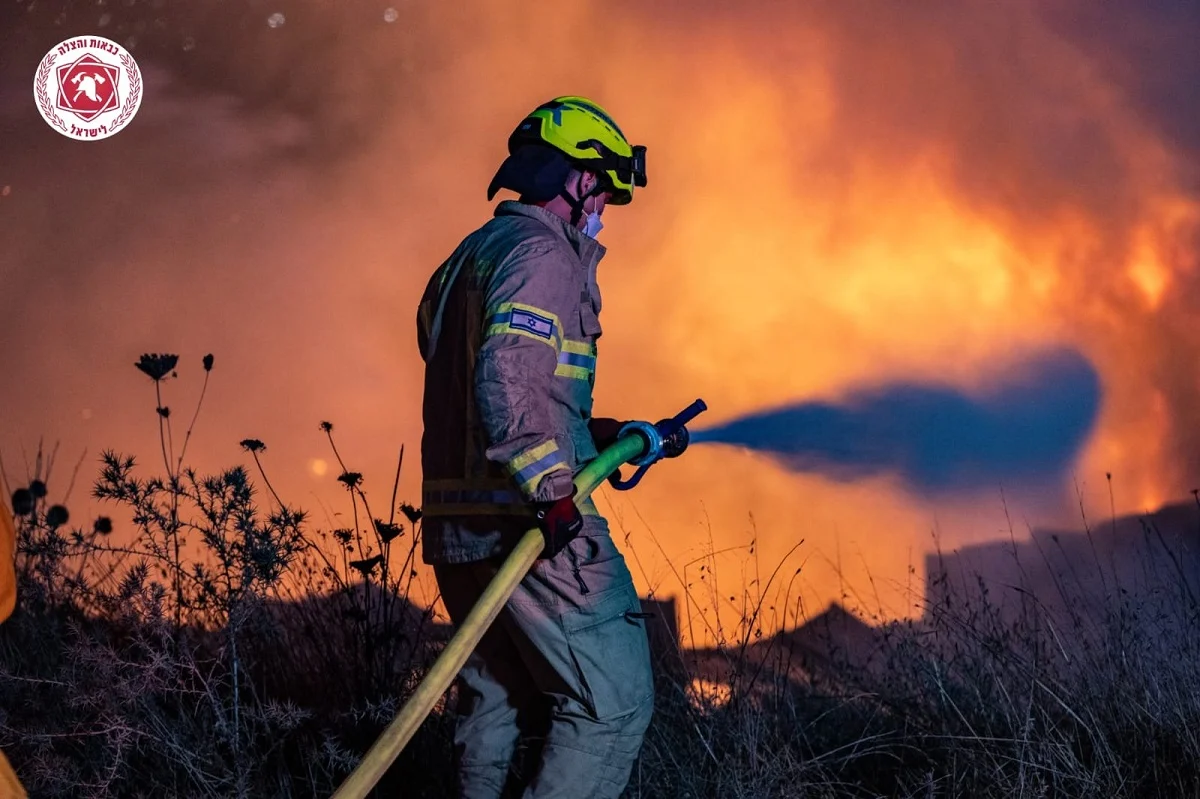
The first reports of the burgeoning inferno emerged around midday, initially targeting areas west of the Palestinian city of Nablus. The illegal Israeli settlement of Kedumim was among the first to be threatened, with two of its neighborhoods swiftly ordered to evacuate as the flames encroached. As the day progressed, the fire’s intensity escalated dramatically, spreading rapidly to the nearby illegal outpost of Havat Gilad, where residents were also compelled to flee their homes in a hurried evacuation. The Israeli Fire and Rescue Services, alongside other emergency and rescue teams from various regions, mounted a large-scale operation to combat the relentless blaze. This extensive effort was bolstered by aerial support, including reconnaissance helicopters to assess the fire’s spread and eight dedicated firefighting aircraft, which continuously dumped water and fire retardant on the active fronts.
Initial reports from the Israeli Fire and Rescue Services indicated that two firefighters sustained injuries during the arduous battle against the flames. Later in the evening, rescue services provided an updated casualty count, stating that "several people with minor injuries and one person with moderate injury" had been evacuated for advanced medical treatment at hospitals. The material toll was severe, with a preliminary assessment confirming the destruction of at least 13 residential homes and a substantial wooden warehouse within the affected settlements. Israeli police enacted immediate road closures in the vicinity, strategically maintaining emergency access routes clear for the continuous flow of rescue vehicles and personnel. The incident underscores the inherent vulnerabilities of communities in the arid and often volatile landscape of the West Bank, particularly during the hot summer months.
Chronology of the Disaster
The events of July 19, 2026, unfolded rapidly, painting a vivid picture of a region grappling with the escalating threat of climate change-induced wildfires in a politically charged environment.
- Midday, Saturday, July 19, 2026: First alarms were raised as multiple brushfires ignited in the scrubland and forested areas west of Nablus, a major Palestinian city in the northern West Bank. The exact cause of the initial ignition remains under investigation but dry vegetation and high temperatures were significant contributing factors.
- Early Afternoon: The fires, driven by gusts of wind, quickly spread towards the illegal Israeli settlement of Kedumim. Emergency services were immediately dispatched. Given the rapid progression, authorities issued evacuation orders for two neighborhoods within Kedumim to ensure the safety of residents.
- Mid-Afternoon: Despite initial firefighting efforts, the blaze proved formidable. The fire front continued its relentless advance, reaching the perimeter of Havat Gilad, another illegal Israeli outpost situated nearby. The severity of the threat prompted a full evacuation of all residents from Havat Gilad, transforming a tranquil Saturday afternoon into a scene of hurried exodus.
- Late Afternoon: A major emergency response was fully underway. Firefighting units from several districts, including those typically serving central Israel, were redeployed to the West Bank. The sheer scale of the fires necessitated significant aerial assets. Reconnaissance helicopters began providing real-time intelligence on fire spread, guiding the deployment of eight firefighting aircraft. These planes and helicopters executed continuous water and fire retardant drops, battling the towering flames and dense smoke.
- Evening: As dusk fell, the battle continued. Israeli Police implemented extensive road closures in the affected zones and on major arteries leading to the area, prioritizing the movement of emergency vehicles. The first reports of injuries emerged, initially citing two firefighters. As operations continued, updated medical assessments confirmed additional casualties among civilians and responders, though largely minor.
- Nightfall: Despite the heroic efforts of ground crews and aerial support, the fires had caused substantial damage. Initial damage assessments confirmed the loss of at least 13 homes and a large wooden storage facility. Firefighters continued to work through the night, focusing on containing the perimeter and preventing further spread to other communities. Authorities indicated that full containment might take days, given the extent of the scorched land and potential for flare-ups.
The Broader Context of West Bank Settlements
The fires in Kedumim and Havat Gilad occur within a highly contentious geopolitical landscape, bringing into sharp focus the complex status of Israeli settlements in the occupied West Bank. According to international law, all Israeli settlements built on Palestinian territory occupied since 1967 are considered illegal. This position is affirmed by numerous United Nations Security Council resolutions, the International Court of Justice, and the vast majority of the international community. These settlements are viewed as a major obstacle to the establishment of a viable Palestinian state and a lasting peace agreement.
Kedumim, established in 1975, is one of the older and larger settlements in the northern West Bank, with a population exceeding 4,000 residents. Like many settlements, it has expanded significantly over the decades, often annexing surrounding Palestinian land. Its presence profoundly impacts the lives of Palestinians in neighboring villages, restricting their movement, access to land, and natural resources.
Havat Gilad, meaning "Gilad’s Farm," holds a particularly controversial status even within the Israeli legal framework. It was initially established as an unauthorized "outpost" in 2002 by a group of settlers, without the formal permission of the Israeli government. Israeli outposts are typically small, often agricultural, and built without official authorization, making them illegal even under Israeli domestic law. However, in a move that drew widespread international condemnation, the Israeli government retroactively authorized Havat Gilad in 2018. This decision followed a deadly attack in the vicinity, which settlers used to press for its legalization. The retroactive authorization effectively granted the outpost legal status in Israel, despite its continued illegality under international law. This act was seen by critics as a direct challenge to international norms and a further entrenchment of the occupation.
As of early 2026, over 475,000 Israeli settlers reside in more than 130 official settlements and approximately 100 unauthorized outposts across the West Bank, excluding East Jerusalem. Their presence is often associated with land confiscation, resource appropriation, and increased friction with the local Palestinian population, creating a complex and often volatile security environment.
Environmental Factors and Climate Change
The wildfires on July 19, 2026, are not isolated incidents but rather part of a growing trend of increasingly frequent and severe fires across the Mediterranean basin, a phenomenon widely attributed to climate change. The summer months in the West Bank are characterized by high temperatures, prolonged drought, and often strong, dry winds, creating ideal conditions for wildfires to ignite and spread rapidly.
- Arid Conditions: The region naturally experiences an arid to semi-arid climate, making its vegetation highly susceptible to combustion, especially after long dry spells.
- Rising Temperatures: Scientific consensus points to a steady increase in average global temperatures, leading to hotter and longer heatwaves. The summer of 2026 had already seen several periods of extreme heat, drying out scrubland and forests to an unprecedented degree.
- Wind Patterns: Strong easterly winds, common in the region, can fan small fires into raging infernos within minutes, making containment exceptionally challenging for ground crews.
- Vegetation: The prevalent shrubland, pine forests, and olive groves, while vital to the ecosystem and local economy, can become highly flammable fuel sources during dry periods.
Experts warn that without significant global action to mitigate climate change and enhanced local strategies for fire prevention and management, such devastating events are likely to become even more common and intense in the coming years. This places an increased burden on emergency services and poses an existential threat to communities residing in fire-prone areas.
Official Responses and Humanitarian Concerns
Following the widespread destruction, reactions from various stakeholders have begun to emerge, focusing on immediate relief, long-term recovery, and the broader implications of the event.
Israeli Fire and Rescue Services: Spokespersons for the Israeli Fire and Rescue Services lauded the extraordinary efforts of their teams, emphasizing the challenging conditions under which they operated. "Our firefighters, supported by air assets, fought heroically against an incredibly aggressive blaze," stated a representative. "Their swift action undoubtedly saved many more homes and lives. We are monitoring the injured closely and providing all necessary support." They also highlighted the logistical complexity of coordinating a multi-district response in a rugged terrain.
Settler Leadership: Leaders from the affected settlements expressed profound shock and gratitude. "This is a devastating blow to our community," said a spokesperson for the Havat Gilad secretariat. "Thirteen families have lost everything. But we are resilient, and we are thankful for the incredible bravery of the firefighters and emergency personnel who risked their lives for us. We will rebuild, stronger than before." Calls for government assistance for reconstruction and enhanced fire prevention measures in settlements were immediately made.
Palestinian Authority (PA): While no direct statements regarding assistance to Israeli settlements were immediately issued, Palestinian officials often use such incidents to reiterate calls for an end to the occupation and the dismantling of settlements, viewing them as illegal infringements on Palestinian land. Humanitarian organizations operating in the West Bank, however, stressed the universal need for emergency preparedness and mutual aid in the face of natural disasters, regardless of political affiliation. The PA’s emergency services, which operate in Palestinian-controlled areas, often face their own challenges in terms of resources and coordination in a fragmented territory.
International Community: Organizations like the United Nations and various European Union representatives, while not specifically commenting on the fires, routinely reaffirm the illegality of Israeli settlements under international law and call for all parties to respect humanitarian principles. Such events, while tragic, can sometimes underscore the shared environmental threats faced by all communities in the region, regardless of political status.
Implications and Future Outlook
The wildfires in the northern West Bank carry multiple layers of implications, ranging from immediate humanitarian needs to long-term policy considerations.
- Immediate Humanitarian Crisis: The displacement of families and the destruction of homes create an immediate need for shelter, food, and psychological support. The emotional toll on those who lost their residences and witnessed the rapid spread of the fires is substantial.
- Economic Impact: The cost of the damage, including residential structures, personal property, and potentially agricultural land, will be significant. Reconstruction efforts will require substantial financial investment from the Israeli government and potentially private donors. The strain on emergency budgets for the extensive response operation is also considerable.
- Environmental Degradation: Beyond the immediate destruction, wildfires have long-term environmental consequences. They lead to soil erosion, especially on slopes, increasing the risk of landslides and flash floods in subsequent rainy seasons. The loss of vegetation impacts local biodiversity and wildlife habitats, requiring years for ecological recovery.
- Security and Preparedness: The incident highlights the critical need for robust emergency infrastructure and coordination in a highly sensitive region. It may prompt calls for increased investment in fire prevention, early warning systems, and enhanced cross-boundary cooperation on emergency response, a concept often complicated by the political realities of the West Bank.
- Political Discourse: While not directly a political event, the fires inevitably intertwine with the ongoing Israeli-Palestinian conflict. The vulnerability of settlements, their contested legal status, and the challenges of managing resources across dividing lines will likely be topics of renewed discussion in both domestic Israeli politics and international diplomatic circles.
- Climate Adaptation: The event serves as a stark reminder of the urgent need for climate adaptation strategies in the Middle East. This includes better forest management, urban planning that considers fire risks, and public awareness campaigns on preventing human-caused ignitions.
As the smoke clears and the full extent of the devastation becomes apparent, the communities of Kedumim and Havat Gilad face a challenging path to recovery. The fires of July 19, 2026, stand as a grim testament to the increasing vulnerability of human settlements to the ravages of climate change, further complicated by the unique and contentious geopolitical landscape of the occupied West Bank. The ongoing efforts to contain and extinguish the remaining embers underscore the persistent dedication of emergency responders and the enduring resilience of the affected populations.