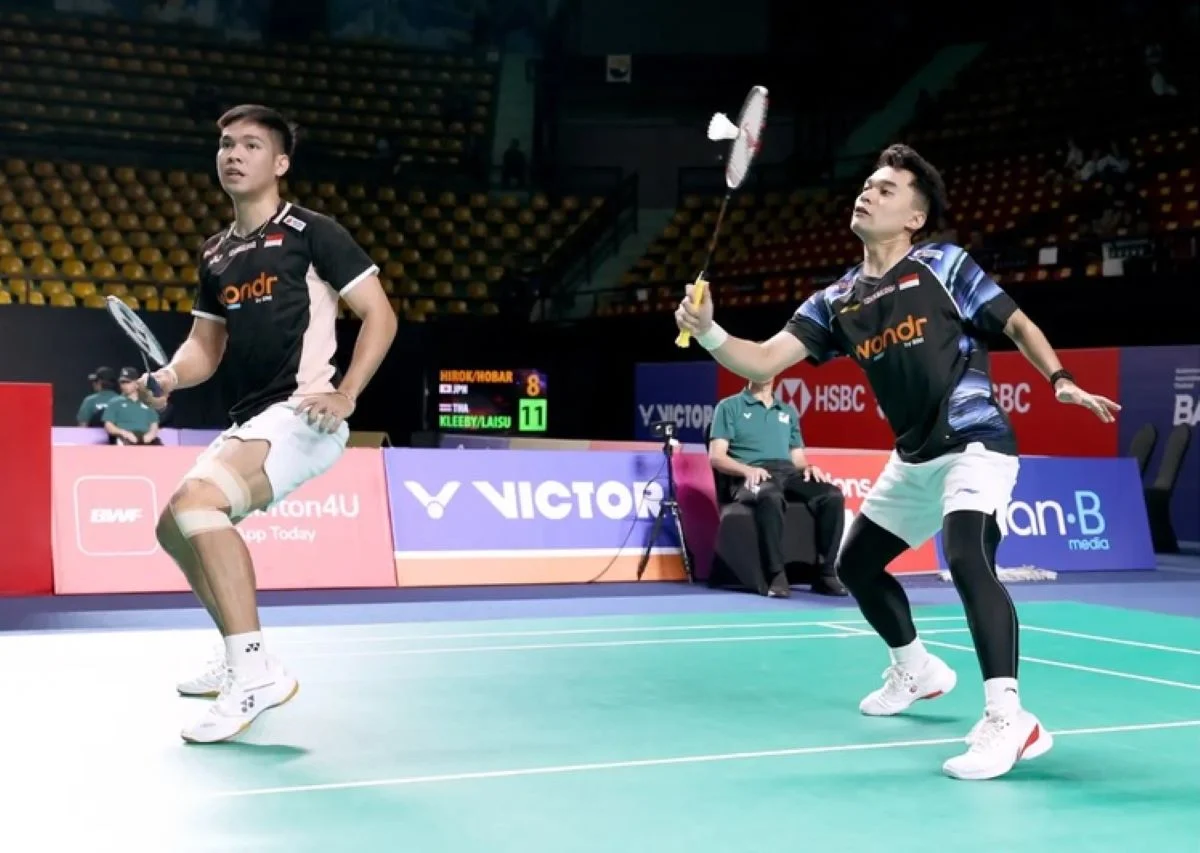
The Indonesian national badminton contingent is leaving no stone unturned in its rigorous preparations for the upcoming multi-sport quadrennial extravaganza, with the nation’s elite men’s doubles pair, Leo Rolly Carnando and Daniel Marthin, spearheading a renewed campaign for redemption. Having endured a sobering early exit at the previous continental showcase in Hangzhou, the dynamic duo—affectionately known to badminton aficionados as "The Babies"—are channeling past disappointments into a fierce competitive resolve as they gear up for the Asian Games 2026 in Aichi-Nagoya, Japan.
Currently undergoing an intensive overseas training camp at the state-of-the-art NTT Central Training Center in Chofu, Tokyo—the esteemed home base of the Japanese club powerhouse NTT East—the Indonesian squad is establishing a robust physical and tactical foundation. For Leo and Daniel, this rigorous training regime represents more than just routine conditioning; it marks a crucial psychological and technical transition aimed at conquering the demons of their past continental campaign and delivering a podium-worthy performance for the red-and-white flag.
The Shadow of Hangzhou: Learning from Past Shortcomings
To fully appreciate the urgency driving Leo and Daniel’s current training regimen, one must look back at the heartbreak of the 2022 Asian Games held in Hangzhou, China (which was postponed to late 2023 due to the COVID-19 pandemic). Entering the tournament with high expectations and a growing reputation on the international BWF World Tour, the young Indonesian pair struggled to find their rhythm under the immense pressure of the major multi-sport games environment.
Their campaign in Hangzhou was abruptly cut short in the Round of 16, a bitter pill to swallow for a pair widely regarded as the torchbearers of Indonesia’s illustrious men’s doubles tradition. The elimination exposed vulnerabilities in tactical execution, consistency under pressure, and the mental resilience required to navigate the grueling draws typical of continental championships. Rather than letting the defeat deter them, however, the pair has chosen to view the setback as an invaluable educational milestone.
Reflecting on the lessons learned from that tournament, Leo Rolly Carnando emphasized the importance of mental fortitude and proactive gameplay as they look toward Nagoya. "The failure at the Hangzhou Asian Games serves as a profound lesson and experience for us. We must rectify our past mistakes and ensure they are not repeated. In Nagoya, we need to step onto the court with a much bolder and more aggressive mindset," Leo asserted during a recent media briefing from their Tokyo training base.
Strategic Overseas Preparations at NTT Central Training Center
The choice of Tokyo as the pre-tournament training hub is a strategic masterstroke by the coaching staff of the Badminton Association of Indonesia (PBSI). The NTT Central Training Center in Chofu offers world-class facilities, simulated climatic conditions closely resembling the upcoming competition venues in Japan, and a controlled environment that shields the athletes from external distractions.
By relocating the squad to Japan well in advance, PBSI aims to facilitate optimal acclimatization, allowing players to adapt to the local shuttlecocks, court lighting, and environmental nuances that often play a decisive role in high-stakes matches. Furthermore, training in the backyard of one of badminton’s traditional powerhouses provides the Indonesian contingent with invaluable psychological readiness, fostering an atmosphere of intense focus and elite professionalism.
Daniel Marthin provided an optimistic progress report regarding the team’s current state of affairs in Japan, highlighting the positive team chemistry and the smooth execution of the training program. "Today’s training session went quite well; the program essentially maintains and refines the conditioning work we completed back in Indonesia recently. The atmosphere here is very conducive, and the team’s cohesion is growing stronger day by day. We hope this positive momentum continues to build continuously from one day to the next," Daniel remarked.

The daily routine at the Chofu facility is grueling, combining high-intensity on-court sparring sessions with rigorous strength and conditioning regimens supervised by PBSI’s specialized coaching and medical staff. Coaches are placing heavy emphasis on refining defensive transitions, sharpening lethal attacking patterns, and enhancing the physical endurance necessary to survive marathon matches against the world’s best pairs, particularly formidable contingents from China, South Korea, Malaysia, and hosts Japan.
The Badminton Landscape at the Asian Games 2026
The men’s doubles discipline remains one of the most fiercely contested categories in international badminton, and the Asian Games field is widely considered second in difficulty only to the Olympic Games and the BWF World Championships. With almost every powerhouse nation fielding pairs ranked inside the global top tier, the margin for error is razor-thin.
For Leo and Daniel, the journey to the 2026 podium requires consistent tactical evolution. Over the past several seasons, the pair has demonstrated their world-class potential by capturing multiple BWF World Tour titles, showcasing their trademark explosive power, blistering speed, and fearless net play. However, consistency has historically been the primary hurdle in their quest for absolute dominance.
Under the watchful eyes of their coaches, the duo has been working extensively on tactical discipline—learning when to unleash their signature power smashes and when to patiently construct rallies through controlled distribution. This tactical maturity will be paramount as they face opponents who are intimately familiar with their playing style.
Broader Implications for Indonesian Badminton
The performance of the men’s doubles team at the Asian Games 2026 carries significant weight for the broader ecosystem of Indonesian badminton. Historically, the archipelago nation has viewed the men’s doubles category as a fortress of national pride, boasting legendary pairs who have dominated Olympic podiums, World Championships, and Asian Games gold medals over decades.
As badminton faces an increasingly competitive global landscape with the rapid rise of European nations and the relentless depth of Asian competitors, maintaining continental supremacy is vital for national morale. A successful campaign in Nagoya by Leo and Daniel would not only validate the strategic planning and talent development pathways implemented by PBSI but also inject a vital wave of enthusiasm back home, where badminton remains the undisputed national pastime.
Furthermore, strong results at the Asian Games serve as crucial stepping stones toward Olympic qualification cycles and world ranking consolidation. Success in Aichi-Nagoya translates directly into valuable ranking points, seeding advantages for upcoming BWF Super 750 and Super 1000 tournaments, and, above all, the invaluable self-belief that they can conquer the continent’s best.
Looking Ahead: The Road to Nagoya
As the calendar ticks closer to the opening ceremonies of the Asian Games 2026, the psychological shift observed in Leo and Daniel signals a mature, battle-tested pairing ready to embrace the weight of national expectation. Gone is the hesitant youth that stumbled in the early rounds of Hangzhou; in its place stands a pair tempered by elite competition, armed with strategic clarity, and fueled by a burning desire for redemption.
With their preparations in Tokyo proceeding according to plan and team cohesion at an all-time high, the Indonesian camp is quietly confident. If Leo Rolly Carnando and Daniel Marthin can successfully translate their training ground intensity into match-day execution, the red-and-white flag will undoubtedly loom large over the podium battles in the Aichi-Nagoya badminton arena, writing a triumphant new chapter in the storied history of Indonesian sports.