President Joko Widodo, accompanied by a high-level ministerial delegation, arrived in Tuban, East Java, on Wednesday, November 11, 2015, to conduct a comprehensive inspection of the PT Trans Pacific Petrochemical Indotama (TPPI) refinery. This visit marked a significant milestone in the administration’s efforts to revitalize the nation’s energy infrastructure and reduce the long-standing dependency on imported fuel and petrochemical products. The President was joined by Minister of State-Owned Enterprises (SOEs) Rini Soemarno, President Director of PT Pertamina (Persero) Dwi Soetijpto, Vice President of Corporate Communication at Pertamina Wianda Pusponegoro, and Director General of Oil and Gas at the Ministry of Energy and Mineral Resources, IGN Wiratmaja.
The inspection was not merely a formal oversight procedure but a symbolic gesture of the government’s commitment to reactivating vital national assets that had long remained dormant due to financial and legal complexities. The TPPI refinery, located in the Jenu district of Tuban, has a storied and often turbulent history, and its reactivation is seen as a cornerstone of the "Nawa Cita" program—the nine priority goals of the Widodo administration—specifically concerning energy sovereignty and the strengthening of the domestic industrial sector.
A Moment of Local Engagement in Tuban
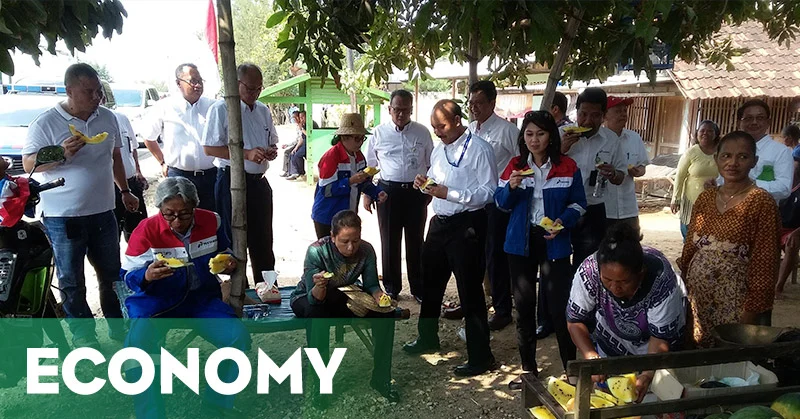
Before reaching the main facility of the TPPI refinery, an unexpected and human-centric event occurred that highlighted the administration’s "blusukan" (on-the-ground) leadership style. As the motorcade and walking party moved through the residential areas surrounding the refinery, they were greeted by local residents who had gathered to witness the arrival of the nation’s top leaders. In a display of accessibility, President Widodo and his team interacted with the community, with many locals taking the opportunity to request photographs with the President, Minister Rini Soemarno, and the leadership of Pertamina.
The delegation eventually paused at the residence of a local villager who also operated a small stall selling fresh watermelons, a fruit widely cultivated in the fertile coastal soil of Tuban. In a spontaneous gesture, the group stopped to rest and sample the local produce. Minister Rini Soemarno was seen encouraging the delegation and the accompanying press corps to enjoy the fruit, praising the quality of the local harvest. "Come on, try the watermelon. It is very delicious," she remarked to those present, emphasizing the connection between the industrial zone and the local agricultural economy.
This brief interlude served as a reminder of the socio-economic context in which the TPPI refinery operates. For the people of Tuban, the refinery represents not just a massive industrial complex but a source of potential employment and regional development. By stopping to engage with local vendors, the delegation signaled that the revitalization of the refinery is intended to bring benefits that trickle down to the immediate community.
The Strategic Importance of the TPPI Refinery
The PT Trans Pacific Petrochemical Indotama (TPPI) refinery is one of the most sophisticated industrial assets in Indonesia. Established in the mid-1990s, the facility was designed to produce both refined petroleum products and aromatics, which are essential feedstocks for the plastics and textile industries. However, the refinery’s history has been marred by financial instability, debt disputes, and ownership changes, leading to several periods of total shutdown.
At the time of the President’s visit in late 2015, the refinery had recently begun a restart process under the management of Pertamina. The facility has a processing capacity of approximately 100,000 barrels per day (bpd). When operating at full capacity, the refinery is capable of producing significant volumes of high-demand products, including:
- Gasoline (Mogas): Approximately 37,000 barrels per day, which directly offsets the need for imports from regional hubs like Singapore.
- Diesel (Solar): Essential for the transportation and industrial sectors.
- Liquefied Petroleum Gas (LPG): A critical energy source for Indonesian households.
- Aromatics: Including Paraxylene, Benzene, Orthoxylene, and Toluene, which serve as raw materials for various manufacturing industries.
The reactivation of TPPI is projected to save the Indonesian government approximately USD 2.2 billion per year in foreign exchange reserves by reducing the volume of refined oil products that must be purchased from international markets. In an era of fluctuating global oil prices and a weakening rupiah, such savings are vital for national fiscal stability.
Chronology of the Reactivation Effort
The path to the 2015 inspection began months earlier when the government decided to take a firmer stance on the management of TPPI. The refinery had been operating sporadically, hampered by a debt of over USD 2 billion owed to various creditors, including Pertamina and the state. Under the direction of President Widodo, the Ministry of SOEs and the Ministry of Energy and Mineral Resources worked to restructure these obligations.
In October 2015, just weeks before the President’s visit, Pertamina successfully conducted a "trial run" of the refinery’s processing units. This technical success proved that the facility was still viable and capable of producing fuel to national specifications. The transition of management to Pertamina was a strategic move to ensure that the refinery’s output would be prioritized for domestic consumption rather than being exported by private entities to settle debts.

During the visit, Dwi Soetijpto, the President Director of Pertamina, explained the technical progress to the President. He noted that the refinery was already beginning to contribute to the national fuel supply, particularly in the production of Premium-grade gasoline. The integration of TPPI into Pertamina’s refinery network—which includes major facilities in Cilacap, Balikpapan, and Dumai—creates a more resilient energy supply chain for the archipelago.
Economic and Industrial Implications
The implications of a fully functional TPPI refinery extend far beyond the energy sector. By producing aromatics domestically, Indonesia can strengthen its manufacturing value chain. Currently, many Indonesian textile and plastic manufacturers are forced to import raw materials that could be produced at the Tuban facility. By localizing this production, the government aims to lower the cost of manufacturing, making Indonesian goods more competitive in the global market.
Furthermore, the Tuban region is being positioned as a major industrial hub. The presence of the TPPI refinery, alongside other major installations like the Semen Indonesia plant and the planned New Grass Root Refinery (NGRR) in collaboration with international partners, suggests that East Java will play an increasingly central role in Indonesia’s industrial future.
From a labor perspective, the full operation of the refinery is expected to create thousands of jobs, both directly within the facility and indirectly through service providers, logistics, and local businesses. The President’s interaction with the watermelon vendor in Tuban underscored the importance of ensuring that this industrial growth does not leave the local population behind.
Official Responses and Policy Direction
Following the inspection, officials expressed a unified front regarding the future of the nation’s energy policy. President Widodo emphasized that the era of relying on fuel imports must come to an end. He stated that the government would no longer tolerate "mafias" in the oil and gas sector that benefit from the continued importation of refined products at the expense of domestic refining capacity.
Minister Rini Soemarno highlighted the role of state-owned enterprises as "agents of development." She noted that Pertamina’s takeover and stabilization of TPPI was a prime example of how SOEs can be used to secure strategic national interests. "We are focusing on efficiency and productivity. TPPI is a national treasure that we must manage properly for the welfare of the people," she said during the tour of the facility.
The Director General of Oil and Gas, IGN Wiratmaja, provided further context on the regulatory side, noting that the government is streamlining permits and providing the necessary legal framework to ensure that refineries like TPPI can operate without the bureaucratic hurdles that plagued them in the past.
Challenges and Future Outlook
Despite the optimism surrounding the 2015 visit, challenges remain. The legal complexities involving the previous owners of TPPI continue to be a subject of litigation. Additionally, the refinery requires ongoing investment to upgrade its technology and ensure it meets modern environmental standards. The transition from an aromatics-focused plant to a fuel-focused plant requires sophisticated engineering adjustments to maintain optimal efficiency.
However, the 2015 inspection by President Widodo served as a definitive turning point. It signaled to the market and the public that the government was willing to intervene directly to protect energy security. The image of the President and his ministers eating local watermelons in the shadow of a multi-billion dollar refinery serves as a potent metaphor for the administration’s goal: a high-tech, industrialized Indonesia that remains deeply connected to its grassroots and local resources.
As Indonesia moves forward, the success of the TPPI refinery will be a barometer for the country’s ability to manage complex industrial assets and achieve the dream of energy independence. The visit to Tuban on that Wednesday in November was not just a day of sightseeing; it was a day of reaffirming the nation’s sovereignty over its own energy future. With the commitment of Pertamina and the oversight of the Ministry of SOEs, the TPPI refinery is poised to become a vital engine of growth for the Indonesian economy in the decades to come.