The bustling corridors of Terminal 3 at Soekarno-Hatta International Airport underwent a remarkable aesthetic transformation on Tuesday, November 10, 2026. Typically a space defined by the hurried pace of global travelers, the terminal became an unconventional stage for "MODE IN TRANSIT," a collaborative fashion initiative that brought the elegance of Indonesian textile heritage directly to the public. By blending high-concept runway culture with the utilitarian environment of an international transit hub, the event sought to democratize access to fashion and highlight the burgeoning talent of local designers.
The project, a strategic partnership between the organization MODE INDONESIA and the Institut Kesenian Jakarta (IKJ), utilized a "flash mob" performance model to engage audiences unexpectedly. This approach serves as a departure from traditional, exclusive runway events, opting instead to immerse travelers in a live exhibition of craftsmanship.
The Chronology of an Immersive Event
The activation began in the mid-morning hours at the Terminal 3 drop-off zone. A fleet of Royaltrans buses arrived carrying a cadre of young, emerging models, signaling the start of the performance. The choreography was meticulously planned to mirror the rhythm of the airport—fast-paced, fluid, and transient.
As the models moved through the departure hall, they transitioned from the exterior arrival point into the terminal’s main thoroughfare. The performance was not static; rather, it was a sequence of spontaneous poses and interactions with passengers. The models showcased garments that emphasized the versatility of Indonesian "wastra"—traditional textiles such as batik, ikat, and songket—reimagined through a contemporary lens.
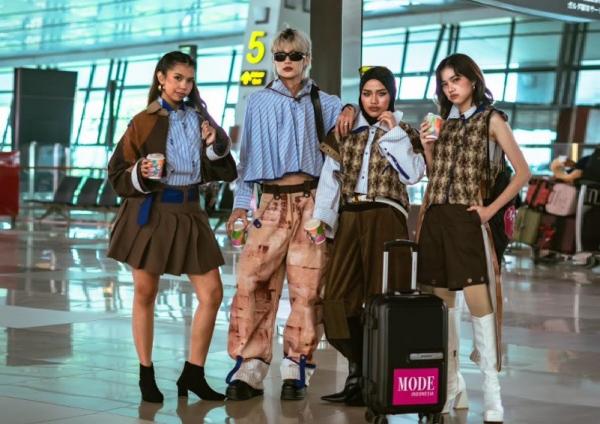
By midday, the terminal’s architecture served as a backdrop for what organizers described as a "living gallery." Passengers who had been waiting for their flights were suddenly treated to an impromptu display of sartorial art, effectively bridging the gap between national cultural identity and the global nature of air travel.
Strategic Objectives and Collaborative Vision
The initiative behind MODE IN TRANSIT is rooted in the desire to increase the visibility of Indonesian fashion on both domestic and international platforms. By positioning the event at Soekarno-Hatta, the organizers reached a diverse demographic of both domestic commuters and international tourists, providing a captive audience for Indonesian creative exports.
For the students of the Institut Kesenian Jakarta (IKJ), the event functioned as a pedagogical bridge. Beyond the spectacle, the day included a high-level dialogue featuring prominent fashion designer and political figure Samuel Wattimena. This discourse aimed to provide students with a realistic understanding of the fashion industry’s supply chain, the commercial viability of traditional textiles, and the intersection of cultural preservation with modern market demands.
The Significance of Wastra in Modern Design
Indonesian fashion has long struggled with the challenge of transitioning traditional fabrics into the "fast fashion" and "luxury" cycles of the global market. Wastra, often reserved for formal or ceremonial occasions, is increasingly being adapted for everyday wear. The MODE IN TRANSIT exhibition focused on this specific evolution.
Data from the Indonesian Ministry of Industry indicates that the creative economy, specifically the fashion sub-sector, remains one of the largest contributors to the nation’s non-oil and gas export revenue. By showcasing these designs in a high-traffic zone like an international airport, the organizers aimed to boost the "soft power" of Indonesian design. This strategy aligns with the broader goal of positioning Indonesia not merely as a production hub for global brands, but as a source of high-value, culturally rich creative content.

Impact and Implications for Public Spaces
The success of such an event invites a broader discussion regarding the utility of public infrastructure as a venue for cultural diplomacy. Airports are often criticized for their sterile, utilitarian atmosphere. The integration of art and fashion into these spaces serves a dual purpose: it enhances the traveler experience and provides a platform for local creators to reach a global audience without the overhead costs of traditional fashion weeks.
From an urban planning perspective, the use of Terminal 3 as a performance space highlights a shift toward "placemaking." By introducing cultural elements into the transit experience, the airport operator, PT Angkasa Pura, contributes to the airport’s identity as a gateway to the country’s culture, rather than just a waypoint for transit.
Expert Perspectives and Industry Outlook
Industry observers noted that the choice of Samuel Wattimena as a mentor figure was significant. Wattimena has long advocated for the intellectual property rights of traditional artisans and the necessity of maintaining high quality in the modernization of traditional weaves. His involvement suggests a commitment to ensuring that the excitement generated by the "flash mob" does not come at the expense of the integrity of the textiles themselves.
The integration of the educational component—the forum with IKJ students—underscores the long-term intent of the event. It is not a one-off publicity stunt, but a structured attempt to groom the next generation of designers to think critically about their impact on the industry. As the global market shifts toward sustainability and "slow fashion," the focus on traditional hand-woven textiles provides a unique competitive advantage for Indonesian designers.
The Future of MODE IN TRANSIT
Following the success of the November 10 event, there is speculation among industry stakeholders regarding the potential for similar activations at other major transit hubs. The scalability of the "flash mob" concept makes it an attractive model for organizations looking to maximize impact with minimal disruption to logistics.

As Indonesia continues to refine its national branding, events like MODE IN TRANSIT offer a blueprint for success. By synthesizing education, public engagement, and creative expression, the collaboration between MODE INDONESIA and IKJ has demonstrated that fashion can serve as a potent tool for national identity.
While the event lasted for only a day, the resonance of the exhibition serves as a benchmark for future collaborations. The intersection of Soekarno-Hatta’s international connectivity and the local expertise of Indonesian artisans creates a unique synergy that, if properly leveraged, could significantly elevate the profile of the domestic fashion industry.
Conclusion
The MODE IN TRANSIT showcase was more than a display of clothing; it was a carefully curated experience designed to assert the relevance of Indonesian culture in a globalized world. By turning a site of transit into a site of transformation, the organizers succeeded in highlighting the artistic potential of the nation’s youth and the enduring value of its traditional textiles.
As the airport returns to its routine operations, the impact of the event remains in the memories of those who witnessed it and in the professional development of the students who participated. It stands as a testament to the fact that when cultural heritage is brought into the public eye with creativity and professional rigor, it becomes a powerful medium for storytelling, education, and economic development. The event serves as a clear indicator that the future of Indonesian fashion lies in its ability to remain rooted in tradition while being bold enough to occupy the modern, international stage.