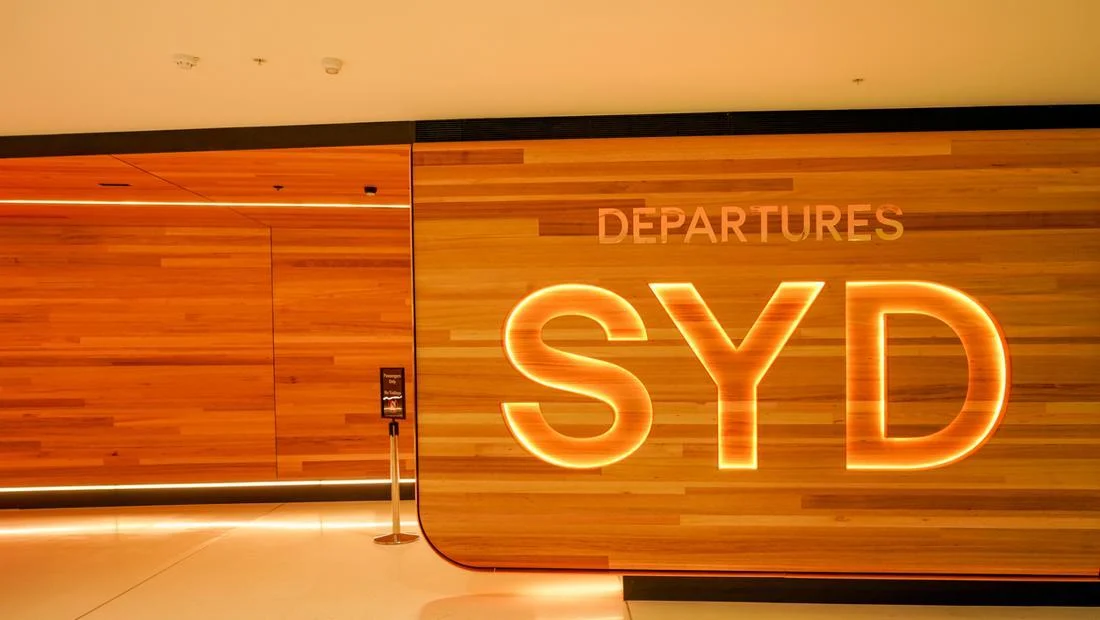
Sydney Kingsford Smith Airport has officially introduced a new "Fast Track" service for international travelers, allowing passengers to bypass standard security queues for a flat fee of $20. This strategic move, announced on Wednesday, July 22, 2026, aims to provide a premium alternative for those seeking to minimize their time spent in transit. The service allows departing passengers at the International Terminal (T1) to purchase a digital access pass, granting them entry into priority lanes previously reserved exclusively for business and first-class travelers, as well as elite airline frequent flyer members.
The implementation of this paid priority service comes at a pivotal time for Australia’s busiest aviation hub. As global travel volumes continue to surge, Sydney Airport is looking for innovative ways to manage the flow of more than 42 million annual passengers. By monetizing access to expedited security screening, the airport joins a growing list of global aviation hubs—including London Heathrow, Dubai International, and Singapore Changi—that offer "pay-per-use" efficiency models to manage peak-hour congestion.
Enhancing the Passenger Experience Through Choice
The core objective of the Fast Track program, according to airport officials, is to reduce the inherent stress associated with international travel. By providing a predictable and swifter path through the security apparatus, the airport hopes to allow travelers more time to utilize terminal amenities, such as duty-free shopping and dining, or simply to relax at their gates before boarding.
Mark Zaouk, the Executive Manager Commercial at Sydney Airport, emphasized that the decision was driven by changing consumer expectations. "More than 42 million people travel through Sydney Airport every year, and that number is expected to increase significantly in the coming decades," Zaouk stated. "Our job is to ensure the airport experience remains in line with those expectations and stays as smooth, efficient, and seamless as possible."
The $20 pass is designed to be accessible via a mobile-friendly booking platform or at kiosks located within the departures hall. Once purchased, the traveler receives a QR code that is scanned at the entrance of the priority security lane. This lane funnels passengers directly to the advanced screening technology, bypassing the often-winding general admission queues that can become a bottleneck during early morning and late evening departure waves.
Equity and Accessibility in the Fast Track Model
While the introduction of a paid tier for security has occasionally sparked debate regarding "two-speed" public infrastructure, Sydney Airport has proactively addressed concerns regarding equity. The airport has confirmed that the priority lane will remain free of charge for specific groups to ensure that those with the greatest need are not disadvantaged.
Families traveling with young children, individuals with mobility issues, and passengers with accessibility requirements will continue to have access to priority lanes without paying the $20 fee. Furthermore, the airport has reinforced its commitment to the "Hidden Disabilities" program. Travelers wearing the recognizable green sunflower lanyard, which indicates a non-visible disability such as autism, dementia, or chronic pain, will be funneled into the priority stream automatically and at no cost. This ensures that the Fast Track service remains a commercial convenience for most, while functioning as a necessary support system for those who find traditional queuing environments challenging.
Analyzing the Current State of Departure Efficiency
A critical question raised by industry analysts is whether the Fast Track service is a necessity or a luxury, given the airport’s recent performance data. According to internal reports from the second quarter of 2026, Sydney Airport’s departure efficiency has been remarkably high. Data shows that 99.9 percent of international travelers were processed through security in 10 minutes or less.
This high level of efficiency is largely attributed to the widespread rollout of next-generation CT (Computed Tomography) scanners. These machines allow passengers to leave laptops, tablets, and liquids inside their bags, significantly increasing the throughput of each security lane. However, airport management notes that "average" wait times do not always tell the full story. During "super-peak" periods—such as the 6:00 AM to 9:00 AM window when dozens of long-haul flights depart for Asia, North America, and Europe—wait times can occasionally spike. The Fast Track pass serves as an insurance policy for travelers who are on a tight schedule or those who simply prefer a more curated airport experience.
The Growing Crisis at Arrivals: A Contrast in Efficiency
While the departure process at Sydney Airport is currently lauded for its speed, the arrival experience tells a different story. For much of 2025 and early 2026, passenger dissatisfaction has mounted regarding the time it takes to clear immigration and customs upon landing in Sydney. Unlike departures, Sydney Airport does not currently offer a paid express service for incoming passengers.
The bottleneck at arrivals is often blamed on a combination of staffing shortages at the Australian Border Force (ABF) and the continued use of an antiquated, paper-based arrival system. During peak arrival windows, particularly when multiple A380 and Boeing 787 aircraft land simultaneously, queues at the "Incoming Passenger Card" checkpoints have been known to stretch for over an hour.
Under intense pressure from the Australian Travel Industry Association (ATIA) and major transport operators, the federal Labor government has finally intervened. This week, the government announced a definitive timeline to modernize Australia’s borders. The long-maligned paper arrival cards—a relic of the pre-digital era—are slated to be phased out entirely within the next 18 months.
The plan involves replacing the physical cards with a streamlined Digital Passenger Declaration (DPD) integrated into the existing Australian Home Affairs infrastructure. This digital shift is expected to allow passengers to complete their declarations on their smartphones before even touching down on Australian soil. Analysts predict that this reform could reduce individual processing times at the border by up to 40 percent, finally bringing the arrivals experience into parity with the modern departure process.
Statistical Overview: The Scale of Australian Aviation in 2026
The scale of the task facing Sydney Airport is illustrated by the latest figures from the Australian Travel Industry Association. In the 12-month period ending May 2026, Australian residents made nearly 12.71 million trips abroad. This represents a robust recovery and growth phase for the domestic market, driven by a high demand for "revenge travel" and a stabilizing economy.
Simultaneously, Australia remains a premier destination for global tourism. During the same period, 9.16 million international visitors traveled to Australia. As the primary gateway for the country, Sydney Airport handles a lion’s share of this traffic. With over 21 million people moving through the international terminal annually (counting both arrivals and departures), the infrastructure is being tested daily.
The financial implications of these passenger volumes are significant. Beyond the $20 Fast Track fee, the airport generates substantial revenue from aeronautical charges, retail concessions, and parking. However, the introduction of the Fast Track pass represents a shift toward "ancillary revenue" models—finding new ways to monetize the existing footprint of the terminal by offering tiered service levels.
Broader Implications and the Future Landscape
The introduction of the Fast Track service is not happening in a vacuum. It is part of a broader "Master Plan 2039" for Sydney Airport, which envisions a massive expansion of terminal capacity and the integration of more automated technology. However, Sydney Airport (KSA) is also facing its first real domestic competition in decades.
The Western Sydney International (Nancy-Bird Walton) Airport (WSI) is scheduled to begin operations in late 2026. Unlike the current Kingsford Smith Airport, which is subject to a strict 11:00 PM to 6:00 AM curfew, WSI will operate 24 hours a day. This competitive pressure is likely a driving force behind Sydney Airport’s recent push to enhance its service offerings and efficiency. By establishing a "premium" reputation through services like Fast Track, KSA aims to retain its status as the preferred choice for business travelers and high-spending tourists who value proximity to the Sydney Central Business District.
Furthermore, the move toward paid priority lanes reflects a global trend in "de-bundling" the travel experience. Much like airlines charge extra for seat selection, extra legroom, or checked baggage, airports are increasingly de-bundling their ground services. This allows the airport to keep base costs lower for the general public while capturing additional value from those willing to pay for convenience.
Timeline of Recent Developments at Sydney Airport
To understand the context of the July 2026 Fast Track launch, it is helpful to look at the chronology of the past three years:
- January 2024: Sydney Airport completes the installation of 3D CT scanners across all T1 (International) security lanes, ending the requirement to remove liquids and gels.
- June 2024: Passenger numbers return to 100% of 2019 levels for the first time since the pandemic.
- March 2025: The Australian Border Force trials a "biometric-only" gate for returning Australian citizens, reducing the need for passport scanning in some instances.
- December 2025: A record-breaking holiday season sees wait times at Sydney arrivals hit an average of 55 minutes, prompting a formal inquiry by the Department of Infrastructure.
- July 2026: Sydney Airport launches the $20 Fast Track Departure Pass.
- Expected Late 2027: The full decommissioning of paper Incoming Passenger Cards and the mandatory adoption of the Digital Passenger Declaration.
Industry Reaction and Future Outlook
The reaction from the travel industry has been largely positive, though cautious. "Any initiative that gives travelers more control over their journey is a win," said a spokesperson for the Australian Travel Industry Association. "However, the priority must remain on ensuring that the standard service—the one every passenger pays for via their ticket taxes—remains world-class. We wouldn’t want to see a situation where standard queues are intentionally slowed down to drive sales of the Fast Track pass."
For now, Sydney Airport maintains that the Fast Track service is an "add-on" rather than a replacement for efficient general operations. As the airport prepares for the competition from Western Sydney and the continued growth of global tourism, the $20 pass serves as a litmus test for how much travelers are willing to pay for a few extra minutes of peace of mind.
As the 18-month countdown to the end of paper arrival cards begins, the focus of the Australian aviation industry will likely shift from how people leave the country to how they are welcomed back. For the millions of travelers passing through Sydney each year, the hope is that the efficiency seen at the departure gates will soon be matched at the arrival halls, creating a truly seamless "end-to-end" journey.