
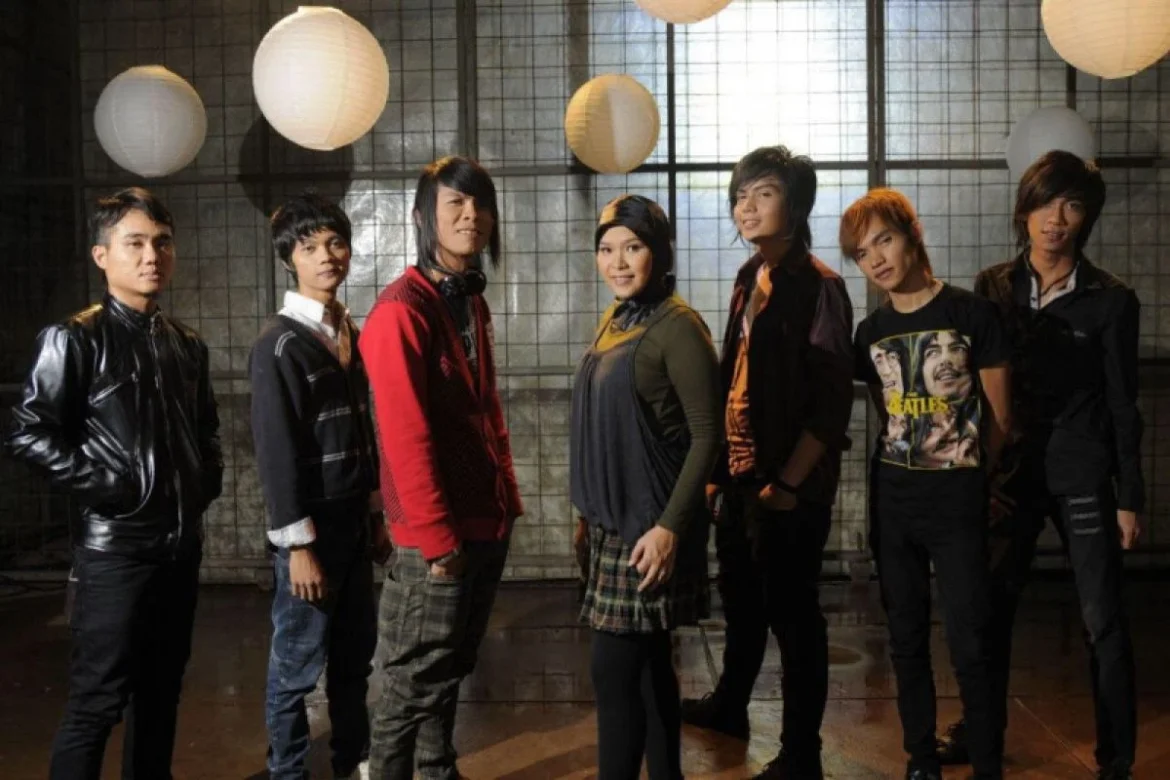
The Indonesian music landscape was rocked by an unexpected and startling announcement when Dodhy Hardiyanto, the primary guitarist and founding member of the iconic pop-melayu group Kangen Band, declared the official dissolution of the band. The announcement, disseminated via his verified personal Instagram account on Saturday, September 12, sent shockwaves through the Indonesian entertainment industry, leaving devoted fans—collectively known as Dovian—in a state of disbelief and profound confusion. The sudden proclamation not only halted the trajectory of one of the country’s most enduring musical acts but also exposed a deep, previously unmasked rift within the band’s internal hierarchy.
Adding to the controversy and public astonishment, the band’s iconic frontman, Andika Mahesa, widely recognized as "Babang Tamvan," publicly admitted that he was completely blindsided by the news. According to Andika, he had no prior knowledge of any systemic grievances or internal crises that could have motivated Dodhy to make such a drastic, unilateral decision. The juxtaposition between Dodhy’s allegations of long-standing grievances and Andika’s claims of absolute harmony has ignited widespread media speculation and intense public scrutiny regarding the true operational and emotional state of Kangen Band behind closed doors.
The Genesis of the Crisis: Dodhy’s Public Declaration and Copyright Restrictions
The unfolding drama began on Saturday afternoon when Dodhy Hardiyanto utilized social media to air his grievances and announce the termination of Kangen Band. In his emotional and stern statement, Dodhy explicitly cited the presence of what he termed "kezaliman" (tyranny, oppression, or severe unfairness) operating within the internal framework of the group. The guitarist maintained that he had harbored emotional pain and distress regarding these unresolved matters for an extended period, suggesting that the dissolution was the culmination of cumulative toxic dynamics rather than a sudden disagreement.
However, Dodhy’s statement conspicuously lacked granular details. He refrained from explicitly identifying the individuals responsible for the alleged mistreatment, nor did he elaborate on the specific incidents or structural failures that catalyzed his decision.
Compounding the severity of the band’s dissolution, Dodhy took a hardline stance regarding the intellectual property generated throughout Kangen Band’s illustrious career. As the primary songwriter and creative architect behind many of the band’s chart-topping hits, Dodhy formally issued a strict prohibition barring any former members of Kangen Band from performing his proprietary musical catalog. Furthermore, this restriction was explicitly extended to event organizers, promoters, and festival planners who might consider booking former members under the moniker of Kangen Band or expecting them to play his compositions live. This legal and artistic embargo threatens to paralyze the commercial viability of any future live performances associated with the brand, directly targeting the livelihood of his former bandmates who rely heavily on performing their classic repertoire.
Andika Mahesa’s Reaction: Confusion and the Quest for Clarity
In the immediate aftermath of the announcement, Kangen Band’s charismatic vocalist, Andika Mahesa, stepped forward to address the media and clarify his position. Andika confirmed that he discovered the dissolution of his own band through the digital realm, scrolling through Instagram just like the general public.
Andika’s primary sentiment was one of profound bewilderment. He asserted that the interpersonal atmosphere among the band members had appeared entirely normal, amicable, and professional leading up to the public announcement. Providing context to the timeline, Andika revealed that just four days prior to the bombshell revelation, the members of Kangen Band had shared stages internationally, successfully completing a high-profile concert appearance in Hong Kong. During this international trip and the subsequent transit back to Indonesia, Andika noted no behavioral anomalies, hostile exchanges, or verbal warnings from Dodhy that would foreshadow the termination of the group.
Rejecting the urge to react defensively or engage in a public war of words, Andika adopted a measured and diplomatic stance. He stated his intention to bypass social media as a communication tool and instead initiate a formal, closed-door meeting with Dodhy, other founding and supporting members, and the band’s management team. Andika emphasized the necessity of a face-to-face dialogue to dissect the vague allegations of "kezaliman" and to determine whether a reconciliation is logistically and emotionally feasible, or if the band must permanently sever ties.
A Historical Retrospective: The Legacy of Kangen Band (2005–Present)
To fully comprehend the gravity of Kangen Band’s sudden dissolution, one must examine the rich and turbulent history of the group. Formed on July 4, 2005, in Bandar Lampung, Lampung province, Kangen Band emerged during a golden era of Indonesian pop-melayu and indie-alternative crossover music. Founded by Dodhy (guitar) alongside vocalists and instrumentalists who would define the early landscape, the band captured the hearts of the Indonesian working class and mainstream pop audiences alike with their distinctively melancholic melodies, catchy hooks, and deeply relatable lyrical themes focusing on love, betrayal, infidelity, and longing.
Throughout the mid-to-late 2000s, Kangen Band achieved phenomenal commercial success, dominating radio airwaves and television music programs. Their seminal studio albums yielded timeless national anthems that remain cultural touchstones to this day, including "Tentang Bintang," "Selingkuh," "Yolanda," "Doy," and "Terbang Bersamaku." These tracks cemented their status as a commercial juggernaut, generating substantial royalties and massive tour revenues.
Despite their widespread acclaim, the band’s trajectory was historically characterized by volatility, internal friction, and high-profile lineup changes. The most notable disruption occurred in 2012 when frontman Andika Mahesa officially departed from the group amid personal legal struggles and creative differences. During Andika’s absence, the band attempted to sustain its momentum by recruiting alternative vocalists, though public reception varied. Recognizing the undeniable synergy of the original lineup, negotiations eventually paved the way for Andika’s triumphant return, leading to a nostalgic and commercially lucrative reunion phase that saw them packing festivals and headlining major tours across the archipelago, including a celebrated performance at Synchronize Fest 2020.
The International Context: Life on the Road Prior to the Split
The timing of Dodhy’s announcement remains one of the most perplexing elements of the entire saga. Industry analysts and fans alike have pointed to the band’s recent international tour schedule as evidence of a functioning, revenue-generating enterprise.
Just days before the Instagram post went live, Kangen Band traveled to Hong Kong to perform before enthusiastic crowds of Indonesian expatriates and migrant workers—a demographic that has historically formed the bedrock of the band’s most loyal fanbase. Reports from the ground indicated that the Hong Kong concert was a resounding success, marked by high energy, strong ticket sales, and apparent camaraderie among the band members on stage.
The abrupt transition from an international touring high to an unannounced, unilateral dissolution highlights a deeply fractured internal communication system. It underscores a reality where professional obligations and international performances were successfully executed on the surface, while deep-seated personal grievances and creative resentments simultaneously boiled underneath.
Legal and Commercial Implications of the Copyright Ban
Dodhy Hardiyanto’s sweeping prohibition against the performance of his copyrighted songs introduces severe commercial and legal ramifications for the remaining members of Kangen Band. Under Indonesian copyright law (UU Hak Cipta), creators and principal songwriters retain substantial moral and economic rights regarding the public performance and broadcast of their musical works.
If Dodhy strictly enforces his legal rights, Andika Mahesa and any other former members will find it legally perilous to perform classic tracks such as "Tentang Bintang," "Selingkuh," and "Terbang Bersamaku" at commercial venues, television broadcasts, or regional concerts. For a touring band whose setlists heavily rely on two decades of nostalgic hits, the inability to perform these signature songs effectively strips them of their primary commercial product.
Event organizers and festival promoters must now navigate a complex legal landscape. Booking former members under the Kangen Band banner without the explicit consent of the primary copyright holder exposes promoters to potential cease-and-desist orders, copyright infringement claims, and subsequent litigation. Consequently, the music industry is bracing for potential legal disputes regarding royalty distributions, performance rights organizations (PRO) enforcement, and the commercial exploitation of a legacy band’s catalog.
Broader Industry Impact and Future Outlook
The dissolution of Kangen Band serves as a poignant reminder of the fragile nature of musical partnerships that endure decades of shifting industry trends, personal maturation, and commercial pressures. For an ensemble that survived multiple iterations, line-up shifts, and the temporary departure of its frontman, the breaking point ultimately arrived not from external market forces or dwindling audience demand, but from internal alienation and unresolved personal disputes.
As of Monday, September 14, the dust has yet to settle. While Dodhy Hardiyanto remains firm in his digital pronouncement and copyright embargo, Andika Mahesa continues to advocate for a transparent, communal resolution. The ultimate fate of Kangen Band—whether it will be relegated to the annals of Indonesian music history or resurrected through mediation and compromise—hangs entirely on the outcome of the impending closed-door summit between the warring factions and their management representation. Until that formal dialogue occurs, the Indonesian music scene watches closely, mourning the sudden halt of a band that defined the soundtrack of a generation.
