
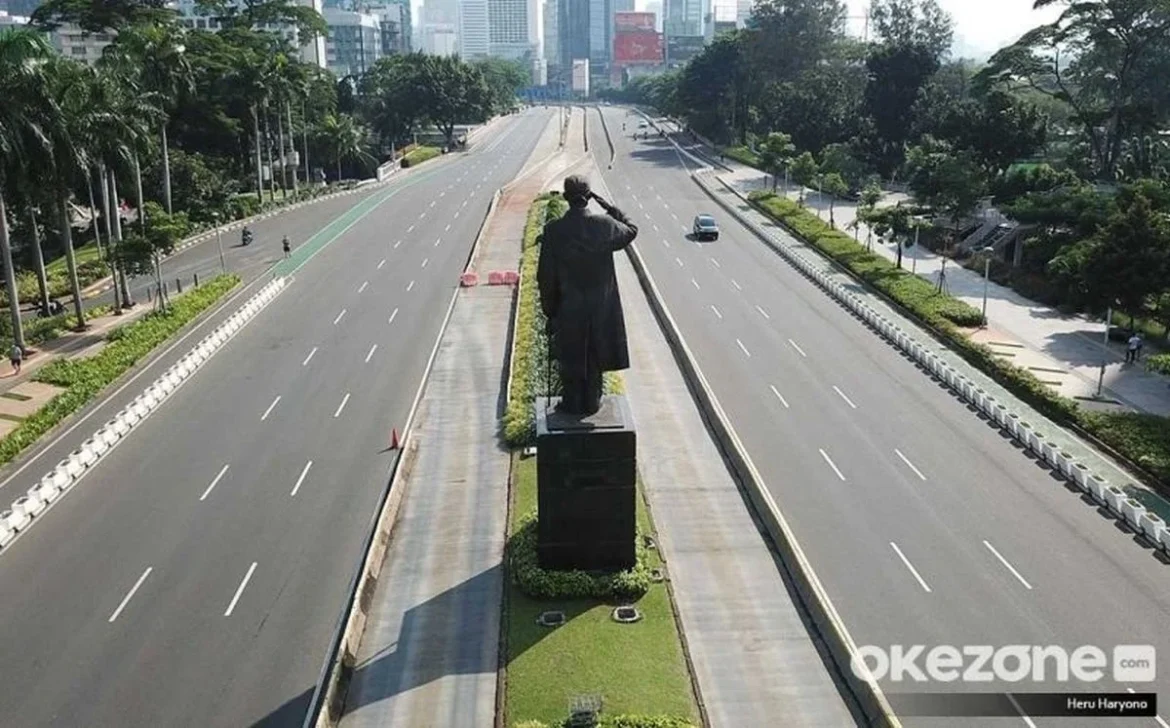
The Indonesian Agency for Meteorology, Climatology, and Geophysics (BMKG) has issued its latest weather forecast for DKI Jakarta, predicting that the sprawling capital will experience a day largely dominated by clear to partly cloudy conditions on Thursday, July 23, 2026. While the majority of the metropolitan area is expected to enjoy relatively fair weather, specific pockets, notably the Administrative Region of Kepulauan Seribu and parts of South Jakarta, are slated to receive light rainfall. This forecast comes as residents navigate the city’s dynamic climate, with daily weather patterns significantly influencing traffic, outdoor activities, and public health considerations across the densely populated urban landscape.
Detailed Regional Weather Breakdown
According to the BMKG’s comprehensive analysis, the diverse administrative regions of Jakarta will experience varied conditions throughout the day. The northernmost district, the Administrative Region of Kepulauan Seribu, which comprises a cluster of islands serving as both a tourist destination and a residential area, is specifically pinpointed for potential light rain. This localized precipitation could impact marine transportation, fishing activities, and tourist excursions in the archipelago.
Concurrently, the bustling southern district, Kota Jakarta Selatan, known for its mix of residential areas, business centers, and green spaces, is also projected to encounter light rain. This might lead to localized slick roads and minor disruptions to pedestrian and vehicular traffic during peak hours, particularly in areas prone to accumulation of surface water.
In contrast, the central economic and governmental hub of Kota Jakarta Pusat, along with the northern coastal stretch of Kota Jakarta Utara and the western commercial zone of Kota Jakarta Barat, are all anticipated to experience predominantly clear to partly cloudy skies. These conditions suggest a generally bright and conducive environment for daily activities, albeit with the usual urban challenges. Meanwhile, Kota Jakarta Timur, a vast area encompassing diverse communities and industrial zones, is predicted to remain cloudy throughout the day, indicating a higher level of atmospheric moisture without necessarily leading to significant precipitation.
Temperatures across DKI Jakarta are expected to range from a comfortable low of 24 degrees Celsius to a warm high of 33 degrees Celsius. The humidity levels are forecast to fluctuate between 43 percent and 85 percent, reflecting the typical tropical climate of the region. BMKG has advised the public to remain vigilant and monitor updated weather information, emphasizing that localized conditions can change rapidly and unexpectedly, particularly in a complex urban environment.
Meteorological Context: Jakarta’s Climate in July
July typically marks the heart of the dry season in Jakarta, a period characterized by reduced rainfall compared to the monsoonal wet season that usually runs from October to April. During this time, the city often experiences sunnier days, lower humidity, and more stable atmospheric conditions. However, "dry season" does not equate to a complete absence of rain. Convective activity, localized atmospheric instability, and sea breeze convergence can still trigger isolated showers, especially in coastal areas like Kepulauan Seribu or inland regions with specific topographical influences, as highlighted by the current forecast for South Jakarta.
Historically, average temperatures in Jakarta during July hover around 28-30 degrees Celsius, with daytime highs frequently reaching into the low to mid-30s. The forecasted range of 24-33 degrees Celsius for July 23, 2026, aligns well with these historical norms, suggesting a typical dry season day. Humidity, while generally lower than in the wet season, can still be significant, contributing to the sensation of heat. The 43-85 percent range is characteristic of a tropical dry season, where early mornings might be more humid, with values dropping as the day progresses and temperatures rise.
The Intertropical Convergence Zone (ITCZ), a band of low pressure around the equator where the northeast and southeast trade winds converge, plays a crucial role in Indonesia’s weather patterns. During July, the ITCZ typically shifts northward, away from Java, contributing to the drier conditions. However, local meteorological phenomena, such as the development of localized low-pressure systems or the influence of the Indian Ocean Dipole (IOD) and El Niño-Southern Oscillation (ENSO) cycles, can introduce variations. While the current forecast does not explicitly link to these broader climate drivers, BMKG continuously integrates such large-scale patterns into its regional models to enhance accuracy.
The Science Behind the Forecast: BMKG’s Role and Technology
BMKG, as Indonesia’s primary meteorological and geophysical agency, plays a critical role in public safety and national development by providing timely and accurate weather, climate, and geophysics information. Its forecasting capabilities rely on a sophisticated array of technologies and methodologies. These include:

- Satellite Imagery: Utilizing data from geostationary and polar-orbiting satellites to track cloud formation, movement, and atmospheric moisture content.
- Radar Systems: Ground-based radar networks provide real-time data on precipitation intensity, type, and movement, crucial for localized rain forecasts.
- Automatic Weather Stations (AWS): A network of stations across the archipelago continuously collects ground-level data on temperature, humidity, wind speed and direction, and atmospheric pressure.
- Numerical Weather Prediction (NWP) Models: BMKG runs complex computer models that simulate atmospheric processes based on vast amounts of observational data. These models project future weather conditions at various scales, from global to regional and local.
- Human Expertise: Highly trained meteorologists interpret the raw data and model outputs, applying their knowledge of local conditions and atmospheric dynamics to refine forecasts and issue advisories.
Forecasting for a megacity like Jakarta presents unique challenges. The urban heat island (UHI) effect, caused by the absorption and re-radiation of heat by concrete, asphalt, and buildings, can create localized temperature differences and alter wind patterns, influencing cloud formation and precipitation distribution. The sheer density of buildings can also interfere with wind flow and trap pollutants. BMKG’s models and meteorologists must account for these microclimatic variations to provide precise localized forecasts, such as differentiating between a clear day in West Jakarta and light rain in South Jakarta.
Implications for Daily Life and Urban Infrastructure
The forecasted weather conditions for July 23, 2026, carry several implications for the millions of residents and businesses in Jakarta.
- Transportation and Commute: Predominantly clear to partly cloudy conditions across most of the city suggest a smoother commute for the majority. However, the anticipated light rain in South Jakarta and Kepulauan Seribu could lead to minor traffic slowdowns. Wet roads increase braking distances and can cause congestion, especially during rush hours. For Kepulauan Seribu, ferry schedules and maritime safety would need to be monitored, even for light rain, as visibility can be affected.
- Public Health: Temperatures reaching 33 degrees Celsius, coupled with fluctuating humidity, raise concerns about heat stress, particularly for individuals working outdoors, the elderly, and young children. BMKG’s advisory for vigilance implicitly extends to health precautions. While not extreme, these conditions emphasize the need for adequate hydration and avoidance of prolonged direct sun exposure during peak heat hours. The mostly dry conditions could also lead to higher concentrations of airborne pollutants if wind dispersion is low, potentially affecting individuals with respiratory sensitivities.
- Outdoor Activities and Tourism: For the majority of Jakarta, the clear to partly cloudy skies are ideal for outdoor activities, ranging from morning jogs in city parks to al-fresco dining. In Kepulauan Seribu, despite the potential for light rain, tourism operators would likely proceed with activities, albeit with a heightened awareness of safety. Tourists are advised to carry light rain gear.
- Energy Consumption: Higher daytime temperatures often translate to increased demand for air conditioning, potentially straining the city’s power grid. Conversely, the absence of widespread heavy rain reduces the risk of power outages caused by lightning strikes or damaged infrastructure.
- Water Management: While July is part of the dry season, urban water management remains a critical concern. The absence of significant rainfall means the city’s water supply, largely sourced from external reservoirs, will not be replenished locally. Even light rain in specific areas might provide some localized moisture but does not significantly contribute to the overall water reserves. City authorities continuously monitor reservoir levels and manage water distribution.
Official Response and Public Advisory
In light of the forecast, BMKG’s call for the public to "remain vigilant and monitor information" is a standard but crucial advisory. It underscores the dynamic nature of weather and the importance of preparedness. For city authorities, this forecast provides valuable input for operational planning:
- Disaster Management Agency (BPBD DKI Jakarta): While the threat of widespread flooding is low during the dry season, localized light rain, especially in areas with poor drainage, can still cause temporary inundation. BPBD would likely have teams on standby for rapid response to any localized issues.
- Transportation Department: Monitoring traffic flow and deploying additional personnel if congestion arises due to rain. Advising motorists to drive cautiously.
- Health Department: Issuing general advisories regarding heat safety and air quality, particularly if pollution levels are anticipated to rise.
- Tourism Board: Providing updated information to visitors, especially those heading to Kepulauan Seribu, about potential weather impacts on activities.
An inferred statement from a BMKG spokesperson might emphasize: "Our forecast for July 23, 2026, indicates a typical dry season day for much of Jakarta, with generally fair conditions. However, residents of Kepulauan Seribu and South Jakarta should be prepared for light, localized showers. We urge everyone to check our latest updates via official channels before planning their day, especially those engaged in outdoor work or leisure. Our advanced modeling and dedicated meteorologists are continuously monitoring atmospheric conditions to ensure the most accurate and timely information is disseminated."
Broader Climate Perspective and Long-Term Trends
The weather on July 23, 2026, while a daily snapshot, fits into broader climatic trends affecting Jakarta and Indonesia. The phenomenon of the Urban Heat Island (UHI) effect is a persistent challenge. As Jakarta continues its rapid urbanization, the expanse of heat-absorbing surfaces like concrete and asphalt grows, intensifying temperatures within the city compared to surrounding rural areas. This can exacerbate heat stress, increase energy consumption, and even influence local weather patterns, potentially leading to more intense but localized convective storms.
Moreover, global climate change is influencing Indonesia’s weather patterns. While some models predict a potential increase in the intensity of extreme rainfall events during the wet season, dry seasons might become more prolonged or hotter. The forecast for a relatively warm and mostly dry day in July 2026 aligns with these general trends. Jakarta’s long-term resilience strategies include investments in green infrastructure, improved drainage systems, and early warning systems to adapt to these evolving climatic conditions. The city government, in collaboration with BMKG and other agencies, is continually developing and implementing climate adaptation plans to protect its citizens and infrastructure from the impacts of both extreme wet and dry weather.
Economic and Social Ramifications
The predictable nature of clear to partly cloudy weather across much of Jakarta on July 23, 2026, generally supports economic activity. Construction projects can proceed unhindered, outdoor vendors can operate without interruption, and the transport of goods across the city is less likely to face delays from adverse weather. The tourism sector, particularly for destinations like Kepulauan Seribu, benefits from stable weather, even with light rain, as it allows for continued operations. However, businesses reliant on precise scheduling or sensitive outdoor operations in South Jakarta and Kepulauan Seribu would need to factor in the potential for light rain, perhaps adjusting logistics or planning for brief interruptions. Socially, such weather allows for greater community engagement, outdoor events, and recreational activities, contributing to overall urban vibrancy.
In conclusion, as Jakarta approaches July 23, 2026, the BMKG’s forecast paints a picture of a largely fair day, characteristic of the dry season, yet with crucial localized variations. This highlights the complex interplay of regional climate patterns, urban microclimates, and advanced meteorological science in predicting daily weather for a megacity. The advisory for continued vigilance serves as a reminder that even seemingly mild forecasts warrant attention, ensuring that residents and authorities alike are prepared for whatever the day may bring.
