
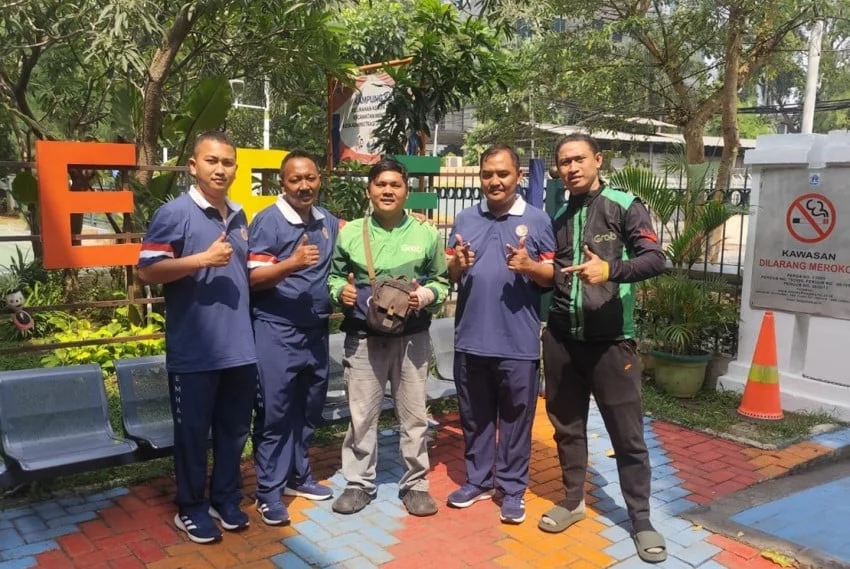
The Indonesian Ministry of Defense (Kemhan) has acknowledged and addressed a recent incident involving one of its official buses, which was widely reported to have been involved in a collision with an online motorcycle taxi (ojol) driver before allegedly fleeing the scene. The Ministry confirmed on Saturday, July 25, 2026, that it had monitored the circulating information and asserted that the matter has since been resolved amicably between the Kemhan driver and the affected ojol operator. This swift resolution, described as a "familial settlement," aims to conclude the incident outside formal legal proceedings, raising discussions about accountability and the handling of such events involving state apparatus.
Chronology of the Incident and Public Awareness
While specific details regarding the exact time and precise location of the collision remain somewhat generalized in official statements, reports suggest the incident occurred recently, leading up to the Ministry’s official acknowledgement on July 25, 2026. The initial information, likely disseminated through social media platforms, quickly garnered public attention. Videos or eyewitness accounts, though not explicitly mentioned in the official statement, are often the catalyst for such incidents gaining traction online, especially when involving government vehicles or personnel. The narrative that emerged prior to Kemhan’s statement painted a picture of an official bus, identifiable by its livery or markings, allegedly striking an ojol driver and subsequently leaving the scene without immediate accountability. This narrative, if widely believed, can quickly erode public trust and prompt demands for transparency and justice.
The incident likely unfolded on one of Jakarta’s bustling thoroughfares, a common scenario given the high volume of traffic and the pervasive presence of online ride-hailing services. An online motorcycle taxi driver, engaged in their daily work, would have been particularly vulnerable in such a situation. The immediate aftermath of a hit-and-run can be traumatic for victims, not only due to potential physical injuries but also the financial burden of damages and lost income. The perceived lack of immediate responsibility from an official vehicle would have compounded the distress, potentially fueling public outrage and leading to the rapid spread of the information across various digital channels.
Official Confirmation and the Nature of the Resolution
Brigadier General TNI Rico Ricardo, Head of Information and Defense Cooperation Bureau (Karo Infohan) at the Secretariat General of the Ministry of Defense, was the official who conveyed Kemhan’s stance on the matter. "The Ministry of Defense has monitored the information," Rico stated when confirmed on Saturday, July 25, 2026. He further elaborated that "Based on the report we received, the incident has been resolved amicably by the concerned member with the online motorcycle taxi driver." This statement confirmed both Kemhan’s awareness of the incident and the conclusion of the matter through informal means.
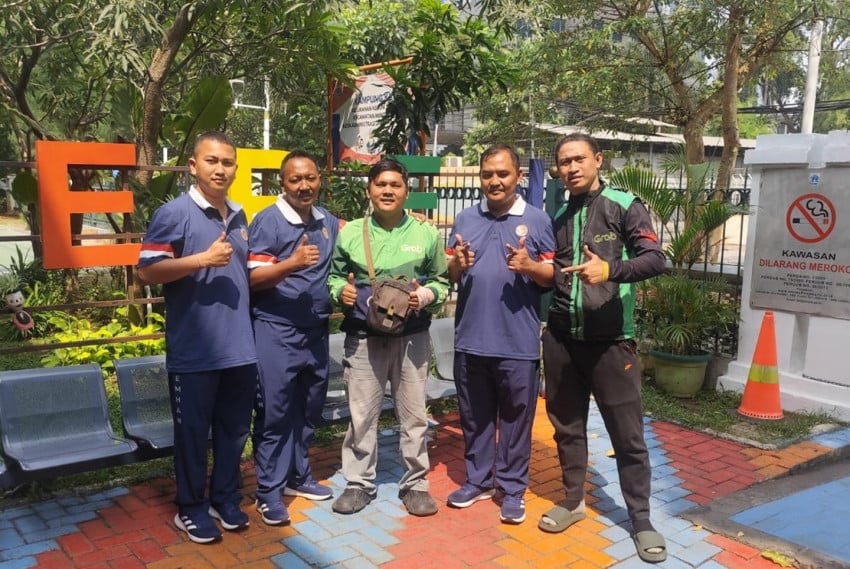
Rico emphasized that the resolution was direct and personal, taking place "directly between the Kemhan official bus driver and the online motorcycle taxi driver." He added that "Both parties have communicated well and reached a settlement through deliberation." This suggests a face-to-face discussion where terms of compensation for damages, medical expenses, or other related issues were agreed upon without the intervention of law enforcement or formal legal procedures. The use of terms like "amicably" (kekeluargaan) and "deliberation" (musyawarah) highlights a common approach in Indonesian society to resolve disputes, particularly those that are not severe criminal offenses, through mutual understanding and consensus rather than strict legal adjudication. While this approach can be effective in fostering community harmony and swift resolution, it also raises questions regarding the extent of accountability, especially when one party represents a state institution.
Contextualizing Official Vehicles and Road Safety in Indonesia
The incident serves as a stark reminder of the complexities of road safety in Indonesia, particularly involving official government vehicles. The sheer volume of traffic in major urban centers like Jakarta, combined with varying driving behaviors and infrastructure challenges, contributes to a high rate of traffic accidents. According to data from the Indonesian National Police (Polri), traffic accidents remain a significant concern, with thousands of incidents reported annually, often resulting in fatalities and injuries. While specific statistics for accidents involving government vehicles are not always disaggregated publicly, such incidents invariably attract greater scrutiny due to the perceived authority and responsibility associated with state institutions.
Government vehicles, including those operated by Kemhan, are typically subject to the same traffic laws as private citizens. However, there is often a public perception, whether justified or not, that drivers of official vehicles may sometimes operate with a sense of immunity or urgency that can lead to risky behaviors. Furthermore, the protocol for handling accidents involving government personnel and assets can sometimes differ from civilian cases, often involving internal investigations by military police (Puspom TNI) or respective institutional bodies in addition to, or instead of, civilian police. The immediate priority for any government institution in such situations is often to ensure the well-being of the involved parties and to protect the institution’s image, while also upholding discipline among its personnel.
The Vulnerability of Online Motorcycle Taxi Drivers
Online motorcycle taxi drivers, or ojol, represent a significant and increasingly vital segment of Indonesia’s urban workforce. Millions of individuals rely on these platforms for their livelihoods, navigating dense traffic daily. Their profession inherently places them at higher risk of road accidents compared to many other occupations. They spend long hours on the road, often under pressure to meet ride quotas, and are exposed to various hazards, including reckless drivers, poor road conditions, and environmental factors. Data from various sources, including ride-hailing companies themselves and independent studies, consistently show that ojol drivers face a disproportionately high rate of accidents, ranging from minor collisions to severe incidents.
In the event of an accident, an ojol driver often bears the brunt of the immediate financial and physical consequences. While ride-hailing platforms typically offer some form of insurance or assistance, the bureaucratic process can be slow, and the coverage might not always be comprehensive. Many drivers lack robust personal insurance, making them highly vulnerable to medical bills and loss of income following an injury. This vulnerability often puts them in a disadvantaged position when negotiating resolutions, especially with parties representing powerful institutions. The fear of prolonged legal battles, potential retaliation, or simply the immediate need for financial compensation can compel them to accept "amicable" settlements, even if they might not fully cover all their losses or feel entirely just.
The Role of Social Media in Public Accountability
This incident, like many others involving public officials or institutions, highlights the powerful and increasingly indispensable role of social media in driving public accountability in Indonesia. In an era where smartphones are ubiquitous and internet access is widespread, ordinary citizens have become de facto reporters. Eyewitness accounts, photos, and videos of incidents can be uploaded and shared instantly, reaching millions within hours. This rapid dissemination of information often bypasses traditional media gatekeepers, creating immediate public pressure on the involved parties to respond.
For institutions like Kemhan, social media can be a double-edged sword. While it allows for direct communication and clarification, it also means that any perceived misstep or lack of transparency can quickly escalate into a public relations crisis. In cases like the alleged hit-and-run, the initial viral spread of information often creates a narrative of injustice or abuse of power. This public outcry then compels institutions to investigate and provide explanations, even for incidents that might otherwise have remained confined to internal channels. The speed and reach of social media thus act as a critical mechanism for demanding accountability from powerful entities, ensuring that incidents are not easily swept under the rug.
Legal and Ethical Considerations of "Familial Resolution"
The "familial resolution" (penyelesaian secara kekeluargaan) is a deeply ingrained cultural practice in Indonesia, often preferred for its ability to maintain harmony and avoid lengthy, costly legal battles. In many minor civil disputes, it is an effective and culturally appropriate method. However, when applied to incidents involving state officials or institutions, particularly those that involve alleged misconduct like a hit-and-run, it presents a complex set of legal and ethical considerations.
From a legal standpoint, a hit-and-run is typically classified as a criminal offense under traffic laws, regardless of whether serious injuries occur. Fleeing the scene of an accident is generally considered an aggravation, as it impedes investigation and demonstrates a lack of immediate responsibility. While an amicable settlement can address civil damages, it often bypasses the criminal aspect of the incident. This raises questions about whether justice is fully served, and whether the perpetrator faces appropriate consequences under the law, beyond merely compensating the victim. Critics argue that relying solely on familial resolution in such cases can inadvertently create a perception of impunity for state actors, undermining the principle of equality before the law.
Ethically, the power imbalance between an individual ojol driver and a representative of the Ministry of Defense is significant. While the settlement might have been mutually agreed upon, there is always the potential for subtle pressure or the perception that the victim had limited options. For Kemhan, while resolving the immediate issue, the institutional responsibility extends beyond mere compensation. It involves upholding public trust, ensuring disciplinary action for its personnel if warranted, and demonstrating a commitment to lawful conduct. A purely familial settlement, without any public disclosure of internal disciplinary measures or a formal acknowledgement of wrongdoing, might fall short of these broader ethical obligations.
Implications for Public Trust and Institutional Image
The way in which incidents involving government institutions are handled has significant implications for public trust and the institution’s overall image. For Kemhan, an institution entrusted with national security and defense, maintaining a strong public image built on discipline, integrity, and accountability is paramount. An incident where an official vehicle is involved in an alleged hit-and-run, even if resolved amicably, can chip away at this trust.
While the swift resolution of the immediate conflict is positive for the directly involved parties, the public’s perception will also hinge on the transparency of the process and any subsequent internal actions. If the resolution is perceived as merely "covering up" a transgression or avoiding formal legal processes for a government employee, it can foster cynicism. Conversely, if Kemhan transparently communicates any internal disciplinary measures taken against the driver, reaffirms its commitment to road safety, and demonstrates genuine empathy for the victim, it can mitigate potential damage to its reputation and reinforce its commitment to accountability. This incident, therefore, serves as a test case for how government institutions balance immediate conflict resolution with broader principles of justice and public accountability.
Moving Forward: Calls for Transparency and Preventive Measures
This incident underscores the need for continuous efforts to enhance road safety, promote responsible driving among all citizens, and ensure robust accountability mechanisms for all, including those operating official vehicles. Moving forward, there could be calls from civil society organizations and road safety advocates for greater transparency in how such incidents involving government personnel are investigated and resolved. This might include:
- Clearer Protocols: Establishing and publicly communicating clear protocols for handling accidents involving government vehicles, outlining steps for police involvement, internal investigations, and victim support.
- Disciplinary Action: Ensuring that internal disciplinary actions, where warranted, are transparently communicated (without necessarily revealing personal details) to demonstrate institutional commitment to accountability.
- Driver Training: Implementing regular and rigorous defensive driving training for all personnel operating official vehicles, emphasizing road safety, ethical conduct, and immediate response procedures in case of an accident.
- Public Engagement: Proactive engagement with the public and media to address concerns, provide updates, and rebuild trust in the aftermath of such incidents.
- Support for Ojol Drivers: Strengthening support systems and legal aid for vulnerable groups like ojol drivers, ensuring they have access to fair legal processes and adequate compensation regardless of the perpetrator’s status.
In conclusion, while the Ministry of Defense has stated that the incident involving its bus and an online motorcycle taxi driver has been resolved amicably, the event highlights broader issues concerning accountability, public trust, and the unique challenges faced by vulnerable road users in a rapidly urbanizing environment. The incident serves as a crucial reminder for all institutions to not only address immediate conflicts but also to continually reinforce a culture of responsibility, transparency, and adherence to the rule of law among its personnel.
