
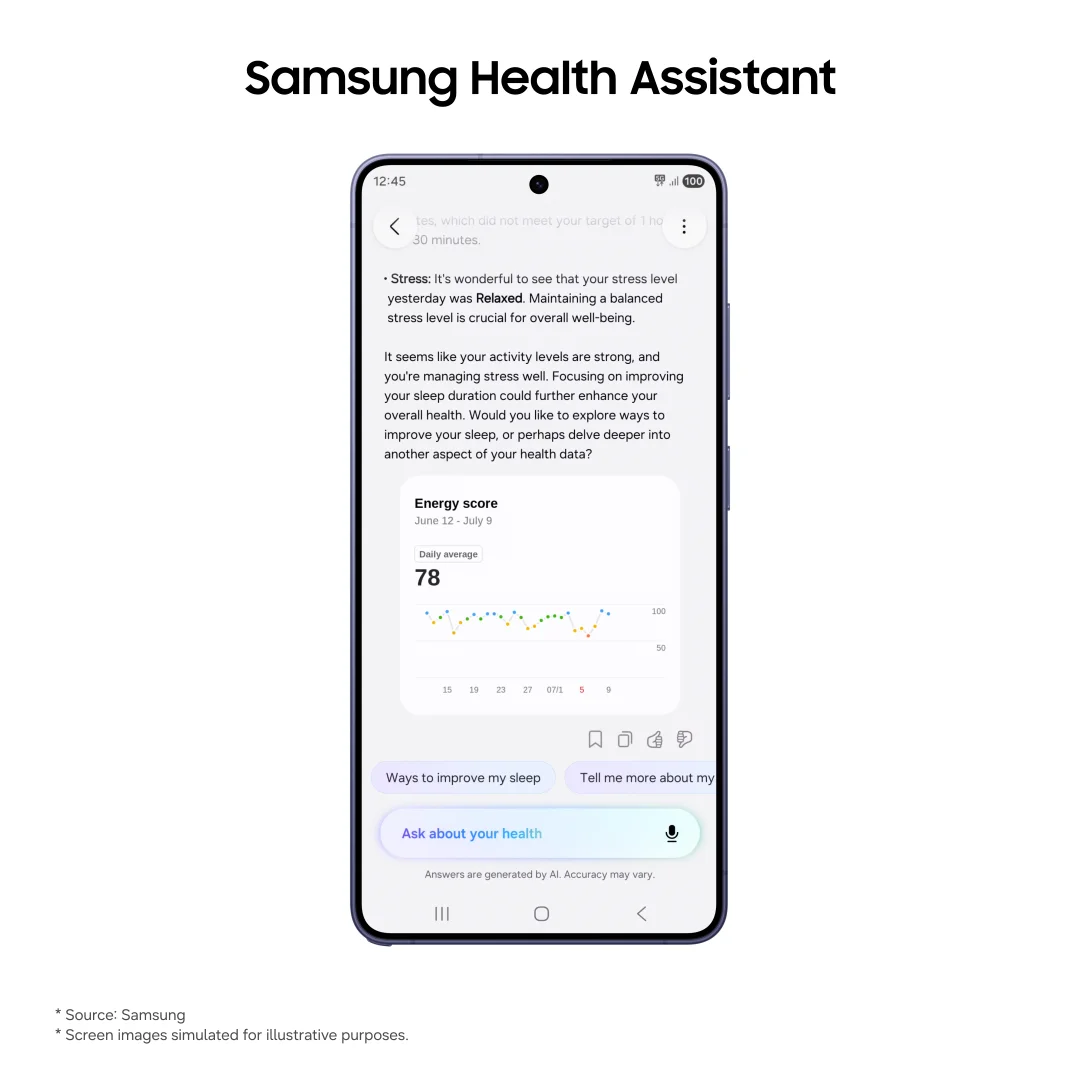
Samsung has officially announced the development and upcoming integration of "Health Assistant," a sophisticated artificial intelligence-powered personal health assistant designed to revolutionize how users manage their well-being. This innovative feature is slated to become an integral part of the widely used Samsung Health application, promising a more personalized and proactive approach to health and fitness. The announcement marks a significant stride for Samsung in leveraging AI to empower individuals in their health journeys, moving beyond simple tracking to offer intelligent guidance and actionable insights.
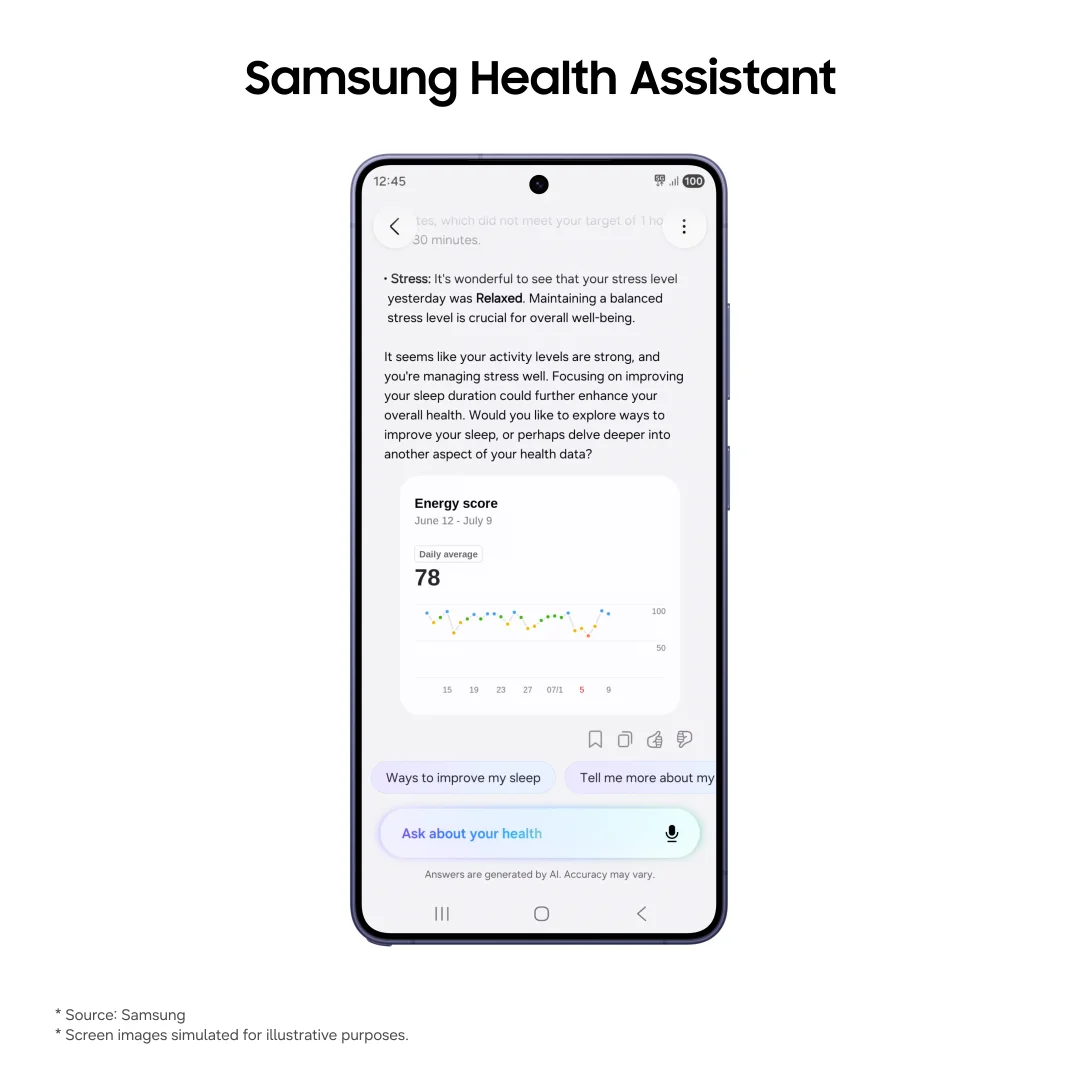
The core functionality of Health Assistant revolves around its ability to holistically assess and guide users toward their health and fitness objectives. It achieves this by synthesizing data from five critical pillars of well-being: sleep, activity, nutrition, mindfulness, and vital signs. Rather than presenting raw data, the AI engine translates this comprehensive information into concise, actionable summaries. Crucially, it elucidates the intricate relationships between these different wellness variables, explaining how improvements or deficiencies in one area can cascade and influence others. This interconnected approach aims to provide users with a deeper understanding of their overall health ecosystem, fostering more informed decision-making.
Evolution of Personal Health Monitoring: From Tracking to Intelligent Guidance
For years, health and fitness applications have primarily focused on data aggregation and basic tracking. Users could monitor their steps, heart rate, sleep duration, and calorie intake. However, the interpretation of this data and the translation into meaningful lifestyle changes often remained a challenge for many. Samsung’s Health Assistant seeks to bridge this gap by introducing an AI layer that not only collects but intelligently analyzes and interprets this wealth of information.
The concept of an AI health assistant has been a growing trend in the tech industry, with various companies exploring ways to integrate artificial intelligence into wearable devices and health platforms. Samsung’s move with Health Assistant signifies a commitment to providing a deeply integrated and sophisticated solution within its own ecosystem. This approach allows for seamless data flow from Samsung’s extensive range of wearables and smart devices, creating a robust foundation for the AI’s analytical capabilities.
Key Features and Functionality of Health Assistant
Health Assistant’s capabilities are built upon a sophisticated AI model designed to identify patterns that might otherwise go unnoticed by the average user. This proactive identification of trends and potential issues is a cornerstone of its value proposition. Furthermore, the recommendations provided by Health Assistant are not arbitrary; they are informed and validated by a team of medical professionals and certified health instructors. This ensures that the advice users receive is grounded in scientific evidence and best practices, adding a layer of credibility and trust.
The integration of expert-vetted advice addresses a common concern with AI-driven platforms – the potential for inaccurate or misleading information. By collaborating with healthcare professionals, Samsung aims to deliver an AI assistant that is both intelligent and reliable, fostering a sense of confidence in its guidance.
Future Capabilities: Deeper Personalization and Behavioral Coaching
Looking ahead, Samsung has outlined ambitious plans for the future evolution of Health Assistant. The company intends to explore enhanced coaching features designed to facilitate sustained behavioral change. This will involve guiding users through a series of actionable steps and leveraging the diverse range of health services available within the Samsung Health platform. The aim is to move beyond mere advice to actively support users in adopting healthier habits and achieving long-term wellness goals.
A pivotal aspect of this future development is the utilization of a "Personal Data Engine." This engine will provide the necessary context for Health Assistant to deliver responses that are highly personalized and sensitive to the user’s individual circumstances. This means the AI will learn and consider factors such as calendar events, daily routines, and personal preferences when formulating recommendations. For instance, if a user has a scheduled workout, Health Assistant might suggest a pre-workout meal based on their dietary habits and nutritional needs, or it might adjust activity recommendations based on the user’s energy levels indicated by other tracked metrics. This level of contextual awareness is what distinguishes a truly personal health assistant from a generic wellness app.
The Role of Data and Privacy
The effectiveness of Health Assistant hinges on the comprehensive collection and intelligent analysis of user data. Samsung has emphasized its commitment to user privacy and data security throughout the development process. As the AI learns from user interactions and health metrics, robust privacy protocols will be crucial to maintain user trust. The integration of a Personal Data Engine suggests a sophisticated approach to data handling, where information is utilized locally or with stringent anonymization and consent mechanisms. This is a critical consideration, as health data is among the most sensitive personal information.
Current Status and Availability
As of the announcement, Health Assistant is currently in a beta phase. This means that its features and performance are still undergoing refinement and testing. Furthermore, its availability is limited to users in specific geographic regions. Samsung has not yet provided a definitive timeline for a global rollout or its release in markets like Indonesia. This beta period is essential for gathering real-world feedback, identifying any bugs or usability issues, and further optimizing the AI’s performance before a wider launch.
The phased rollout strategy is common for complex technological integrations, allowing Samsung to manage the deployment effectively and address region-specific needs or regulations. The initial limited release also provides an opportunity to study user adoption patterns and preferences, which can inform future updates and feature development.
Implications for the Digital Health Landscape

The introduction of Samsung’s Health Assistant has several significant implications for the broader digital health and wearable technology markets.
- Elevated User Expectations: As consumers become accustomed to AI-powered assistants in other aspects of their lives, their expectations for health and wellness tools will undoubtedly rise. Health Assistant sets a new benchmark for what users can expect from their personal health applications, pushing competitors to innovate and enhance their offerings.
- Increased Focus on Holistic Well-being: The emphasis on five interconnected pillars of health signifies a move towards a more holistic understanding of well-being. This approach acknowledges that health is not solely about physical fitness but also encompasses mental health, sleep quality, and nutrition. This broader perspective is likely to influence how other health platforms conceptualize and deliver their services.
- The Rise of Personalized Health Interventions: The trend towards hyper-personalization, driven by AI and advanced data analytics, is set to accelerate. Health Assistant’s ability to tailor recommendations based on individual context and preferences is a prime example of this. This could lead to more effective health interventions and better adherence to health plans.
- Potential for Proactive Healthcare: By identifying patterns and offering early interventions, AI-powered health assistants have the potential to shift healthcare from a reactive model to a proactive one. Early detection of potential health issues could lead to timely medical consultation, potentially preventing more serious conditions and reducing healthcare costs in the long run.
- Challenges in Data Privacy and Ethics: As AI becomes more integrated into personal health, the ethical considerations surrounding data privacy, algorithmic bias, and user autonomy will become increasingly important. Samsung’s approach to data handling and the transparency of its AI’s decision-making processes will be closely watched.
Background Context and Samsung’s AI Strategy
This announcement is not an isolated event but rather a strategic move within Samsung’s broader commitment to artificial intelligence. Samsung has been investing heavily in AI research and development across various product categories, from smartphones and home appliances to semiconductors. The company’s vision for AI is to create intuitive and helpful experiences that simplify users’ lives and enhance their capabilities.
The integration of Health Assistant into Samsung Health aligns with the company’s strategy of building an interconnected ecosystem of devices and services. By leveraging the data generated from its popular Galaxy Watch smartwatches and other wearable devices, Samsung can create a powerful, closed-loop health and wellness solution. This vertical integration allows for a more seamless user experience and greater control over the technology’s development and implementation.
Samsung’s recent unveiling of its "Fluid AI Design System," inspired by generative AI, further underscores its dedication to embedding AI into the fabric of its user interfaces and experiences. This system aims to create more dynamic, adaptive, and intuitive interactions across Samsung devices. Health Assistant is a direct application of this forward-thinking design philosophy, promising an interface that is not only functional but also intelligently responsive to user needs.
Looking Ahead: The Future of AI in Personal Health
The development of Health Assistant by Samsung represents a significant milestone in the evolution of personal health technology. As AI continues to advance, we can anticipate even more sophisticated and integrated health solutions that empower individuals to take greater control of their well-being. The journey from simple data trackers to intelligent, personalized health companions is well underway, and Samsung is positioning itself at the forefront of this transformative wave. The success of Health Assistant will likely depend on its ability to deliver tangible improvements in user health outcomes, maintain user trust through robust privacy measures, and continuously adapt to the evolving landscape of digital health.
The question now for consumers, particularly in regions where the feature will eventually launch, is whether they will embrace this AI-driven approach to health management. Early adoption and sustained engagement will be key indicators of Health Assistant’s impact and its potential to reshape the future of personal well-being. The beta phase will be crucial for Samsung to gather insights and refine the product, ensuring that when Health Assistant officially rolls out, it delivers on its promise of a truly intelligent and indispensable health companion.
