
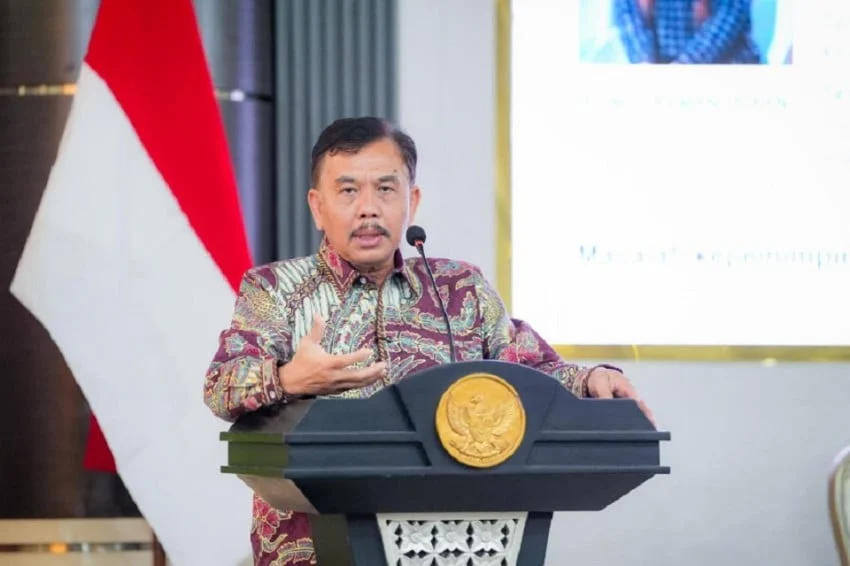
The political landscape in Jakarta has experienced a significant escalation following a direct public disagreement between the Head of the Presidential Communication Agency (Bakom RI), Syahganda Nainggolan, and Vice President Gibran Rakabuming Raka. The contention centers on conflicting narratives regarding the advice allegedly given by President Prabowo Subianto concerning the long-standing controversy over Vice President Gibran’s academic credentials. While Vice President Gibran previously claimed that President Prabowo advised him to fight the allegations by pursuing legal action in the State Administrative Court (PTUN) to validate his diploma, this assertion was swiftly and publicly challenged by Syahganda Nainggolan. Syahganda maintained that official legal assessments presented to the President by senior cabinet ministers dictate an entirely different course of action, one that renders a PTUN battle legally redundant.
The unfolding friction highlights the delicate coordination challenges within the executive branch as the administration navigates complex legal, political, and public relations hurdles. The diploma controversy, which has periodically resurfaced to challenge the legitimacy of the Vice President’s educational background, has now intersected with high-level institutional disagreements over how the government should respond to ongoing judicial challenges.
Chronology of Events at the State Palace
The sequence of events leading to the public contradiction unfolded primarily on Tuesday, November 10, 2026. On this day, the State Palace in Jakarta hosted a solemn and high-profile state ceremony for the conferment of National Hero titles, an event presided over by President Prabowo Subianto. As a senior government official and the Head of Bakom RI, Syahganda Nainggolan was present at the presidential complex throughout the proceedings and remained on-site long after the formal ceremonies concluded.
According to Syahganda’s detailed account to the media on Wednesday, November 11, 2026, he remained inside the Istana Negara until approximately 6:00 PM Western Indonesia Time (WIB). During the post-event hours, Syahganda observed the movements of key cabinet members who stayed behind to brief the President on pressing administrative and legal matters. Among the final officials to meet with President Prabowo was the Coordinating Minister for Law, Human Rights, Immigration, and Corrections, Yusril Ihza Mahendra.
Syahganda noted that Minister Yusril’s private audience with the President occurred last among the legal advisors, effectively granting the Coordinating Minister the final opportunity to present the official governmental and constitutional perspective on the ongoing diploma controversy. Based on this observation, Syahganda concluded that the legal guidance provided by Yusril represented the definitive administrative stance adopted by the executive leadership, directly contradicting the narrative that the President had encouraged a separate legal contest at the PTUN.
Legal Opinions and the Role of Yusril Ihza Mahendra
The core of the dispute hinges on the legal utility of pursuing a case through the State Administrative Court (PTUN). Prior to the latest developments, Coordinating Minister Yusril Ihza Mahendra publicly articulated a clear legal perspective regarding the viability of such litigation. Yusril emphasized that initiating legal proceedings in the PTUN to prove the authenticity of Gibran’s diploma serves no practical or legal purpose.
The rationale behind Yusril’s assessment is rooted in the principle of legal finality established by Indonesia’s highest judicial bodies. Specifically, the Constitutional Court (MK) and the Supreme Court (MA) have previously issued definitive rulings concerning the validity of Gibran Rakabuming Raka’s educational credentials. Under Indonesian jurisprudence, decisions rendered by the Constitutional Court are final and binding, possessing absolute legal force that precludes lower judicial bodies, such as the PTUN, from reopening or adjudicating identical matters.
Yusril argued that any attempt to litigate the matter further through administrative courts would not only be legally superfluous but could also unnecessarily prolong a settled controversy, potentially undermining public confidence in judicial finality. By asserting that Yusril’s comprehensive legal overview was the last to reach President Prabowo on the evening of November 10, Syahganda sought to validate the Coordinating Minister’s viewpoint as the prevailing counsel accepted by the head of state.
Broader Political Context and Related Developments
The public contradiction between the Head of Bakom RI and the Vice President occurs against a backdrop of intense political volatility. Compounding the friction over the diploma dispute are concurrent reports regarding shifts in the executive leadership structure. Notably, public attention has been intensely focused on related breaking news developments, including unconfirmed or developing reports regarding the Vice President’s political standing and administrative future, such as speculations surrounding his tenure.
The confluence of these events has placed the Presidential Communication Agency under immense pressure to maintain narrative consistency and project administrative unity. As the agency tasked with streamlining government messaging and managing public information, Bakom RI finds itself at the center of efforts to reconcile differing accounts emanating from high-ranking officials. The public rebuttal by Syahganda underscores the challenges of internal communication management, where statements made by individual leaders can inadvertently clash with the formal legal consensus articulated by specialized ministries.
Implications for Governance and Institutional Stability
The public divergence in accounts between the Vice President and a senior communications official carries several critical implications for the current administration.
First, it highlights potential vulnerabilities in the internal coordination mechanisms among executive leadership. While discrepancies in political communication are not uncommon in large administrations, a public contradiction between the Vice President and the head of the presidential communication apparatus risks fueling speculation about internal policy disarray.
Second, the controversy underscores the persistent challenge of managing legacy legal disputes. The authenticity of educational credentials among high-ranking public officials has increasingly become a focal point for political opposition and civil society scrutiny in Indonesia. By relying on definitive rulings from the Constitutional Court and the Supreme Court, the administration seeks to establish a firm legal boundary that discourages endless litigation. However, divergent statements regarding the appropriate response to these challenges can inadvertently prolong the public debate rather than put it to rest.
Finally, the incident tests the efficacy of Bakom RI in its mandate to provide transparent, accurate, and harmonized information to the public. As the administration navigates this sensitive period, the ability of executive officials to present a unified front will be crucial in maintaining institutional credibility and public trust. The unfolding developments will undoubtedly require careful diplomatic and administrative alignment to ensure that all branches of the government speak with a singular, legally grounded voice.
