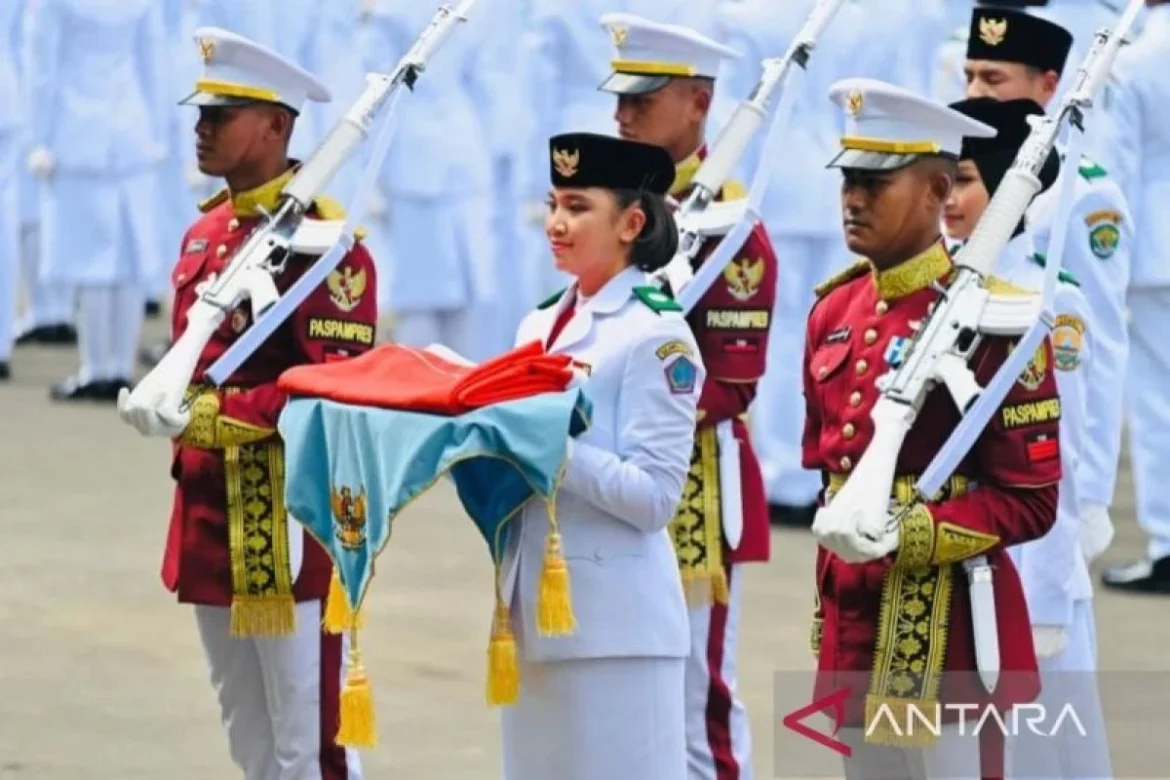
Dalam setiap peringatan Hari Ulang Tahun Kemerdekaan Republik Indonesia, perhatian jutaan pasang mata tertuju pada barisan rapi yang bergerak dengan presisi tinggi di lapangan upacara. Pasukan Pengibar Bendera Pusaka (Paskibraka) bukan sekadar menjalankan tugas protokoler; mereka adalah representasi hidup dari memori kolektif bangsa. Inti dari penampilan mereka terletak pada formasi 17-8-45, sebuah konfigurasi barisan yang secara matematis dan simbolis memahat angka-angka keramat sejarah Proklamasi Kemerdekaan Indonesia ke dalam gerak langkah yang disiplin.
Struktur dan Komposisi Formasi 17-8-45
Formasi 17-8-45 bukanlah sebuah kebetulan artistik, melainkan sebuah manifestasi terstruktur yang terdiri dari tiga unit utama dengan peran yang telah didefinisikan secara ketat dalam pedoman tata upacara. Pemisahan kelompok ini mencerminkan kompleksitas koordinasi yang dibutuhkan dalam sebuah operasi kenegaraan yang sakral.
Pasukan 17, yang menempati posisi terdepan, berfungsi sebagai pengiring dan pemandu. Angka 17 di sini bertindak sebagai pengingat akan tanggal 17, hari di mana teks Proklamasi dikumandangkan oleh Soekarno dan Mohammad Hatta pada tahun 1945. Tugas mereka adalah menjaga irama langkah dan memastikan keselarasan gerakan pasukan di belakangnya.
Di tengah formasi terdapat Pasukan 8, yang secara luas dianggap sebagai "pasukan inti." Kelompok inilah yang memikul tanggung jawab paling berat dan prestisius: membawa serta mengibarkan duplikat Bendera Pusaka Merah Putih. Angka 8 merujuk pada bulan Agustus, bulan kemerdekaan Indonesia. Anggota yang terpilih dalam kelompok ini biasanya merupakan putra-putri terbaik yang telah melalui seleksi fisik dan mental yang sangat ketat, mencerminkan kedewasaan karakter yang dibutuhkan untuk membawa simbol kedaulatan negara.
Terakhir, Pasukan 45 menutup barisan dengan berperan sebagai pengawal kehormatan. Angka 45 merepresentasikan tahun 1945. Posisi mereka di belakang Pasukan 8 memberikan kesan perlindungan dan pengokohan, melambangkan kekuatan rakyat Indonesia yang bersatu untuk mempertahankan kemerdekaan yang baru saja diproklamasikan. Secara kolektif, formasi ini adalah sebuah narasi visual yang bercerita tentang tanggal, bulan, dan tahun lahirnya sebuah bangsa.
Akar Historis: Warisan Husein Mutahar
Untuk memahami mengapa formasi ini begitu krusial, kita harus menengok kembali ke sosok Habib Husein Mutahar, seorang tokoh perintis Paskibraka sekaligus komponis lagu kebangsaan. Sejarah pembentukan formasi ini berakar pada kondisi darurat tahun 1946. Ketika Ibu Kota Indonesia harus pindah ke Yogyakarta akibat agresi Belanda, Presiden Soekarno memerintahkan Mutahar untuk menyiapkan upacara pengibaran bendera di halaman Istana Gedung Agung.
Pada saat itu, Mutahar memilih lima orang pemuda-pemudi yang melambangkan lima kelompok suku di Indonesia sebagai bentuk perwujudan persatuan nasional. Gagasan dasar ini kemudian berevolusi. Ketika Presiden Soeharto kembali menugaskan Mutahar untuk menangani pengibaran bendera pada tahun 1967, ia mengembangkan konsep tersebut menjadi struktur 17-8-45 yang kita kenal hari ini. Transformasi ini dilakukan untuk memberikan bobot sejarah yang lebih mendalam pada setiap elemen upacara, memastikan bahwa setiap generasi baru Paskibraka memahami nilai di balik setiap langkah yang mereka ambil.
Kedisiplinan dan Analisis Teknis Pelaksanaan
Secara teknis, pelaksanaan formasi 17-8-45 menuntut tingkat sinkronisasi yang luar biasa. Koordinasi antar-kelompok tidak hanya bergantung pada kemampuan fisik, tetapi juga pada komunikasi non-verbal yang intens selama masa pemusatan latihan. Setiap anggota Paskibraka harus memiliki tingkat fokus yang tinggi; kesalahan sekecil apa pun dalam formasi dapat merusak estetika dan makna filosofis yang terkandung di dalamnya.
Data dari berbagai pelatihan Paskibraka menunjukkan bahwa masa persiapan, yang sering kali berlangsung selama berminggu-minggu, difokuskan pada tiga pilar utama: ketahanan fisik, penguasaan formasi, dan kedisiplinan mental. Keberhasilan dalam melakukan transisi dari formasi awal menuju formasi pengibaran sering kali menjadi indikator kesiapan pasukan secara keseluruhan. Analisis menunjukkan bahwa kedisiplinan yang ditempa dalam latihan Paskibraka bukan hanya untuk tujuan seremonial, tetapi merupakan bentuk pendidikan karakter yang bertujuan membentuk generasi muda yang tangguh, patuh pada aturan, dan memiliki loyalitas tinggi terhadap negara.
Adaptabilitas dalam Dinamika Upacara Modern
Meskipun formasi 17-8-45 telah menjadi pakem selama beberapa dekade, penting untuk dicatat bahwa tradisi ini tetap memiliki ruang untuk adaptasi sesuai dengan konteks upacara. Sebagai contoh, dalam beberapa peringatan penting lainnya, seperti Hari Lahir Pancasila, otoritas terkait—seperti Badan Pembinaan Ideologi Pancasila (BPIP)—terkadang menyesuaikan formasi untuk mencerminkan nilai-nilai lain. Misalnya, penggunaan formasi lima kelompok untuk melambangkan lima sila dalam Pancasila.
Adaptasi ini menunjukkan bahwa Paskibraka bukan entitas yang statis. Mereka mampu berevolusi mengikuti kebutuhan zaman tanpa kehilangan esensi sejarahnya. Namun, di tengah berbagai inovasi formasi tersebut, konfigurasi 17-8-45 tetap menjadi "standar emas" yang paling relevan dengan identitas nasional Indonesia. Hal ini menegaskan bahwa simbolisme 17-8-45 adalah fondasi yang tidak tergantikan dalam memori kolektif masyarakat Indonesia mengenai perjuangan meraih kemerdekaan.
Implikasi Budaya dan Edukasi Bangsa
Dampak dari keberadaan Paskibraka dengan formasi 17-8-45 melampaui batas-batas lapangan upacara. Bagi masyarakat umum, menyaksikan barisan ini adalah pengingat tahunan tentang harga sebuah kemerdekaan. Setiap derap langkah yang serempak adalah bentuk penghormatan kepada para pahlawan yang telah berjuang pada tahun 1945.
Lebih jauh lagi, bagi para anggota Paskibraka itu sendiri, pengalaman ini sering kali menjadi titik balik dalam kehidupan pribadi mereka. Banyak mantan anggota Paskibraka yang kemudian tumbuh menjadi pemimpin di berbagai sektor, membawa nilai-nilai disiplin dan nasionalisme yang mereka pelajari selama masa tugas. Hal ini membuktikan bahwa Paskibraka berfungsi sebagai kawah candradimuka bagi calon pemimpin bangsa di masa depan.
Secara sosiologis, formasi ini memperkuat rasa persatuan. Anggota Paskibraka yang terpilih biasanya berasal dari berbagai latar belakang suku, agama, dan daerah yang berbeda di seluruh pelosok Indonesia. Ketika mereka berdiri dalam satu formasi 17-8-45, perbedaan-perbedaan tersebut melebur menjadi satu kesatuan yang utuh, sejalan dengan semboyan Bhinneka Tunggal Ika.
Kesimpulan: Menjaga Api Semangat 1945
Menjelang peringatan-peringatan besar kenegaraan, proses pemusatan latihan Paskibraka selalu menjadi sorotan media nasional. Fokus pada detail formasi, ketegasan sikap, dan kesiapan fisik para anggota sering kali menjadi berita utama yang membangkitkan kebanggaan nasional. Hal ini menegaskan kembali bahwa terlepas dari kemajuan teknologi dan perubahan zaman, simbol-simbol sejarah tetap memegang peranan vital dalam menjaga integritas bangsa.
Formasi 17-8-45 adalah bukti nyata bahwa sejarah tidak hanya tertulis dalam buku teks, tetapi juga hidup dalam gerak dan langkah generasi penerus. Selama bendera Merah Putih masih dikibarkan, formasi ini akan terus menjadi pengingat abadi bagi seluruh rakyat Indonesia akan tanggal 17 Agustus 1945—titik awal perjalanan Indonesia sebagai negara yang berdaulat dan merdeka. Melalui dedikasi para anggota Paskibraka, warisan Husein Mutahar tetap terjaga, memastikan bahwa pesan perjuangan tetap tersampaikan kepada setiap generasi dengan martabat dan kehormatan yang setinggi-tingginya.