
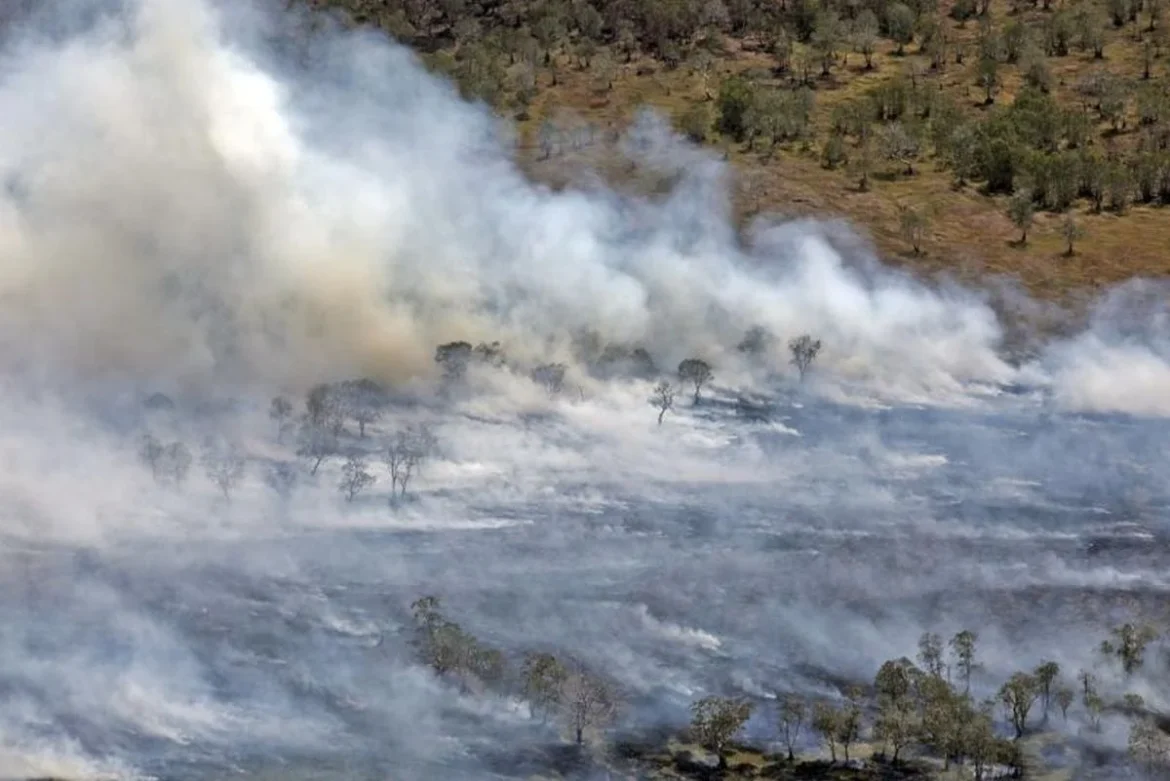
The National Disaster Management Agency (BNPB) of Indonesia has reported a significant decline in forest and land fire (karhutla) hotspots across the Papua Selatan region. According to official data released on Thursday, October 29, 2026, the number of active hotspots has plummeted by 78% within a short timeframe, marking a critical success in the government’s ongoing efforts to contain the environmental crisis. The reduction, which saw the number of hotspots drop from 295 to 65, serves as a testament to the intensified tactical operations deployed by national and regional task forces.
Operational Success and Strategic Intervention
Berton SP Pannaitan, the Acting Head of the BNPB’s Center for Data, Information, and Communication, confirmed the positive trend while emphasizing that the situation remains under active surveillance. The dramatic reduction is largely attributed to the aggressive implementation of Weather Modification Technology (TMC) and ground-based suppression efforts. As of the latest reporting period, the total land area affected by the fires is estimated at approximately 161 hectares.
To combat the spreading flames, the BNPB executed a series of high-intensity operations, including 10 sorties dedicated to cloud seeding. During these missions, emergency crews successfully dispersed 10,000 kilograms of Sodium Chloride (NaCl) over the affected regions. This chemical intervention is designed to induce artificial rainfall, thereby increasing humidity levels and reducing the flammability of the peatlands and forest floor in Papua Selatan.
The Mechanics of Weather Modification in Papua
The use of weather modification has become a cornerstone of Indonesia’s strategy to combat seasonal forest fires. In the context of Papua Selatan, the geographic complexity—characterized by vast, remote wetlands and dense canopy—makes traditional ground-based firefighting extremely difficult. By deploying salt compounds into the atmosphere, authorities can influence cloud formations to produce localized rain, effectively quenching smoldering embers that would otherwise be inaccessible to ground crews.
The 78% reduction is not merely a statistical improvement; it represents a tactical shift in how Indonesia addresses the annual cycle of fires. By acting preemptively with meteorological data, the BNPB has managed to prevent small fires from escalating into large-scale disasters that threaten biodiversity, air quality, and local livelihoods.
Chronology of the Crisis
The surge in fire activity that necessitated this emergency response began earlier in the month as the dry season reached its peak intensity. October has historically been a volatile month for fire activity in Indonesia due to the convergence of dry winds and the degradation of peatlands.
By mid-October, regional environmental agencies in Papua Selatan began observing an uptick in satellite-detected thermal anomalies. The situation reached a critical point toward the end of the second week of October, when the number of hotspots hit the 295-mark. This surge prompted an emergency meeting between the BNPB, the Ministry of Environment and Forestry (KLHK), and local Papua Selatan authorities.
Following the assessment, the government mobilized the necessary air assets to initiate the Weather Modification Operations. The rapid response, which took place over the course of approximately 10 days, successfully reversed the upward trajectory of the fires, leading to the sharp decline reported on October 29.
Environmental and Ecological Implications
Papua Selatan is home to one of the world’s most pristine ecosystems, characterized by expansive mangrove forests, sago plantations, and critical carbon-sequestering peatlands. Fires in this region are particularly devastating because they often burn underground, consuming the carbon-rich peat layer. This process not only destroys the habitat of endemic species but also releases significant quantities of stored carbon into the atmosphere, contributing to regional climate instability.

The 161 hectares identified as affected by the fires have sparked concerns among local ecologists. While the immediate threat to the wider forest canopy has been mitigated by the recent rain-inducing sorties, the long-term recovery of the burned peatland will require years of careful monitoring. Experts suggest that the government must pivot from reactive suppression to a proactive restoration model, focusing on re-wetting peat areas before the onset of the peak dry season.
Broader Socio-Economic Impact
The fires in Papua Selatan have broader implications for the local economy and public health. Smoke haze, often a byproduct of these fires, poses severe respiratory risks to the local population. By curbing the hotspots so effectively, the BNPB has significantly improved air quality standards in neighboring residential hubs.
Furthermore, the protection of these lands is vital for the preservation of indigenous land rights and traditional agriculture. Many communities in the region depend on the forest for subsistence, and large-scale fires disrupt the supply chains and food security of these populations. The success of the current operation is, therefore, a relief not just for environmentalists, but for the rural communities that reside on the periphery of the fire-prone zones.
Analysis of BNPB’s Future Strategy
The ability to reduce fire intensity by nearly four-fifths within a single month suggests that the current integration of satellite monitoring (using systems like SiPongi and Hotspot Monitoring) and physical intervention is highly effective. However, the BNPB remains cautious. Berton SP Pannaitan noted that while the current numbers are encouraging, the dry season has not fully concluded, and vigilance is required.
The Indonesian government is now exploring further investments in high-tech fire detection systems, including drone surveillance and AI-driven predictive modeling. These tools are expected to provide even faster notification times, allowing for "micro-suppression" efforts that stop fires before they expand beyond a few square meters.
Inter-Agency Cooperation
The containment of the Papua Selatan fires is the result of a multi-stakeholder collaboration. Beyond the BNPB, the regional police (Polri) and military (TNI) have played essential roles in ground-level monitoring and law enforcement. Illegal land clearing for agricultural expansion remains the leading driver of these fires, and regional authorities have intensified investigations to ensure that perpetrators are held accountable for their actions.
The synergy between the meteorological experts providing the data for cloud seeding and the pilots executing the sorties is a hallmark of Indonesia’s improved disaster management framework. As the nation continues to face the challenges of a changing global climate, these operational successes serve as a blueprint for how technical expertise and rapid mobilization can protect Indonesia’s natural heritage.
Conclusion and Outlook
As of late October 2026, the situation in Papua Selatan is stable, though the region remains on high alert. The reduction from 295 to 65 hotspots is a clear indication that the government’s comprehensive approach—blending atmospheric science with rigorous on-the-ground management—is yielding tangible results.
While the immediate crisis is under control, the focus is expected to shift toward monitoring for potential flare-ups and assessing the damage to the 161 hectares. The BNPB has committed to maintaining its current level of readiness, ensuring that if conditions deteriorate again, the response will be equally swift and effective. For the people of Papua Selatan, the containment of these fires provides a much-needed window of safety as they transition into the next phase of the year. The government’s resolve to preserve the region’s environment remains a top priority, reflecting a broader commitment to sustainable development and climate resilience in the face of increasingly unpredictable weather patterns.
