

Economy
The global market for portable content creation tools is poised for a major shake-up as consumer electronics giant OPPO prepares to enter the pocket gimbal camera segment. Known primarily for its smartphone innovations, the Chinese multinational technology company is reportedly in the advanced stages of developing its first-ever standalone pocket gimbal camera, carrying the internal codename "Fuyao." This strategic move places OPPO on a direct collision course with established industry leaders such as DJI and Insta360, while intensifying a burgeoning hardware race that is rapidly redefining mobile videography.
According to prominent industry tipster Digital Chat Station (DCS), development on the OPPO Fuyao has progressed significantly, signaling that an official commercial launch may be closer than initially anticipated. Industry observers note that OPPO harbors high confidence in the commercial viability of the Fuyao project, driven by exhaustive market analyses of competing hardware already dominating the vlogging and mobile journalism sectors. By diversifying beyond traditional smartphones and conventional digital cameras, OPPO aims to capture a lucrative demographic of content creators, travel vloggers, and everyday media enthusiasts who demand professional-grade video stabilization without the encumbrance of bulky DSLR equipment.
The Evolution of Pocket Gimbals and the Competitive Landscape
Pocket gimbal cameras have carved out a distinct and rapidly expanding niche within the consumer electronics market. Unlike traditional action cameras that rely heavily on electronic image stabilization—which often crops the sensor and can introduce visual artifacts in low-light conditions—pocket gimbals integrate a miniature mechanical multi-axis stabilization system directly beneath the camera lens. This mechanical stabilization ensures buttery-smooth cinematic movement, making the form factor exceptionally popular for walking tours, travel documentation, travel vlogs, and fast-paced social media production.
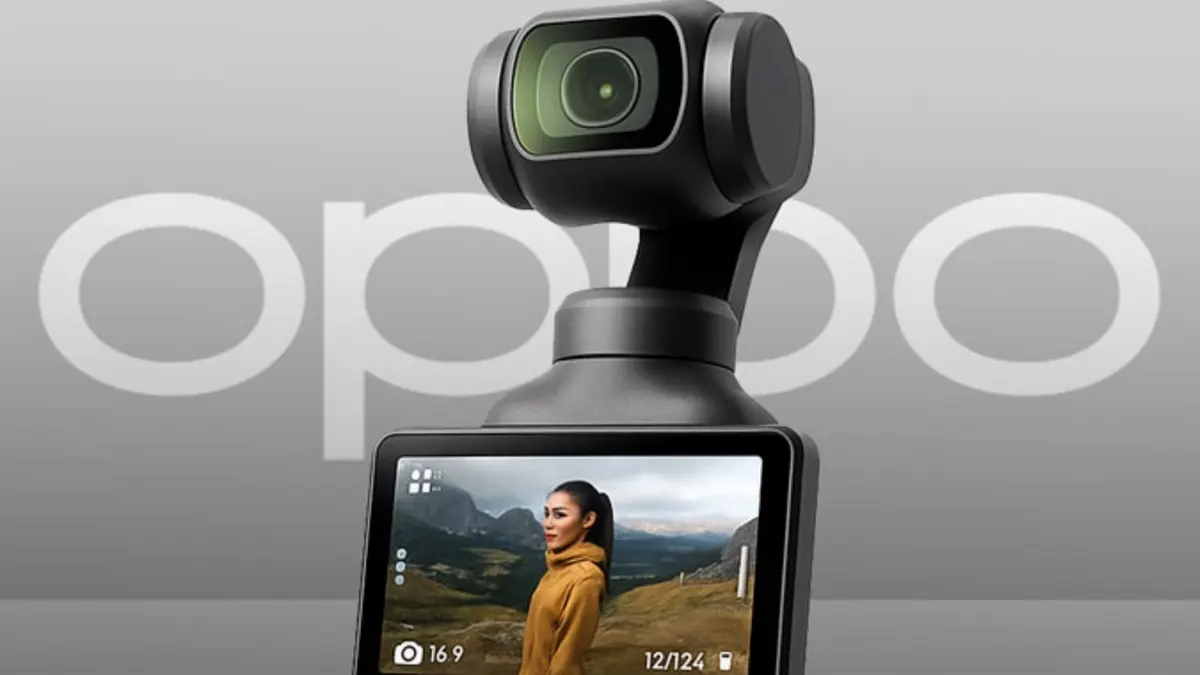
For years, the market has been largely dominated by DJI, whose Osmo Pocket series has set the benchmark for ultra-portable stabilized video recording. However, the competitive landscape has evolved dramatically. The rise of alternative ecosystem players like Insta360 has proven that consumers are eager for fresh design philosophies, modular accessories, and advanced software integration. Furthermore, recent industry intelligence suggests that other major smartphone manufacturers, including vivo, are also exploring or actively developing similar imaging hardware. OPPO’s entry into this arena is a calculated response to shifting consumer preferences, reflecting a broader trend where mobile brands leverage their advanced camera engineering expertise to conquer adjacent hardware categories.
Tracing the Timeline: From R&D Commitments to the Fuyao Codename
The journey toward OPPO’s upcoming pocket gimbal camera did not happen overnight. The foundation for this expansion was formally laid in September, when corporate leadership officially confirmed the development of a brand-new imaging product category featuring an entirely novel form factor. At the time, company executives outlined a strategic roadmap targeting a commercial rollout within 2026.
As research and development teams refined the hardware blueprints, the project adopted the internal designation "Fuyao." In recent weeks, leaks originating from supply chain sources and high-profile industry analysts have brought the device back into the spotlight. Reports indicate that OPPO engineers have spent considerable time rigorously testing competitor products, dismantling rival hardware to benchmark stabilization motors, battery efficiency, thermal performance, and optical clarity. This meticulous preparation underscores the company’s determination to deliver a polished product upon its initial market debut, minimizing early software bugs and hardware limitations that often plague first-generation devices.
Unpacking the Rumors: High-End Optics and Ecosystem Integration
While OPPO has maintained a tight-lipped official stance regarding the definitive specifications of the Fuyao, the tech community has been rife with speculation concerning its potential capabilities. Early rumors suggested that the pocket gimbal might incorporate an ultra-high-resolution 200-megapixel sensor. While such a staggering pixel count on a pocket gimbal sensor remains unverified and subject to debate among optics experts, it highlights the ambitious performance tier OPPO is apparently targeting.

Beyond raw sensor metrics, industry insiders are closely monitoring potential synergies with OPPO’s existing product ecosystem. Speculation points toward a prospective collaboration with legendary Swedish camera maker Hasselblad—a partnership that has already yielded acclaimed color calibration and imaging profiles across OPPO’s flagship Find-series smartphones. If Hasselblad’s color science and advanced tuning algorithms are successfully integrated into the Fuyao, users could experience unprecedented color accuracy and dynamic range out of a pocket-sized device.
Additionally, seamless smartphone integration is expected to be a cornerstone of the user experience. Content creators frequently face bottlenecks when transferring massive video files from standalone cameras to mobile devices for quick editing and publishing. OPPO is widely anticipated to develop a proprietary ecosystem bridge, enabling instant pairing, ultra-fast wireless file transfers, and streamlined post-production workflows directly through companion mobile applications.
Market Implications and the Future of Mobile Imaging
The impending arrival of the OPPO Fuyao carries significant implications for both the manufacturer and the broader consumer tech industry. For OPPO, successfully launching a competitive pocket gimbal validates its broader diversification strategy, reducing its reliance purely on smartphone sales in an increasingly saturated global market. By capturing creators who rely on specialized video tools, OPPO can foster stronger brand loyalty across its wider ecosystem of tablets, wearables, and audio accessories.
For consumers, increased competition typically drives rapid technological innovation and aggressive pricing models. As DJI and Insta360 face a formidable new rival backed by massive research and development resources, buyers can anticipate accelerated firmware updates, enhanced AI-driven tracking features, improved battery performance, and more accessible price points.
As the industry awaits an official announcement concerning pricing, regional availability, and a definitive release date, the spotlight remains firmly on OPPO. With the company’s stated goal of introducing its new imaging form factor fully materializing, the pocket gimbal market is gearing up for a dynamic new era. Creators and tech enthusiasts alike will be watching closely to see if the OPPO Fuyao can live up to the soaring expectations and successfully redefine what is possible in the palm of a hand.
