
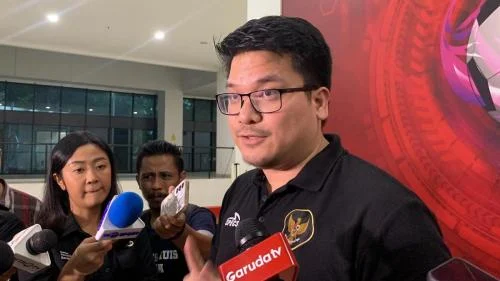
The future of Indonesian futsal is currently hanging in the balance as a deepening leadership crisis within the Federasi Futsal Indonesia (FFI) threatens to derail high-profile international engagements. Michael Sianipar, the embattled Chairman of FFI, has expressed grave concerns that the ongoing duality in leadership could force the cancellation of a landmark friendly match between the Indonesian National Futsal Team and the legendary Brazilian National Futsal Team, originally scheduled for April 2027. This administrative instability not only risks the loss of a historic sporting event but also signals a potential decline in Indonesia’s reputation within the international futsal community.
The roots of this crisis trace back to recent internal friction, which has escalated to a point where multiple factions now lay claim to the legitimate leadership of the federation. For stakeholders, fans, and the athletes themselves, the uncertainty serves as a significant hurdle to the progress that the sport has made in recent years.
The Origin of the Brazil Connection
The proposed match against Brazil is not merely an exhibition; it is the culmination of months of diplomatic efforts and strategic planning aimed at elevating the profile of Indonesian futsal. During a visit to Brazil in October 2026, which involved accompanying the Garuda squad for a series of invitational tournaments, Michael Sianipar successfully negotiated the terms for a return visit. The agreement was intended to provide the Indonesian squad with invaluable exposure against the world’s elite, serving as a critical benchmark for the team’s development on the global stage.
The signed agreement between the two federations was celebrated as a milestone for Indonesian sports. However, the current political landscape within the FFI has cast a long shadow over these plans. Michael Sianipar notes that international partners, particularly those as prestigious as the Brazilian Football Confederation (CBF) or its futsal counterpart, prioritize stability and legal clarity when committing to international tours.
Chronology of the Leadership Conflict
The instability within the FFI did not happen overnight. The following timeline outlines the progression of the current impasse:
- October 2026: Michael Sianipar leads the Indonesian delegation to Brazil, finalizing the historic agreement for an April 2027 tour.
- November 2026: Internal disagreements regarding the governance and structural direction of the FFI culminate in a public rift. Various factions emerge, leading to questions regarding the legitimacy of the current executive board.
- Late November 2026: The situation reaches a boiling point, with PSSI—the parent organization of Indonesian football—reportedly intervening in matters related to the leadership of the FFI, leading to the reported removal of Michael Sianipar from his position.
- November 24, 2026: Michael Sianipar publicly addresses the media in Jakarta, characterizing the conflict as a threat to the sport’s international obligations rather than just an internal administrative dispute.
The Anatomy of the Risk
The core of the concern lies in the legal and logistical uncertainty presented to foreign entities. International sports federations typically require a single, undisputed point of contact to handle logistics, venue security, financial guarantees, and diplomatic protocols. When two parties claim to represent the same organization, international partners often choose to withdraw rather than risk getting embroiled in domestic political turmoil.
"I am deeply hopeful that the Brazilian team will still make the journey to Indonesia," Sianipar stated during his address. "However, one must consider the perspective of our counterparts. If they are faced with the question of which entity holds the authority to sign contracts, issue invitations, and ensure the safety of the delegation, they will likely choose the safer path of cancelling the event to avoid the risk of landing in a chaotic environment."
Implications for the Women’s National Team
The crisis is not confined to the men’s squad. Sianipar highlighted that the Women’s National Futsal Team is also facing potential disruption. A planned training camp in Portugal, scheduled for February 2027 and backed by the Djarum Foundation, is now in jeopardy.
This program represents a significant investment in the growth of women’s sports in Indonesia. Should the administrative deadlock continue, the lack of a clear authority to manage travel, visa documentation, and partnership obligations could result in the withdrawal of support from stakeholders. The loss of such a training camp would be a severe setback for the players, many of whom rely on these international experiences to improve their tactical understanding and competitive edge.
International Perceptions and Reputation
The impact of this conflict extends beyond the immediate cancellation of matches. The global futsal community is relatively interconnected, and news of administrative instability travels quickly. When a national federation is seen as unreliable, it often results in the loss of trust from international governing bodies such as FIFA and the AFC.
In his analysis, Sianipar emphasized that the conflict has already moved beyond domestic borders. "This is no longer just an internal organizational dispute," he explained. "The leaders of futsal federations in other countries are watching. They are aware of the situation in Indonesia, and it is causing them to reconsider their future engagements with us."
Economic and Developmental Consequences
Futsal in Indonesia has experienced a surge in popularity, driven by both private investment and consistent efforts to develop local talent. The loss of international friendlies directly impacts the following areas:
- Sponsorship Stability: Private foundations and corporations, such as the Djarum Foundation, require a stable environment to justify their investments. Prolonged chaos risks the withdrawal of future funding.
- Athletic Development: Without international matches, the Indonesian national teams are deprived of the high-intensity competition required to qualify for or succeed in major tournaments like the Futsal World Cup.
- Youth Engagement: The visibility of the national team is a primary driver for youth participation. If the national team is absent from the international scene, interest in the sport at the grassroots level may wane.
The Path Forward: Seeking Resolution
For the sake of the sport, observers and stakeholders are calling for an immediate resolution to the dualism within the FFI. Whether through mediation by the PSSI, intervention by the Ministry of Youth and Sports, or a resolution through internal democratic processes, the priority remains the restoration of a singular, recognized leadership.
The legal standing of the FFI must be clarified to reassure both domestic players and international partners. As of late 2026, the silence or the conflicting statements coming from the competing factions only serve to exacerbate the anxiety of the fans.
Conclusion
The potential loss of the Indonesia vs. Brazil match and the cancellation of the women’s training camp in Portugal are the most visible symptoms of a much deeper problem. While the technical staff and players continue to prepare for their upcoming duties, they do so under a cloud of uncertainty.
The situation serves as a stark reminder that administrative governance is the backbone of any sporting success. Without a stable foundation, even the most promising sporting projects are destined to collapse. As the clock ticks toward the April 2027 deadline, the Indonesian futsal community waits to see if common sense and the spirit of the game will prevail over internal politics, or if the country will suffer the embarrassment of an international withdrawal that could have been avoided.
The onus is now on the leadership to put aside individual ambitions and prioritize the integrity of the sport. Failure to do so will not only disappoint thousands of fans but will also erase the progress of a generation of athletes who have worked tirelessly to put Indonesia on the world map.
