
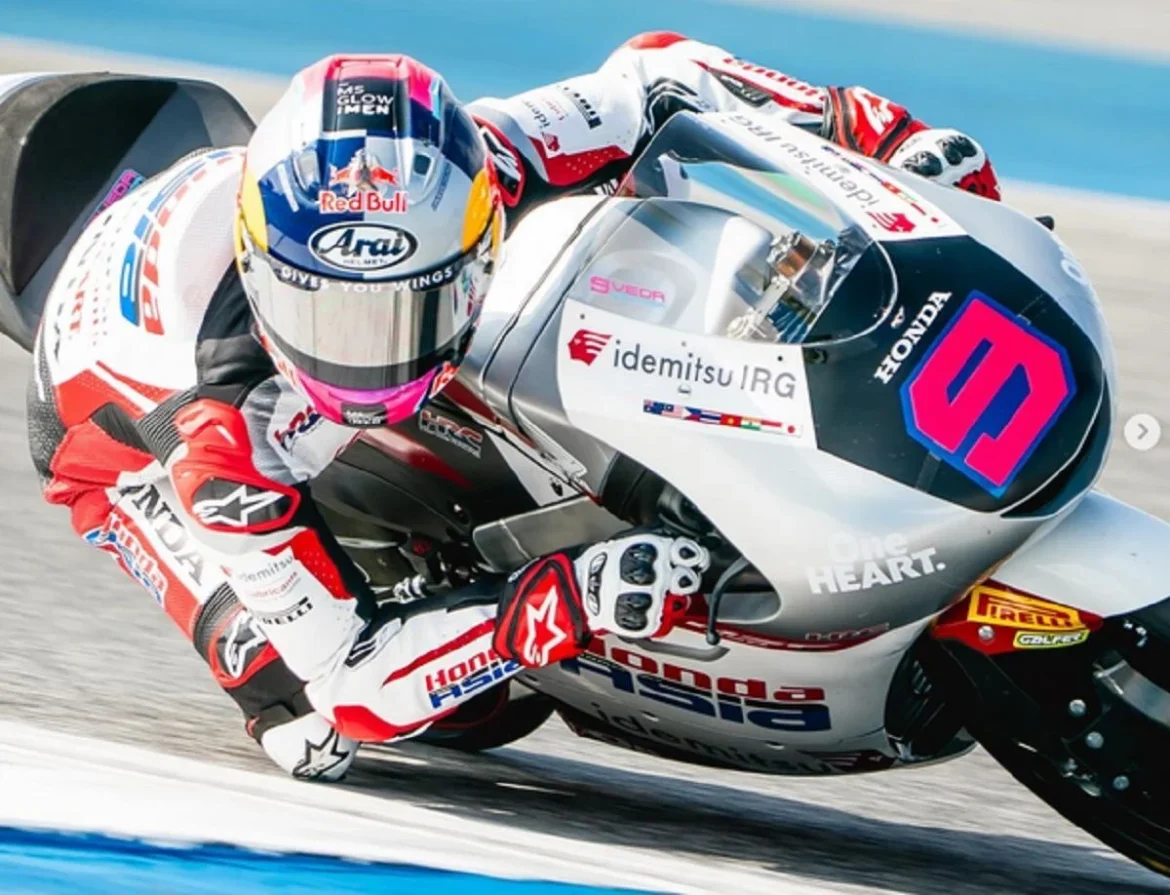
The final round of the 2026 Moto3 World Championship approaches with intense anticipation as Indonesian rising star Veda Ega Pratama prepares to face one of the most challenging venues on the calendar: the Circuit Ricardo Tormo in Valencia, Spain. Scheduled for November 27 to 29, 2026, the season-closing Grand Prix carries immense significance for the 17-year-old rider. Beyond the standard ambitions of closing out a gruelling global campaign on a high note, Pratama faces the psychological hurdle of a difficult historical record at the Spanish circuit, coupled with high-stakes championship mathematics that demand an aggressive and flawless performance.
As the global motorsport community turns its attention to the Valencian Community for the 22nd and final round of the season, the paddock is abuzz with speculation regarding whether the young Indonesian talent can reverse past misfortunes. Pratama enters the weekend holding the sixth position in the fiercely contested Moto3 World Championship standings, a remarkable feat for a competitor navigating the complexities of the lightweight class. However, his grip on that coveted position is precarious, making the upcoming weekend a definitive test of resilience, technical adaptation, and tactical maturity.
Historical Context and Past Challenges at Ricardo Tormo
For Veda Ega Pratama, the Circuit Ricardo Tormo holds memories of frustration rather than triumph. Historical records and paddock archives reveal that the Indonesian prodigy has tackled the demanding 4.01-kilometer layout twice previously, during his formative years in European competition last season. Operating within the ultra-competitive environment of the Moto3 World Junior Championship, Pratama struggled to unlock consistent pace across the race distances at the Valencia venue.
During those previous outings, the young rider encountered a steep learning curve characteristic of international motorcycle racing. In the first encounter of the weekend, Pratama managed to salvage a tenth-place finish, securing crucial championship points but trailing significantly behind the front-running pack. The second race proved even more unforgiving, culminating in a premature exit as Pratama failed to see the checkered flag due to a race incident. These historical struggles present a psychological hurdle as he returns to the Spanish circuit under the global spotlight of the Moto3 World Championship, though analysts note that his subsequent promotion and development throughout the 2026 season have rendered him a vastly different and more experienced competitor.
The Imperative of Defending Championship Standing
Pratama’s motivation heading into the Valencia weekend is multi-layered, anchored primarily by the urgent necessity to protect his position in the overall rider standings. The Indonesian sensation currently occupies sixth place in the championship table, having accumulated an impressive tally of 144 points over the course of the 2026 season. This milestone highlights his consistency and ability to regularly challenge established front-runners in the premier lightweight division.

However, safety is a luxury Pratama cannot afford as the season concludes. Trailing closely behind him in seventh place is Marco Morelli of the CFMoto Aspar Team. Morelli has amassed 141 points, sitting a mere three markers adrift of the Indonesian rider. This razor-thin margin means that any misstep, mechanical failure, or subpar qualifying session during the Valencia weekend could result in an immediate swing in the standings. If Morelli outperforms Pratama in Sunday’s Grand Prix, the championship ranking will shift, stripping the Indonesian rider of his hard-earned sixth-place finish. Consequently, race engineers and tactical analysts anticipate that Pratama will be forced to adopt an aggressive yet calculated approach from the opening practice session onward.
Redemption Following the Portuguese Grand Prix Setback
The urgency of the Valencia finale is further amplified by the events of the preceding weekend. The 21st round of the 2026 season, hosted at the Algarve International Circuit in Portimão, Portugal, ended in disappointment for the Honda-mounted rider. In a race characterized by heavy attrition and unpredictable track conditions, Pratama suffered a DNF (Did Not Finish), failing to complete the distance and missing out on an opportunity to solidify his position in the standings.
The psychological impact of a recent non-finish often tests a rider’s momentum. For Pratama, the setback in Portugal serves as fuel for redemption. Team insiders suggest that the young rider has spent the intervening days analyzing telemetry data alongside his technical crew to pinpoint the factors contributing to the Portuguese exit. Translating those lessons to the unique demands of the Ricardo Tormo circuit will be critical, particularly given the track’s distinctive layout featuring fourteen corners, a notoriously short main straight, and a stadium-like atmosphere that amplifies pressure on every competitor.
Team Evolution and Future Prospects: The Transition to Honda HRC Asia
Beyond the immediate sporting battle on the asphalt, the Valencia weekend marks a transitional milestone off the track. The ongoing evolution of the junior development structure within the premier grand prix ecosystem brings structural changes for the upcoming campaign. Honda Team Asia, the developmental breeding ground that has nurtured Pratama’s burgeoning career, is set to undergo a rebranding and structural elevation ahead of next season, transforming officially into Honda HRC Asia.
This institutional upgrade underscores Honda’s long-term commitment to grooming Asian talent for the premier classes of Grand Prix motorcycle racing. For Pratama, whose performances throughout 2026 have validated his status as one of the region’s premier two-wheeled exports, securing stability and continuity within the factory-backed structure remains paramount. While official announcements regarding next year’s rider rosters continue to generate intense media scrutiny, maintaining a top-six finish in the world championship serves as a powerful statement of intent, reinforcing his value to manufacturers and team principals alike as negotiations and preparations for the following season reach their zenith.
Technical Analysis of the Ricardo Tormo Circuit
Navigating the Circuit Ricardo Tormo presents a distinct engineering challenge for Moto3 machinery. Unlike high-speed power tracks, the Valencia venue emphasizes cornering agility, precise chassis setup, and exceptional rear-end grip. The circuit’s layout features a tight, twisting infield surrounded by grandstands that create a natural amphitheatre effect, trapping wind and altering track temperatures throughout the day.

For lightweight machines like the Moto3 prototypes, maintaining corner speed is vastly more vital than outright engine horsepower. Pratama’s machine setup will require a delicate balance between front-end stability under heavy braking into the tight Turn 1 and rapid directional changes through the sweeping complex of the back section. Crew chiefs must find a setup that allows the Indonesian rider to defend his lines effectively against aggressive lunges from competitors like Marco Morelli, while preserving Michelin rubber durability across the full 20-lap race distance.
Broader Implications for Indonesian Motorsport
The journey of Veda Ega Pratama carries significance far beyond personal accolades; it represents a watershed moment for the development of Indonesian motorsport on the global stage. As the archipelago nation boasts one of the most passionate fanbases for Grand Prix motorcycle racing in the world, the emergence of a competitive homegrown rider capable of fighting at the sharp end of a world championship class has captured the imagination of millions.
A successful conclusion to the 2026 season—culminating in the preservation of sixth place in the overall standings—would validate the systematic talent-pathway initiatives implemented across Southeast Asia in recent years. It demonstrates that regional riders can successfully bridge the competitive gap to European-dominated racing hierarchies. Conversely, a failure to hold off challengers in the final race would serve as a reminder of the unforgiving nature of elite motorsport, where margins are measured in fractions of a second and historical demons can resurface without warning.
Outlook for the Weekend Ahead
As the pit lane opens for Free Practice 1 on Friday morning, all eyes will be locked on the number 54 machine. The narrative surrounding Veda Ega Pratama is one defined by high stakes, historical redemption, and the relentless pressure of elite global competition. Whether the young Indonesian talent can conquer the ghosts of his past performances at the Circuit Ricardo Tormo and successfully stave off the championship threat posed by Marco Morelli remains one of the most compelling subplots of the 2026 Moto3 finale.
The weekend will demand absolute precision, mental fortitude, and tactical execution. For Pratama, the objective is straightforward yet monumental: conquer the Valencian asphalt, secure the coveted sixth position in the world championship, and lay down a definitive marker as he transitions into a new era of international competition with Honda HRC Asia.
