
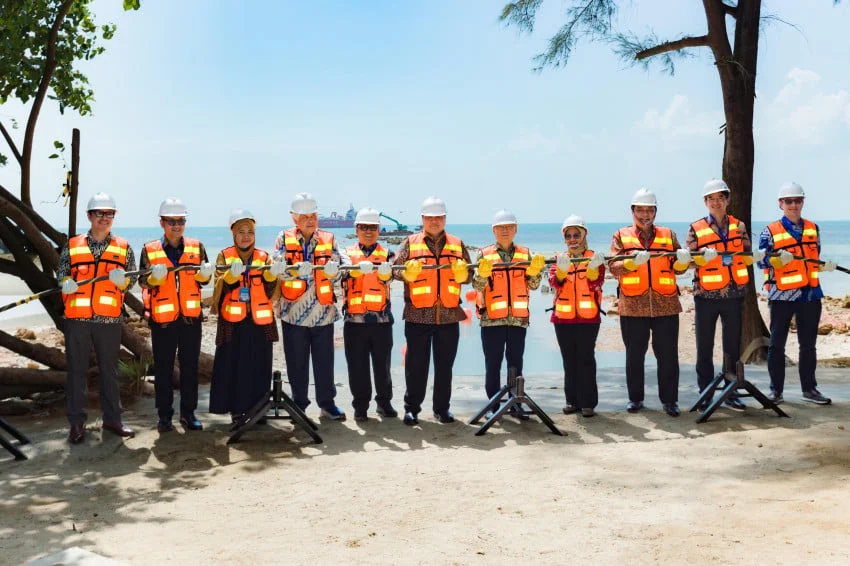
The symbolic landing of the Nongsa Changi Cable (NCC) in Batam on Monday, July 20th, marked a significant milestone in enhancing digital connectivity between Indonesia and Singapore, bolstering the region’s digital infrastructure and its competitiveness on the global stage. PT Telekomunikasi Indonesia International (Telin), an operating company of PT Telkom Indonesia (Persero) Tbk (Telkom), in collaboration with BW Digital and with the strategic support of Nongsa Digital Park (NDP), successfully completed this crucial phase of the project. This achievement underscores the commitment to building robust digital corridors and positions Batam as a pivotal gateway for Indonesia’s digital ambitions.
The high-profile ceremony was attended by key dignitaries from both nations, signifying the strategic importance of the NCC project. Among those present were Airlangga Hartarto, Coordinating Minister for Economic Affairs of the Republic of Indonesia; Gan Kim Yong, Singapore’s Deputy Prime Minister and Minister for Trade and Industry; Hotmangaraja Panjaitan, Indonesian Ambassador to Singapore; Setyanto Hantoro, Managing Director Business-2 Danantara Indonesia; Nyanyang Haris Pratamura, Deputy Governor of the Riau Islands Province; and the directorial boards of Telkom, Telin, BW Digital, and Nongsa Digital Park. Their presence highlighted the collaborative spirit and the shared vision for a more interconnected digital future.
A Foundation for Digital Transformation
Minister Airlangga Hartarto emphasized the critical role of tangible infrastructure and robust connectivity in supporting Indonesia’s digital transformation agenda. "Indonesia’s digital transformation needs to be supported by real infrastructure and increasingly strong connectivity," stated Minister Hartarto. "The NCC serves as the physical foundation for the creation of a new digital corridor connecting Indonesia and Singapore, simultaneously strengthening Batam’s position as Indonesia’s digital gateway. The presence of the NCC is expected to reinforce the strategic positions of both countries within the global digital ecosystem and value chain, while also opening avenues for the growth of investment, innovation, and new technology-based economic activities."
The NCC project is part of a broader initiative by TelkomGroup to enhance digital links between Indonesia and Singapore. It is one of two subsea cables being developed by the group for this purpose, the other being the Indonesia Singapore Cable System (INSICA). Together, these cables are designed to significantly boost the capacity and reliability of data transmission between the two nations. The NCC is also integrated into the Indonesia Cable Express (ICE) ecosystem, a comprehensive network designed to accelerate the development of digital economies across Indonesia and its surrounding regions.
Strategic Investment for National Resilience
Setyanto Hantoro, Managing Director Business-2 Danantara Indonesia, further elaborated on the economic implications of such strategic investments. "Strategic investments like the NCC are crucial because strengthening digital sovereignty and infrastructure can act as a catalyst for innovation, competitiveness, and the growth of various industrial sectors," Hantoro remarked during the press conference. "The presence of this infrastructure is expected to create a multiplier economic effect by encouraging the growth of various industries in Batam and Indonesia as a whole, ultimately contributing to the strengthening of national economic growth and resilience."
This sentiment is echoed by the broader economic landscape, where reliable and high-capacity digital infrastructure is increasingly recognized as a prerequisite for economic competitiveness. As digital services become more integrated into daily life and business operations, the ability to transmit data quickly and securely is paramount. The NCC, with its advanced technology and strategic routing, is poised to meet these growing demands.
Chronology of a Critical Connection
The successful landing of the NCC cable in Batam is the culmination of a meticulously planned and executed process that likely spanned several years. While specific dates for earlier stages are not detailed in the provided information, the journey typically involves:
- Feasibility Studies and Planning: Extensive research into optimal cable routes, seabed conditions, potential landing sites, and the required technical specifications. This phase would have involved engagement with various stakeholders, including governments, regulatory bodies, and potential partners.
- Securing Permits and Approvals: Obtaining necessary permissions from Indonesian and Singaporean authorities, environmental impact assessments, and rights-of-way for both terrestrial and subsea segments.
- Cable Manufacturing: The intricate process of manufacturing the subsea cable itself, which is designed to withstand extreme environmental conditions. This often involves specialized facilities capable of producing thousands of kilometers of cable.
- Cable Laying Operations: The most visible and complex phase, involving specialized cable-laying vessels that transport and carefully deploy the cable across the seabed. This stage requires precise navigation and meticulous attention to detail. The NCC’s journey from its point of origin, likely in Singapore, to its landing in Batam would have been a significant undertaking involving advanced maritime technology.
- Cable Landing and Shore End Connection: The critical process of bringing the subsea cable ashore and connecting it to the terrestrial network infrastructure at the landing station. This was the event celebrated on July 20th.
- Testing and Commissioning: Rigorous testing of the cable’s performance, capacity, and reliability to ensure it meets all operational standards before being officially activated.
The symbolic landing ceremony on July 20th represents the successful completion of the physical installation of the cable’s subsea segment and its connection to the landing point in Batam. The subsequent steps would involve the final integration into the wider network and the commencement of commercial operations.
Supporting Data and Technological Significance
Subsea cables are the backbone of global internet connectivity, carrying over 99% of international data traffic. The NCC, by connecting Batam directly to Singapore, one of the world’s leading digital hubs, will significantly reduce latency and increase bandwidth for data transfer. This is crucial for a variety of applications, including:
- Cloud Computing: Businesses and individuals will experience faster access to cloud services hosted in Singapore.
- Financial Transactions: High-frequency trading and real-time financial data exchange will benefit from reduced latency.
- Content Delivery Networks (CDNs): Streaming services and online content providers can deliver faster and more reliable experiences to users in Indonesia.
- E-commerce: Enhanced connectivity supports smoother online transactions and logistics.
- Emerging Technologies: The growth of 5G, Artificial Intelligence (AI), and the Internet of Things (IoT) relies heavily on robust and low-latency network infrastructure.
While specific technical specifications for the NCC are not provided, modern subsea cables typically offer capacities ranging from tens to hundreds of terabits per second (Tbps). The deployment of such advanced cables is a testament to the significant investments being made in digital infrastructure. For context, the global subsea cable market is valued in the tens of billions of dollars, with ongoing investments driven by the insatiable demand for data.
Broader Implications for Regional Development
The NCC’s landing in Batam is not merely a technological achievement; it is a strategic move with far-reaching economic and geopolitical implications.
Batam as a Digital Hub
Nongsa Digital Park (NDP) has been actively positioned as a hub for digital businesses, attracting investment in areas such as data centers, software development, and creative industries. The NCC provides the essential connectivity that underpins these ambitions. By linking directly to Singapore, a global financial and technology center, Batam becomes a more attractive location for foreign direct investment in the digital sector. This could lead to job creation, skills development, and the growth of a local digital ecosystem.
Indonesia’s Digital Sovereignty
Strengthening domestic digital infrastructure is vital for Indonesia’s digital sovereignty. Reduced reliance on potentially less secure or less efficient international transit routes enhances control over data flow and security. The NCC project, being a collaboration with an Indonesian state-owned enterprise (Telkom), reinforces this national objective.
Singapore’s Role as a Regional Gateway
For Singapore, the NCC further solidifies its position as a key digital gateway for Southeast Asia. Enhanced connectivity with its largest neighbor strengthens bilateral ties and supports Singapore’s ambition to be a leading digital economy in the region. This also facilitates the expansion of Singaporean digital services into the Indonesian market.
Economic Multiplier Effects
The increased data capacity and reliability facilitated by the NCC are expected to stimulate economic growth across various sectors. Businesses will be able to operate more efficiently, innovate faster, and reach broader markets. This can lead to the development of new digital services, e-commerce expansion, and the growth of knowledge-based industries. The Indonesian government’s focus on digital transformation, as articulated by Minister Hartarto, is directly supported by such infrastructure developments, aiming to create a more resilient and competitive national economy.
The successful landing of the Nongsa Changi Cable is a pivotal moment, symbolizing a significant leap forward in bridging digital divides and fostering a more interconnected and prosperous digital future for Indonesia and the wider ASEAN region. As the cable becomes operational, its impact will be felt across industries, driving innovation and solidifying the region’s role in the global digital economy.
