
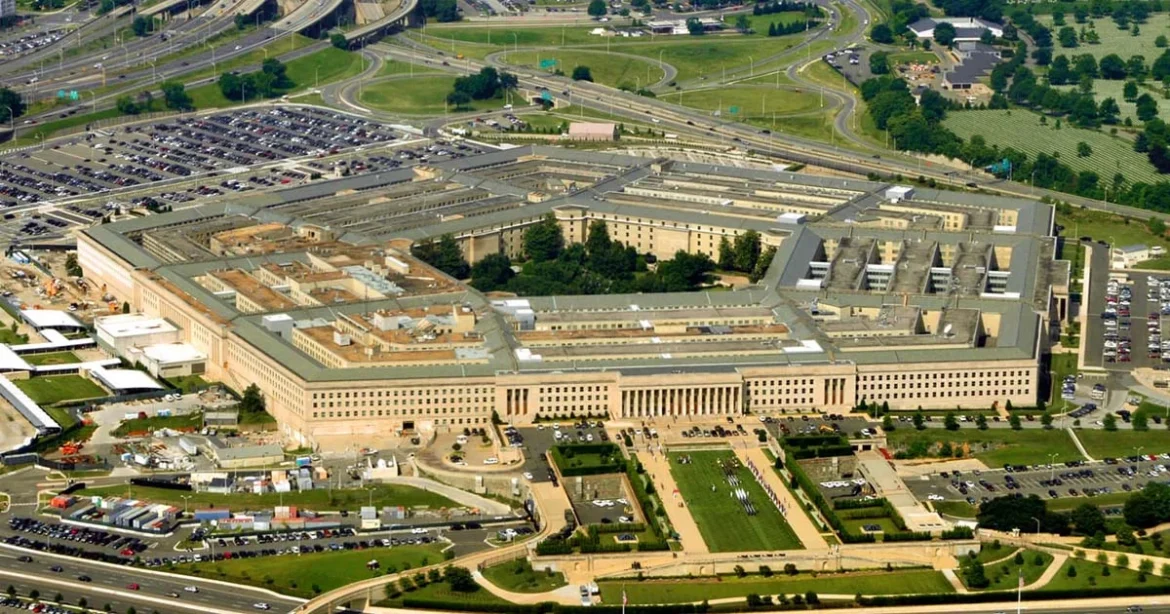
A recent report has ignited a significant controversy, alleging that the Pentagon has deliberately withheld information regarding dozens of injuries sustained by U.S. forces during recent confrontations with Iran. This accusation suggests that the actual number of American casualties is considerably higher than what Washington has publicly acknowledged, raising serious questions about transparency and public trust in military reporting during ongoing hostilities in the Middle East.
The immediate catalyst for this renewed scrutiny was a series of attacks culminating in a deadly strike on Friday, July 17, 2026, against the U.S. Muwaffaq Salti Air Base in Jordan. This particular incident resulted in the confirmed deaths of two service members and left one missing. By Monday, July 20, 2026, the Pentagon officially identified the deceased as First Lieutenant Tyler James Feehan, 25, from Ewa Beach, Hawaii, and Private Isabella Gonzales, 19, from Carrolton, Texas. The loss of these service members immediately drew national attention and condolences, highlighting the inherent risks faced by U.S. personnel deployed in volatile regions.
However, the report, citing U.S. officials speaking to the New York Times, posits that these fatal casualties represent only a fraction of the total impact on American forces. According to these officials, in the week preceding the deadly Muwaffaq Salti attack, Iran had executed three other separate assaults on U.S. military facilities within Jordan. These previously undisclosed attacks reportedly resulted in injuries to dozens of service members and caused significant damage to several helicopters. Crucially, the Pentagon had neither acknowledged these prior attacks nor released any details regarding the associated casualties or material damage. This alleged pattern of non-disclosure forms the core of the accusation: a systematic suppression of information concerning the human cost of the escalating conflict.
Pentagon’s Forceful Rebuttal and the Defense of Transparency
In response to these grave allegations, Sean Parnell, the principal spokesperson for the Pentagon, issued a swift and robust denial. Parnell vehemently dismissed the accusations as "unfounded and malicious," characterizing them as "a blatant lie from partisan proponents at the New York Times who are desperate to tarnish the good name of the American military and its leadership." His statement, shared via an X (formerly Twitter) post, underscored the Pentagon’s position that the claims of concealment were fabrications designed to further distress the American public following the tragic deaths of three service members in combat.
Parnell further elaborated on the Pentagon’s stance, asserting that the conduct described was "disgusting, even for the New York Times." He countered the notion of secrecy by stating that information on U.S. military casualties is, in fact, publicly accessible and regularly updated online through the Defense Casualty Analysis System (DCAS), making it available for review by anyone, including media outlets. He argued that military injuries encompass a broad spectrum, ranging from minor ankle sprains during routine training exercises to incidents entirely unrelated to combat operations. Presenting raw numbers without appropriate context, Parnell contended, would deliberately create a misleading and incomplete picture. He concluded by affirming that U.S. forces are executing the President’s directives with exceptional proficiency, supported by superior training, equipment, and medical care that prioritizes safety.
Geopolitical Backdrop: U.S. Presence and Regional Tensions
The allegations emerge against a complex and increasingly volatile geopolitical landscape in the Middle East. The United States maintains a significant military footprint across the region, primarily aimed at counter-terrorism operations, deterring state and non-state actors, and ensuring regional stability. Jordan, a key strategic ally, hosts several U.S. military installations and personnel, serving as a critical hub for operations in Iraq, Syria, and against various extremist groups.
The long-standing rivalry between the U.S. and Iran has intensified in recent years, largely playing out through proxy conflicts. Iran leverages a network of regional militias and paramilitary groups, often referred to as the "Axis of Resistance," to project its influence and challenge U.S. interests. These groups, operating in Iraq, Syria, Lebanon, and Yemen, frequently target U.S. military bases and personnel with rocket, drone, and missile attacks. The Muwaffaq Salti Air Base, situated near the Syrian border, is particularly vulnerable due to its proximity to active conflict zones and the operational areas of Iran-backed militias.
These attacks are not isolated incidents but rather part of a broader strategy by Iran and its proxies to pressure the U.S. to withdraw from the region. The tit-for-tat exchanges have escalated, with each strike risking a wider regional conflagration. The U.S. policy has generally involved a measured response, seeking to deter further aggression without triggering a full-scale war, a strategy that often involves balancing retaliatory strikes with diplomatic efforts.
A Chronology of Recent Attacks and the Unfolding Controversy
The precise chronology of events leading up to the current controversy is critical for understanding the allegations:
- Week Preceding July 17, 2026: According to the New York Times report, Iran conducted three distinct attacks against U.S. military facilities in Jordan. These attacks reportedly caused injuries to dozens of service members and damaged several helicopters. The exact dates and specific locations of these three attacks remain undisclosed by the Pentagon.
- Friday, July 17, 2026: A more significant and fatal attack occurred at the U.S. Muwaffaq Salti Air Base in Jordan. This strike resulted in the deaths of two U.S. service members and one missing. This incident was publicly acknowledged by the Pentagon.
- Monday, July 20, 2026: The Pentagon officially identified the two deceased service members as First Lieutenant Tyler James Feehan and Private Isabella Gonzales.
- Subsequently: The New York Times publishes its report, citing unnamed U.S. officials, alleging that the Pentagon concealed the details of the three prior attacks and their associated casualties.
- Immediately After Report: Pentagon spokesperson Sean Parnell issues a strong denial, refuting the allegations as "unfounded and malicious" and affirming the transparency of the military’s casualty reporting system.
The core of the dispute lies in the discrepancy between what the Pentagon officially disclosed and what unnamed officials claim occurred. The alleged withholding of information about the three earlier attacks and the injuries sustained therein forms the basis of the "cover-up" accusation.
The Nuance of Casualty Reporting: Definition and Disclosure
Military casualty reporting is a complex process governed by specific definitions and protocols. The Department of Defense (DoD) categorizes casualties based on the nature and cause of injury or death. Key distinctions include:
- Killed in Action (KIA): A service member who is killed outright or who dies of wounds or other injuries before reaching a medical treatment facility, if the death was the direct result of hostile action.
- Died of Wounds (DOW): A service member who died of wounds or other injuries received in action, after having reached a medical treatment facility.
- Wounded in Action (WIA): A service member who has suffered an injury due to hostile action. This category itself can be broad, encompassing everything from minor shrapnel wounds to severe trauma.
- Non-Hostile Injuries/Deaths: Injuries or deaths that occur during military service but are not directly attributable to enemy action (e.g., accidents, illness, self-inflicted injuries).
The Pentagon’s Defense Casualty Analysis System (DCAS) is the official repository for U.S. military casualty data. It is designed to provide accurate and timely information on all service members who have been killed, wounded, injured, or gone missing. Parnell’s defense hinges on the assertion that DCAS data is publicly available and regularly updated.
However, the debate often centers on what constitutes a reportable "injury" in the context of public disclosure, especially when the injuries are not severe enough to warrant immediate repatriation or hospitalization. Military protocols might allow for a degree of discretion in reporting minor injuries that do not significantly impact operational readiness or long-term health. The New York Times report suggests that even injuries requiring medical attention and causing operational damage were not disclosed, crossing a threshold that critics argue constitutes a lack of transparency. The distinction between a "combat injury" and an "injury in a combat zone" can also be blurry, particularly when dealing with indirect fire or psychological trauma.
Historical Precedents and Public Trust
Allegations of casualty underreporting are not entirely unprecedented in U.S. military history. During various conflicts, from Vietnam to Iraq, questions have periodically arisen regarding the accuracy and completeness of casualty figures. These instances often fuel public skepticism and contribute to a perception of government secrecy.
For example, during the Iraq War, there were debates about the reporting of Traumatic Brain Injuries (TBIs) and Post-Traumatic Stress Disorder (PTSD), with some critics arguing that the full scope of these "invisible wounds" was not adequately captured or publicized. Similarly, the criteria for awarding the Purple Heart, specifically concerning blast injuries that might not leave visible wounds, have also been a point of contention, highlighting the complexity of defining and documenting all combat-related injuries.
Such historical contexts underscore the sensitivity surrounding military casualty data. Public trust in military leadership and government hinges significantly on perceived honesty and transparency, especially when the lives of service members are at stake. Any suggestion of obfuscation can erode this trust, making it harder to garner public support for military operations.
Reactions from Congress and Defense Analysts (Inferred)
While no specific direct statements from members of Congress or defense analysts were provided in the original content, it is highly probable that such allegations would provoke significant reactions.
- Congressional Oversight: Members of Congress, particularly those on armed services and oversight committees, would likely demand immediate briefings and investigations. Concerns would focus on the welfare of service members, the accuracy of information provided to Congress and the public, and the potential impact on military morale and recruitment. Lawmakers from both parties often unite in demanding transparency when it comes to the lives and well-being of military personnel. Questions might be raised about whether the administration is adequately informing the public about the true costs of its foreign policy.
- Defense Analysts: Security and defense analysts would likely weigh in on the implications for U.S. deterrence strategy and regional stability. Some might argue that withholding information about injuries could embolden adversaries by making them perceive a lower cost of aggression. Others might analyze the political motivations behind such alleged non-disclosure, perhaps linking it to domestic political considerations or efforts to manage public perception of the conflict. The broader impact on U.S. credibility among allies in the region would also be a point of discussion.
Implications for U.S. Policy and Regional Stability
The implications of these allegations, regardless of their ultimate veracity, are far-reaching:
- Erosion of Public Trust: If the accusations of a cover-up gain traction, they could severely damage public trust in the Pentagon and the administration’s handling of foreign policy. This erosion of trust can have long-term consequences, making it more difficult to secure public consent for future military engagements.
- Political Fallout: The allegations could lead to significant political fallout, potentially intensifying domestic debates about the U.S. military presence in the Middle East and the administration’s strategy towards Iran. Opponents of current policies could use these claims to press for withdrawal or a re-evaluation of military commitments.
- Impact on Military Morale: For service members and their families, news of alleged casualty cover-ups can be deeply unsettling. It can create a perception that their sacrifices are not being fully acknowledged or valued, potentially affecting morale and recruitment efforts.
- Strategic Ambiguity vs. Transparency: The incident highlights the perennial tension between the military’s desire for strategic ambiguity (not revealing vulnerabilities to adversaries) and the public’s right to transparency. Finding the right balance is crucial but exceedingly difficult in an era of instant information.
- Regional Dynamics: If adversaries perceive that the U.S. is sensitive to casualty counts and is trying to minimize their public disclosure, it might influence their calculus regarding future attacks. They might see it as a sign of weakness or a point of leverage.
The Path Forward: Transparency and Accountability
The current controversy underscores the critical importance of transparency and accountability in military operations, particularly in an environment where information spreads rapidly and skepticism can quickly take root. The Pentagon’s robust defense, emphasizing the public availability of DCAS data, suggests a commitment to transparency, but the allegations from within the U.S. officialdom present a challenge to that narrative.
Moving forward, a thorough and impartial review of the casualty reporting protocols and the specific incidents in question may be necessary to restore full public confidence. This could involve congressional inquiries, independent audits, or further detailed explanations from the DoD regarding how injuries are categorized, reported, and disclosed to the public. The debate is not merely about numbers but about the fundamental principles of openness in a democratic society, especially when its citizens are serving in harm’s way. The ongoing tensions with Iran and the continued presence of U.S. forces in the Middle East mean that the need for clear, consistent, and credible communication regarding the human cost of these operations will remain paramount.
