
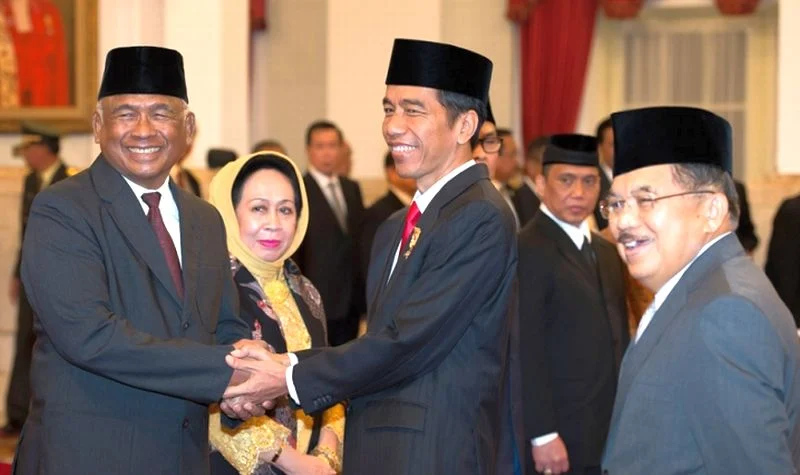
The return of Inspector General of Police (Retired) Taufiequrachman Ruki to the leadership of Indonesia’s Corruption Eradication Commission (KPK) marks a critical juncture in the nation’s ongoing battle against graft. Appointed during a period of institutional turbulence following the temporary suspension of then-Chairman Abraham Samad and Deputy Chairman Bambang Widjojanto, Ruki brought decades of law enforcement experience, administrative acumen, and historical institutional memory back to the anti-graft body. Born in Rangkasbitung, Lebak, Banten, on May 18, 1946, Ruki’s journey from a top-ranking police academy graduate to the founding chairman of the KPK illustrates a career defined by discipline, academic excellence, and public service.
This comprehensive profile examines the background, professional trajectory, academic achievements, and strategic implications of Taufiequrachman Ruki’s leadership roles within Indonesia’s legal and law enforcement frameworks.
Early Life, Academic Excellence, and Police Career
Taufiequrachman Ruki’s trajectory in public service began long before the establishment of the KPK in 2002. Enrolling in the Police Academy (Akademi Kepolisian or Akpol), Ruki distinguished himself early through rigorous discipline and academic aptitude. Upon his graduation in 1971, he earned the prestigious Adhi Makayasa award, an accolade bestowed upon the best graduate of the police academy corps, recognizing his holistic excellence in academic, physical, and leadership training.
His commitment to continuous professional and academic development persisted throughout his active service. When pursuing further specialization at the Police Science College (PTIK), Ruki maintained his high standards, graduating among the top four students in his cohort. Recognizing the necessity of a strong legal foundation for law enforcement officers navigating complex criminal codes, he pursued higher education outside the police apparatus. In 1987, he successfully earned his Bachelor of Laws (S-1) degree from the Faculty of Law at the 17 August 1945 University (UTA ’45) in Jakarta.
Ruki’s career in the Indonesian National Police (Polri) commenced formally when he served as a Platoon Commander of Academy Cadets (Komandan Peleton Taruna Akpol) from 1970 to 1971, bridging his transition from cadet leadership to active-duty assignments. Over a multi-decade career within the police force, Ruki navigated various structural and operational posts. Notably, throughout his extensive tenure in law enforcement, his record remained unblemished by major disciplinary scandals or controversies, enabling him to retire with a reputation for integrity—a crucial prerequisite for his eventual transition into anti-corruption oversight.
The Genesis of the KPK and Ruki’s Inaugural Leadership
The establishment of the Corruption Eradication Commission in 2002 under the administration of President Megawati Sukarnoputri was a direct response to the systemic corruption entrenched during the New Order era, which conventional law enforcement agencies like the police and the Attorney General’s Office were widely perceived as unequipped to eradicate independently.
As an independent state institution vested with extraordinary powers—including wiretapping authority, asset-freezing capabilities, and the jurisdiction to supersede other law enforcement agencies in graft investigations—the KPK required a leader who understood the institutional mindset of traditional law enforcement while fully committing to uncompromising anti-corruption reforms.
Taufiequrachman Ruki was selected as the inaugural chairman of the KPK, serving his primary term from 2003 to 2007. Alongside a collective board of commissioners, Ruki laid the institutional foundation of the agency. During his tenure, the KPK established its foundational Standard Operating Procedures (SOPs), built its internal investigative methodologies, and prosecuted several high-profile cases involving high-ranking state officials, parliamentarians, and judicial figures.
Setting up an independent anti-corruption agency from scratch presented immense bureaucratic resistance and institutional skepticism, particularly from established bodies like the police and the judiciary. Ruki’s background as a senior police general played a vital role in navigating these tensions. His insider credibility helped mitigate immediate institutional pushback, even as the KPK aggressively pursued corruption cases that previously would have fallen outside the bounds of conventional prosecutorial reach.
Institutional Crisis and the Return in 2015

The trajectory of the KPK has historically been marked by high-stakes friction between the anti-graft agency and traditional law enforcement bodies, often referred to in Indonesian political discourse as the conflict between "Cicak dan Buaya" (The Gecko and the Crocodile). In early 2015, the KPK entered one of its most severe institutional crises when then-Chairman Abraham Samad and Deputy Chairman Bambang Widjojanto were embroiled in legal controversies and subsequently suspended from their duties by presidential decree.
With the leadership quorum of the five-member commission severely compromised, President Joko Widodo (Jokowi) needed to appoint acting commissioners to ensure the continuous operation of the KPK’s investigative and prosecutorial machinery. On February 20, 2015, Taufiequrachman Ruki was officially appointed as the acting chairman of the KPK, serving alongside Indriyanto Seno Adji and Johan Budi.
Ruki’s return to the commission was widely interpreted by legal analysts and political observers as a stabilizing measure. Given his historical status as the founding chairman, his appointment provided a sense of institutional continuity and reassurance to the public that the KPK would remain functional despite the sudden removal of its active leadership.
Mandate and Challenges of the Interim Leadership
Stepping back into the commission nearly a decade after his first tenure, Ruki faced a radically different political and operational landscape. The KPK had grown into a formidable investigative body with massive public support, but it was also experiencing unprecedented political pressure, institutional countermeasures from legislative bodies, and internal operational strain.
During his 2015 interim tenure, Ruki’s primary objectives were explicitly defined:
- Stabilization of Internal Operations: Restoring administrative order and maintaining staff morale within the commission following the suspension of key leaders.
- De-escalation of Institutional Tensions: Managing the volatile relationship between the KPK and the Indonesian National Police, particularly in the wake of the Budi Gunawan nomination controversy which had triggered the 2015 crisis.
- Ensuring Continuity of Case Processing: Overseeing ongoing investigations and ensuring that high-profile corruption cases did not stall due to administrative vacuum or leadership transitions.
Ruki’s leadership style during this period was characterized by pragmatism and institutional diplomacy. While maintaining the KPK’s aggressive stance against graft, he emphasized the importance of synergy among law enforcement agencies, arguing that sustainable anti-corruption efforts required cooperation rather than perpetual conflict between the KPK, the police, and the Attorney General’s Office.
Broader Implications and Legacy
The career of Taufiequrachman Ruki reflects the complex interplay between traditional state apparatuses and specialized reform institutions in post-Suharto Indonesia. As a retired police general who dedicated his post-retirement life to leading the nation’s premier anti-corruption body, Ruki occupies a unique position in modern Indonesian legal history.
His contributions can be analyzed through several institutional dimensions:
First, as a bridge-builder, Ruki demonstrated that institutional reform does not necessarily require the complete dismantling of traditional bureaucratic structures. By applying his extensive knowledge of police administration to the nascent KPK in 2003, he helped institutionalize investigative standards that could withstand judicial scrutiny.
Second, his 2015 appointment highlighted the reliance on veteran figures during times of acute institutional vulnerability. While civil society groups occasionally expressed concern that figures from a traditional law enforcement background might hesitate to investigate police-related graft, Ruki’s dual stewardship demonstrated a consistent adherence to statutory investigative mandates.
Ultimately, Taufiequrachman Ruki’s legacy is intertwined with the institutional maturation of the KPK. From laying its administrative bricks in the early 2000s to steering it through stormy political waters in 2015, his career underscores the ongoing, structural challenges of building resilient, independent anti-corruption institutions in a developing democracy.
