
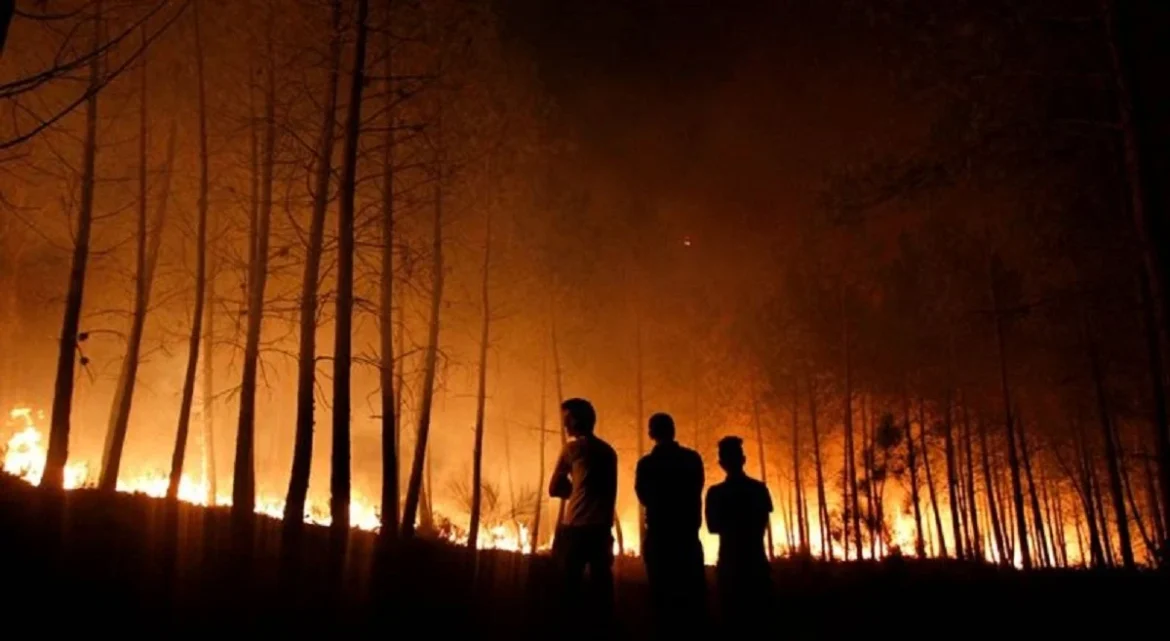
More than 10,000 individuals were forced to evacuate overnight from their homes in southwestern France as rapidly spreading wildfires consumed an estimated 2,000 hectares of land situated west of the major city of Bordeaux. The escalating crisis on Thursday, July 24, 2026, marks a grim highlight in a season that has seen an alarming surge in wildfire activity across Europe, a continent grappling with the profound and intensifying impacts of climate change, manifested by a succession of debilitating heatwaves. The scale and intensity of these blazes are taxing emergency services and raising critical questions about long-term preparedness and environmental resilience.
Escalating Crisis in the Gironde Region
The heart of the current emergency lies within the Gironde department, a region renowned for its dense pine forests and iconic vineyards, yet increasingly vulnerable to arid conditions. The fires, initially reported to have ignited earlier in the week, gained significant momentum, propelled by strong winds and parched vegetation, creating a volatile and unpredictable environment for emergency responders. The affected areas, including critical woodland expanses, are crucial for local ecosystems and the regional economy, particularly the timber industry and tourism. The rapid spread of the flames across 2,000 hectares, equivalent to approximately 5,000 acres, underscores the extreme fire behavior characteristic of the current climatic conditions.
Tragedy Amidst the Flames: The Human Cost
The human toll of these infernos became tragically evident on Tuesday, July 21, 2026, when two firefighters, whose identities have been withheld pending full official notification, perished while battling a particularly fierce blaze near Bordeaux’s airport. Their deaths serve as a somber reminder of the immense dangers faced by emergency personnel on the front lines of these environmental catastrophes. The incident prompted an immediate outpouring of grief and solidarity. French Interior Minister Laurent Nunez traveled to the region on Wednesday, July 22, 2026, to meet with the grieving families of the fallen firefighters, offering the nation’s condolences and support. His visit underscored the government’s recognition of the profound sacrifices made by those dedicated to protecting lives and property.
Simultaneously, firefighter unions issued urgent warnings regarding the extreme fatigue experienced by their members and the critical shortage of resources necessary to combat fires of such rare intensity and scale. Captain Wilfried Schneider, a veteran firefighter involved in the current operations, described the blazes as having "rare intensity," exacerbated by the "very dense and compact pine stands" characteristic of the region. These statements highlight the immense physical and psychological strain placed upon the 500 firefighters currently deployed, who are battling relentlessly to contain the inferno. Their calls for additional support, both in terms of personnel and equipment, resonate across a nation increasingly confronted by the realities of a changing climate.
A Continent Under Siege: Europe’s Wildfire Epidemic
The crisis in France is not an isolated incident but rather a stark illustration of a broader, continent-wide phenomenon. Data indicates that wildfires have consumed significantly more land across Europe this year than the annual average over the past two decades. This alarming trend is directly linked to Europe’s status as the world’s fastest-warming continent, which has endured three suffocating heatwaves in quick succession throughout the current year. Countries from Portugal to Greece, and Spain to Italy, have reported widespread fires, necessitating large-scale evacuations and stretching national emergency services to their limits. The cumulative impact of these events paints a concerning picture of ecological degradation, economic disruption, and human suffering.
The Mediterranean basin, in particular, has become a hotspot for these extreme fire events. Southern European nations, already accustomed to hot, dry summers, are experiencing unprecedented periods of prolonged drought and record-breaking temperatures. These conditions create an ideal tinderbox, where a single spark, whether from natural causes like lightning or human activity, can rapidly ignite vast expanses of forest and scrubland. The increased frequency and intensity of these fires are overwhelming traditional firefighting capabilities, forcing a re-evaluation of strategies and resource allocation at both national and European levels.
The Perilous Climate Backdrop: Heatwaves and Drought
The current French wildfires are inextricably linked to a summer of unprecedented climatic extremes. The year 2026 has witnessed a series of three distinct and profoundly impactful heatwaves sweeping across Europe. These events have not only driven temperatures to record highs but have also exacerbated prolonged drought conditions, leaving forests, grasslands, and agricultural lands bone-dry and highly susceptible to ignition. The consecutive nature of these heatwaves means that there has been little respite for the environment to recover, nor for the ground moisture levels to replenish.
Scientists and climatologists have unequivocally linked these extreme weather patterns to anthropogenic climate change. The rise in global temperatures intensifies atmospheric pressure systems, leading to more frequent and longer-lasting heat domes that trap hot air over regions. This, in turn, accelerates evaporation, dries out vegetation, and creates highly flammable conditions. The combination of high temperatures, low humidity, and strong winds transforms what might once have been manageable fires into uncontrollable infernos, capable of rapid, unpredictable spread. The ecological feedback loop is concerning: as forests burn, they release vast amounts of stored carbon dioxide, further contributing to global warming, which in turn creates conditions for more fires.
Evacuation Efforts and Community Impact
The decision to evacuate over 10,000 people was made as a precautionary measure to ensure public safety, given the unpredictable nature of the spreading flames. Local authorities, in coordination with emergency services, activated contingency plans to facilitate the orderly relocation of residents from villages and hamlets directly threatened by the fire front. Temporary shelters, including community halls and sports centers, have been established in safer zones, providing food, water, and medical assistance to the displaced. The psychological toll on evacuees, many of whom left their homes with only essential belongings, is significant, marked by uncertainty, anxiety, and the fear of losing their properties and livelihoods.
Community leaders and volunteer organizations have mobilized to support the displaced, demonstrating remarkable resilience and solidarity. However, the sheer scale of the displacement, coupled with the ongoing threat, places immense pressure on local infrastructure and social services. Communication channels are crucial during such crises, with regular updates provided by prefectural authorities and emergency services to keep the public informed of the evolving situation, evacuation routes, and areas of immediate danger. The experience of mass evacuation, while necessary, leaves an indelible mark on individuals and communities, highlighting the deep vulnerability of human settlements situated close to wildfire-prone landscapes.
Ecological and Economic Fallout
The immediate ecological consequences of the 2,000 hectares burned are devastating. Pine forests, while resilient, face a long and uncertain recovery. The destruction of habitat affects countless species of flora and fauna, many of which may not survive the immediate blaze or the subsequent disruption to their ecosystems. Beyond the visible destruction, the fires contribute significantly to air pollution. Plumes of smoke laden with particulate matter and toxic gases are spreading over large areas, posing health risks to residents, particularly those with respiratory conditions. The carbon emissions released by these fires further exacerbate global warming, creating a dangerous feedback loop.
Economically, the impact is multi-faceted and severe. The timber industry, a cornerstone of the regional economy, faces substantial losses from destroyed plantations. Agricultural sectors, including the renowned Bordeaux wine industry, are also at risk from smoke taint on grapes, damage to vineyards, and disruption to seasonal labor. Tourism, another vital industry for southwestern France, will undoubtedly suffer as visitors are deterred by the fires and the subsequent recovery efforts. The costs associated with firefighting operations, including personnel, equipment, and logistical support, are astronomical, placing a considerable burden on national and local budgets. Furthermore, the long-term costs of reforestation, soil stabilization, and ecosystem restoration will stretch over decades.
The Road Ahead: Prevention and Adaptation
The recurring and intensifying wildfire crises demand a comprehensive re-evaluation of national and European strategies for prevention, preparedness, and response. Experts are calling for increased investment in forest management practices, including controlled burns, creation of firebreaks, and diversification of tree species to reduce the dominance of highly flammable monocultures like pine. Early warning systems, utilizing advanced satellite imagery and meteorological data, need to be enhanced to detect fires quickly and accurately.
Furthermore, there is a pressing need for a robust climate adaptation strategy. This includes urban planning that considers wildfire interfaces, stricter building codes in vulnerable areas, and public education campaigns to raise awareness about fire prevention. At a broader policy level, accelerated efforts to mitigate climate change through reduced greenhouse gas emissions remain paramount. International cooperation, particularly through mechanisms like the European Union Civil Protection Mechanism, which allows member states to pool resources and provide assistance, is becoming increasingly critical. The activation of such mechanisms can bring vital aerial firefighting assets and ground crews from other nations, providing much-needed relief to overstretched national forces.
The fires raging in southwestern France are a stark reminder of the urgent need for a proactive and coordinated approach to environmental management in the face of a rapidly changing climate. The human cost, the ecological devastation, and the economic fallout underscore the imperative for immediate action and long-term strategic planning to safeguard communities and ecosystems from future, potentially even more catastrophic, events. The resilience of the French people and the dedication of its emergency services are being tested to their limits, as Europe collectively confronts an era defined by climatic extremes.
