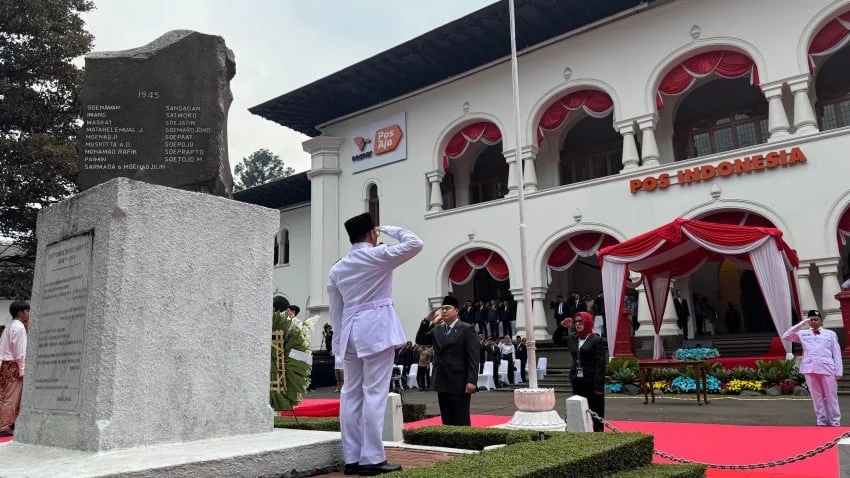
JAKARTA — The Indonesian government has reaffirmed its commitment to accelerating the expansion of information and communication technology (ICT) infrastructure, aiming to bridge the digital divide and ensure that citizens in even the most remote regions are seamlessly connected to the national digital ecosystem. This strategic directive was underscored during the 81st anniversary of Hari Bhakti Pos dan Telekomunikasi (Postel), held at the PT Pos Indonesia headquarters in Bandung, West Java, on Sunday, September 27, 2026.
Deputy Minister of Communication and Digital, Angga Raka Prabowo, presided over the commemorative ceremony, which served as the culmination of a month-long series of events that began in August 2026. Themed "Digital Connectivity for a Sovereign Indonesia," the event highlighted the critical role of robust telecommunications and postal infrastructure in maintaining national unity and economic resilience in an increasingly digitized global landscape.
A Legacy of Communication and Sovereignty
The Postel Day commemoration is an annual tradition that honors the historic takeover of the Post, Telegraph, and Telephone (PTT) offices from Japanese occupation forces on September 27, 1945. This act of bravery by young Indonesian telecommunications workers was a pivotal moment in securing the nation’s independence, as it allowed the young republic to establish its own sovereign communication channels.
Eight decades later, the mission has evolved from establishing basic communication lines to building a sophisticated digital architecture. During the ceremony, Deputy Minister Angga Raka Prabowo, alongside Theodorus Ardi Hartoko (Teddy)—who serves as both the General Chairman of the Association of Telecommunications Infrastructure and Tower Development (Aspimtel) and the General Chairman of the 81st Postel Day committee—and PT Pos Indonesia’s Risk Management Director, Rosmanidar Zulkifli, participated in a floral tribute at the monument dedicated to the pioneers of Indonesian telecommunications.
The ceremony was attended by a broad spectrum of industry stakeholders, including representatives from major telecommunications providers, postal service operators, and surviving veterans who witnessed the industry’s early post-independence development.
The Role of Aspimtel and Private Sector Collaboration
As the coordinator of the event, Aspimtel has emerged as a central player in the government’s push for infrastructure expansion. The organization, representing the backbone of tower and fiber-optic deployment, has been instrumental in facilitating the government’s goals of increasing the national penetration rate of high-speed internet.
Theodorus Ardi Hartoko emphasized that the collaboration between the government and the private sector is more vital than ever. "The theme of this year’s commemoration is not merely a slogan; it is a call to action. We are moving toward a future where digital sovereignty is predicated on the reliability of our infrastructure. Aspimtel remains committed to supporting the Ministry of Communication and Digital in ensuring that every corner of the archipelago is serviced by modern, sustainable telecommunications facilities," Hartoko stated during the proceedings.
Current Landscape of Indonesia’s Digital Infrastructure
To understand the weight of the government’s commitment, one must examine the current state of Indonesia’s ICT sector. As of late 2026, Indonesia continues to face the logistical challenge of its unique geography—a sprawling archipelago consisting of over 17,000 islands.
According to recent industry data, the national internet penetration rate has shown steady growth, reaching approximately 82% of the population. However, the disparity between urban centers like Jakarta or Bandung and the "3T" regions (frontier, outermost, and underdeveloped) remains a significant policy challenge. The government, through the Ministry of Communication and Digital, has been aggressively deploying Base Transceiver Stations (BTS) and expanding the Palapa Ring fiber-optic network to mitigate these gaps.
Economic analysis indicates that every 10% increase in broadband penetration in emerging markets is associated with a 1.2% to 1.5% increase in GDP growth. By prioritizing the "Digital Connectivity for a Sovereign Indonesia" agenda, the government aims to catalyze regional economic development, enable remote education, and enhance the efficiency of public services.
Chronology of the 81st Postel Day Series
The events leading up to the September 27 ceremony were meticulously structured to engage stakeholders across the ICT and postal sectors:
- August 2026: The official launch of the 81st Postel Day series took place, featuring policy dialogues on digital infrastructure sustainability and the integration of emerging technologies like 6G research and edge computing.
- Early September 2026: Technical workshops were conducted in various provinces, focusing on the acceleration of passive infrastructure deployment, such as shared telecommunications towers, to reduce capital expenditure for providers.
- Mid-September 2026: A series of community outreach programs were held to promote digital literacy, particularly among rural populations, ensuring that infrastructure expansion is met with the human capacity to utilize digital tools effectively.
- September 27, 2026: The grand commemoration in Bandung, featuring the wreath-laying ceremony, official remarks by the Deputy Minister, and a gala dinner for industry leaders and veterans.
Official Responses and Strategic Implications
The Ministry of Communication and Digital has indicated that the upcoming policy framework will prioritize the "Neutral Host" model for telecommunications infrastructure. This model encourages multiple operators to share the same physical assets, thereby reducing the environmental footprint and allowing for faster deployment in geographically challenging areas.
"The government will continue to simplify regulations to encourage investment in the ICT sector," said Angga Raka Prabowo. "We are working toward a landscape where the private sector finds it feasible and profitable to extend their reach to underserved areas, while the government provides the necessary regulatory buffer and financial incentives to ensure that no citizen is left behind."
Industry experts observing the ceremony noted that the focus on "sovereignty" implies a stronger move toward local content and local manufacturing of telecommunications equipment. By reducing reliance on imported hardware, Indonesia aims to insulate its critical infrastructure from global supply chain disruptions—a lesson learned from the volatility of the mid-2020s.
The Future of Postal and Logistics Integration
The inclusion of PT Pos Indonesia in the ceremony highlights the transformation of the postal sector. Once primarily a courier service, the national postal entity is increasingly functioning as a critical component of the "Digital Logistics" network. By leveraging the physical reach of its thousands of outlets, PT Pos Indonesia is facilitating the distribution of digital services and e-commerce goods to the most remote villages.
Rosmanidar Zulkifli noted that PT Pos Indonesia is currently undergoing a digital transformation process that integrates its traditional logistics services with digital payment platforms and government service portals. This synergy is intended to turn post offices into "digital hubs" where citizens can access government applications, financial services, and telecommunications assistance.
Analytical Perspective: Challenges and Opportunities
While the government’s ambitions are clear, the path toward total digital connectivity is not without hurdles. Industry analysts point to three primary challenges:
- Energy Access: In many remote areas, the lack of a stable electrical grid prevents the continuous operation of telecommunications infrastructure. The government’s plan to integrate renewable energy sources, such as solar panels and small-scale wind turbines, into tower infrastructure is a necessary, albeit costly, step.
- Spectrum Management: Efficient allocation of the radio frequency spectrum remains a point of contention between the government and operators. Balancing the need for high-speed 5G implementation in cities with the need for low-frequency coverage in rural areas requires delicate policy balancing.
- Cybersecurity: As the nation becomes more connected, the attack surface for cyber threats increases. The government’s emphasis on "sovereignty" must therefore be paired with robust investments in national cybersecurity frameworks and data protection regulations to ensure that the increased connectivity does not compromise national or personal security.
Conclusion
The 81st anniversary of Postel Day serves as more than just a nod to history; it is a definitive statement of Indonesia’s future trajectory. By aligning the interests of government regulators, private infrastructure developers like those under the Aspimtel banner, and service providers like PT Pos Indonesia, the nation is positioning itself to capitalize on the digital economy.
As the ceremony concluded in Bandung, the message from the Ministry of Communication and Digital was one of cautious optimism. While the digital divide still exists, the roadmap—defined by collaboration, infrastructure expansion, and a renewed focus on national resilience—is firmly in place. The success of this endeavor will determine Indonesia’s standing in the regional and global economy for the next decade, cementing its reputation as a digitally sovereign nation capable of providing universal access to its 280 million citizens.