
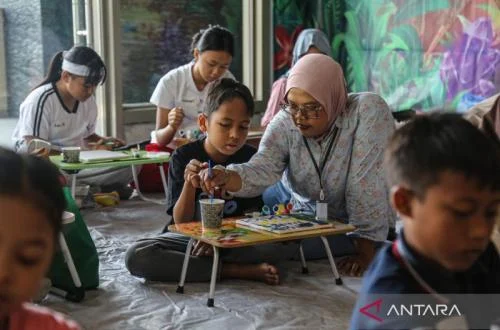
JAKARTA – Across the Indonesian archipelago, Sunday, July 19, 2026, was marked by a vibrant tapestry of cultural celebrations and significant appeals for strengthening child protection, underscoring the nation’s rich heritage and its commitment to future generations. From massive spiritual gatherings in East Java to traditional fishing rituals in Central Java, and elaborate cultural parades in Sumatra, the day showcased the diverse social fabric of Indonesia. Simultaneously, national leaders reiterated urgent calls for collaborative action to safeguard children ahead of the upcoming National Children’s Day.
A Convergence of Faith and Community in Situbondo
In East Java, the serene Alun-Alun (town square) of Situbondo Regency transformed into a sprawling spiritual congregation, drawing over one hundred thousand community members and devotees for the annual Haul Masyayikh commemoration. This significant event, dedicated to remembering and praying for the nation’s deceased Islamic scholars (masyayikh) and public figures, resonated with the powerful recitation of selawat nariyah. The communal prayer, a deeply cherished practice in Indonesian Islam, served as a poignant tribute to the spiritual lineage that has shaped the nation, while also invoking blessings for Indonesia’s continued prosperity and well-being.
The Haul Masyayikh is more than just a memorial; it is a profound expression of communal identity and spiritual solidarity. Historically, such gatherings have played a crucial role in transmitting religious knowledge, moral values, and social cohesion across generations. Participants, hailing from various parts of East Java and beyond, united in their devotion, reflecting the enduring influence of religious scholars on Indonesian society. The sheer scale of the gathering underscored the deep reverence held for these figures and the communal desire to uphold their legacy.
Bupati (Regent) of Situbondo, Yusuf Rio Wahyu Prayogo, who also chaired the organizing committee, emphasized the dual purpose of the event. "Firstly, the hope for this Haul Masyayikh is to pray for our revered scholars and community leaders across the archipelago, seeking their blessings. Beyond that, we also pray for a better Indonesia," Prayogo stated, highlighting the intrinsic link between spiritual remembrance and national aspiration. The event concluded with a palpable sense of unity and renewed commitment to the values espoused by the commemorated figures, reaffirming the role of faith in fostering national character and progress.
Celebrating Indigenous Heritage and Community Bonds
Further west, in Central Java, the spirit of tradition animated the Klaten Regency, where thousands enthusiastically participated in the ancient "Memet Ikan" ritual at the village pond of Desa Gemblegan, Kalikotes District. This unique communal fishing tradition, a vibrant part of the celebrations marking the 222nd anniversary of Klaten Regency, drew participants from surrounding areas, armed with nets to catch fish released into the pond.
"Memet Ikan," which literally translates to "catching fish," is a practice deeply embedded in Javanese agrarian culture. It often symbolizes gratitude for natural resources, promotes community cooperation, and serves as a sustainable method of managing local aquatic ecosystems. The annual event provides a rare opportunity for villagers and visitors alike to engage directly with a living tradition, fostering a sense of shared heritage and camaraderie. The communal act of fishing, often accompanied by laughter and friendly competition, strengthens social ties and reinforces local identity.
Among the enthusiastic participants was Supriyadi (42), a resident of Tambaksari Village, who expressed his satisfaction with his haul. "I got some pompano earlier, quite a decent amount. There were also some big ones, I managed to get about five," he recounted, his words echoing the joy and bounty experienced by many. The event not only provided fresh fish for families but also served as a significant local tourism draw, with vendors and local businesses benefiting from the influx of visitors. Local authorities underscored the importance of preserving such cultural events as a means of educating younger generations about their roots and promoting regional pride.
Bandarlampung’s Grand Cultural Showcase: Begawi Bandarlampung
On the island of Sumatra, the city of Bandarlampung unveiled its cultural richness through the "Begawi Bandarlampung" event. Wali Kota (Mayor) Eva Dwiana underscored the critical role of this traditional Lampungese ceremony in introducing local culture to the youth. The event was magnificently showcased through a Festival of Decorated Vehicles and a Cultural Parade, which vividly displayed the region’s diverse cultural treasures.
The "Begawi" is a series of traditional ceremonies integral to the Lampungese people, often associated with rites of passage, communal feasts, and expressions of social status. It is characterized by elaborate rituals, traditional music (like gamolan), dance, and the display of intricate traditional attire, particularly the tapis cloth. For the youth, participating in or witnessing Begawi provides a tangible connection to their ancestors and cultural identity, a crucial aspect in an increasingly globalized world. Mayor Dwiana’s emphasis on youth engagement reflects a broader national strategy to ensure the continuity of indigenous traditions.
The Festival of Decorated Vehicles featured floats adorned with traditional Lampungese motifs, symbols, and historical narratives, parading through the city streets. This visual spectacle captivated onlookers and served as an accessible entry point for understanding Lampung’s unique heritage. The Cultural Parade, meanwhile, brought together various community groups, each showcasing distinct traditional costumes, dances, and musical performances, celebrating the mosaic of ethnic identities within Lampung. The Begawi Bandarlampung not only boosted local pride but also aimed to position the city as a vibrant cultural destination, attracting domestic and international tourists interested in authentic Indonesian experiences.
Palembang’s Elegant Kebaya Parade: A Symbol of National Identity and Empowerment
In Palembang, South Sumatra, the iconic Ampera Bridge became the stage for a spectacular display of national elegance, as over a thousand women participated in a vibrant kebaya fashion parade. Held to commemorate Hari Kebaya Nasional (National Kebaya Day) 2026, the event saw participants gracefully combining the traditional Indonesian kebaya with modern songket fabrics, creating a stunning fusion of heritage and contemporary style.
The kebaya, an elegant blouse-dress, holds a revered place in Indonesian culture, symbolizing grace, resilience, and national identity. Efforts to secure UNESCO intangible cultural heritage status for the kebaya have gained significant momentum, making events like this parade crucial for raising public awareness and pride. Palembang’s songket, a traditional hand-woven fabric intricately embroidered with gold or silver threads, is particularly renowned for its exquisite craftsmanship and luxurious appeal. The combination showcased the rich textile heritage of Indonesia, especially from South Sumatra.
Lana T Koentjoro, Chairperson of the Central Board of Perempuan Indonesia Maju (PIM – Indonesian Women Forward), highlighted the multifaceted impact of the movement. "The kebaya movement, culminating in this walk from Ampera Bridge to the Monumen Perjuangan Rakyat (Monpera) of Palembang, actively strengthens family economies through women’s empowerment," Koentjoro stated. This initiative underscores how cultural preservation can directly translate into economic benefits, supporting local artisans, designers, and small businesses involved in the production and promotion of traditional garments. By empowering women to embrace and innovate with traditional attire, the movement not only preserves cultural heritage but also fosters economic independence and contributes to sustainable livelihoods.
National Imperative: Strengthening Child Protection Ahead of Hari Anak Nasional 2026
Amidst these widespread cultural celebrations, a crucial national call resonated from Jakarta, emphasizing the urgent need for enhanced child protection. With Hari Anak Nasional (National Children’s Day) just around the corner on July 23, 2026, Minister of Women’s Empowerment and Child Protection (PPPA), Arifah Fauzi, issued a powerful appeal for nationwide collaboration. She underscored the paramount importance of fulfilling the rights and ensuring the protection of every child across Indonesia.
Hari Anak Nasional, celebrated annually, serves as a vital reminder of the nation’s commitment to its children, who represent the future of Indonesia. Despite significant progress, children in Indonesia continue to face various challenges, including issues related to access to quality education, adequate healthcare, protection from violence, exploitation, and neglect. According to recent demographic data, children under 18 constitute approximately one-third of Indonesia’s total population, making their well-being a critical national priority. The Ministry of PPPA actively spearheads initiatives to address issues such as child marriage, online child sexual exploitation, stunting, and ensuring children’s participation in decision-making processes.
"As National Children’s Day approaches on July 23, let us seize this moment to further love, protect, and fulfill the rights of every child. Children are the future of our nation, and we must support them in achieving their dreams," Minister Arifah Fauzi urged. Her statement highlighted the collective responsibility of all elements of society – government, families, communities, and civil society organizations – in creating a safe, nurturing, and empowering environment for children. The call for strengthened collaboration aims to consolidate efforts, optimize resources, and implement more effective policies to address the complex challenges facing Indonesian children, ensuring they can grow into healthy, educated, and productive members of society.
A Nation’s Dual Focus: Preserving Heritage and Nurturing the Future
Sunday, July 19, 2026, thus encapsulated a dynamic snapshot of Indonesia: a nation deeply rooted in its diverse cultural heritage, actively preserving and celebrating its traditions, while simultaneously looking forward with a firm commitment to safeguarding its most vulnerable population – its children. The confluence of these events underscored a holistic approach to national development, recognizing that a vibrant cultural identity and a protected, empowered younger generation are both indispensable pillars for a prosperous and resilient future. The collective engagement in cultural festivities and the renewed focus on child protection serve as powerful testaments to Indonesia’s enduring spirit and its aspirations for continued growth and well-being.
