
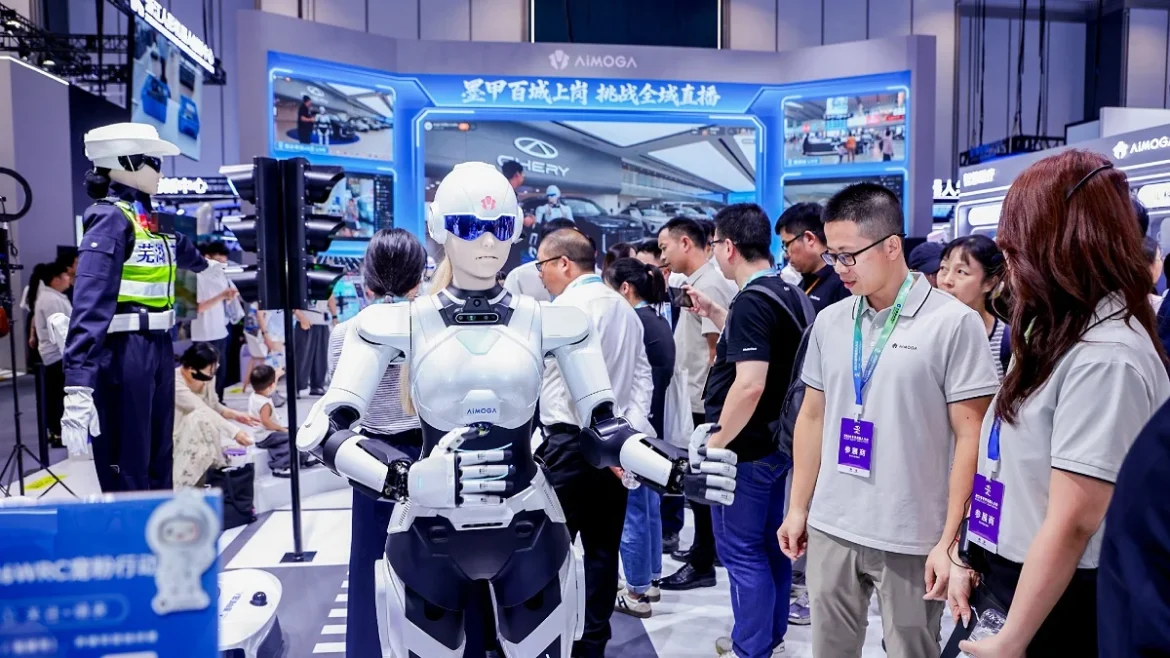
AiMOGA Robotics, an innovative subsidiary operating in partnership with the global automotive powerhouse Chery, has officially etched its name into the annals of technological history. The company’s flagship humanoid robot, Mornine, has successfully secured three rigorous European Union certifications, marking a significant milestone as the first humanoid robot in the world to achieve such comprehensive regulatory compliance. This breakthrough not only validates the sophisticated engineering behind Mornine but also signals a pivotal shift in the global robotics landscape, where high-level hardware safety, cybersecurity, and radio frequency standards are now being harmonized for the next generation of autonomous human-robot interaction.
The certifications obtained by Mornine are not merely bureaucratic achievements; they represent the gold standard for high-tech equipment entering the European market. Specifically, the robot has been granted CE-MD (Machinery Safety Directive) certification, ensuring its physical design meets stringent safety protocols for human proximity; EN 18031, which focuses on critical cybersecurity and data protection standards; and CE-RED (Radio Equipment Directive), which governs the secure use of radio spectrums for wireless communication. By clearing these three hurdles, AiMOGA Robotics has established a blueprint for international commercial deployment, proving that humanoid technology can be both functional and strictly compliant with the EU’s evolving regulatory framework.
A Chronology of Compliance and Innovation
The journey of Mornine from a concept in a laboratory to a certified, globally compliant humanoid has been a fast-paced evolution. While the announcement on September 7, 2026, marks the pinnacle of this process, the groundwork was laid years earlier.
AiMOGA Robotics was born from the strategic vision of Chery, which sought to pivot its automotive expertise—specifically in areas like autonomous driving, intelligent sensor fusion, and high-performance motors—into the burgeoning field of general-purpose robotics. The development timeline was characterized by rapid prototyping, where the company leveraged Chery’s existing supply chain and AI research facilities to expedite hardware refinement.
Earlier in 2026, the company achieved its first major international milestone when Mornine successfully secured the FCC (Federal Communications Commission) certification from the United States. This served as the testing ground for the robot’s wireless capabilities. Following the American certification, the development team immediately pivoted toward the European market, recognizing that the EU’s regulatory environment—known for being among the most stringent in the world—would be the ultimate litmus test for the robot’s long-term commercial viability. The successful completion of the CE-MD, EN 18031, and CE-RED certifications in September 2026 confirms that Mornine is now technically ready for deployment in sectors ranging from industrial manufacturing and logistics to high-end service environments within Europe.
Decoding the Certification Standards
To understand the magnitude of this achievement, one must examine the specific hurdles that Mornine cleared. In the realm of robotics, hardware is often the easiest to regulate, but integrating complex, AI-driven software with secure, standardized wireless communication is significantly more difficult.
The CE-MD (Machinery Safety Directive) certification is arguably the most critical for a humanoid robot. It mandates that a machine must be designed to prevent accidents, minimize mechanical risks, and feature failsafe mechanisms that protect humans during interaction. For a robot that mimics human movement, this implies highly sophisticated torque control and collision-avoidance sensors.
Simultaneously, the EN 18031 certification addresses the modern reality of the Internet of Things (IoT). As robots become more connected, they become potential vectors for cyberattacks. Achieving this standard indicates that Mornine’s internal software architecture is hardened against unauthorized access, data breaches, and remote hijacking, providing users and businesses with the necessary confidence to integrate the robot into sensitive environments.

Finally, the CE-RED certification ensures that the robot’s wireless communication systems—essential for real-time remote operation, cloud computing, and fleet management—do not interfere with other critical radio services. This trifecta of certifications effectively clears the regulatory path for Mornine to operate as a standardized unit within the European single market.
Official Perspectives on the Milestone
In a press release issued from the company’s headquarters on Monday, September 7, 2026, Zhang Guibing, the President of Chery International and President of AiMOGA Robotics, emphasized that the achievement was part of a broader corporate strategy. "For AiMOGA Robotics, certification has never been merely an administrative milestone; it is the fundamental launchpad for a robot’s transition into real-world utility," Zhang stated.
Zhang further highlighted the philosophy guiding the development team: "We have consistently prioritized safety, system reliability, and data integrity above all else. The successful compliance of Mornine with this full suite of European standards is a testament to our commitment to delivering robotics technology that is not only innovative but also deeply trustworthy for diverse, real-world applications."
Industry observers note that this statement reflects a shift in the robotics sector from "showcase technology"—where robots perform tasks in controlled, sterile environments—to "deployable technology," where the focus shifts toward liability, safety, and operational consistency in the wild.
The Broader Economic and Industrial Implications
The implications of a Chinese-developed humanoid meeting European standards are profound. Historically, the robotics market has been dominated by a handful of players in the United States, Japan, and Europe. By achieving this level of regulatory compliance, AiMOGA Robotics—supported by the massive industrial scale of Chery—is signaling its intent to compete on a global stage.
- Supply Chain Integration: Chery’s involvement suggests that Mornine will benefit from automotive-grade manufacturing processes. This means that instead of producing robots in small, custom batches, the company could potentially utilize existing automotive production lines to scale output, drastically lowering the cost per unit.
- Standardization as a Competitive Advantage: By being the first to secure these certifications, Mornine sets the bar for other competitors. New entrants into the humanoid market will now be judged against the benchmarks established by AiMOGA, creating a barrier to entry that favors companies with the resources to pursue rigorous compliance.
- The Humanoid Labor Force: The deployment of robots like Mornine is expected to address labor shortages in the manufacturing and service sectors. With the legal and safety frameworks now in place, industries in Europe that are currently struggling with aging workforces may find a viable partner in humanoid automation, provided the technology proves its economic return on investment.
Future Outlook and Challenges Ahead
While the certification is a major victory, the road ahead remains complex. The next phase for AiMOGA Robotics will involve large-scale field testing in European commercial environments. Compliance is a static measure, but real-world performance is dynamic. The company must now demonstrate that Mornine can navigate unpredictable human environments—such as busy retail spaces, complex assembly lines, or healthcare facilities—without compromising the safety and reliability standards it has just officially attained.
Furthermore, as humanoid robotics enters the workforce, public perception and labor policy will play an increasingly important role. AiMOGA Robotics will likely need to engage with European policymakers, labor unions, and industrial safety boards to ensure that the deployment of these robots is perceived as a collaborative effort to enhance productivity rather than a displacement of human labor.
In conclusion, the successful certification of the Mornine robot is more than just a headline; it is a turning point for the industry. It proves that the era of the regulated, safe, and commercial-grade humanoid is no longer a distant futuristic dream but a tangible reality. With the combined industrial might of Chery and the innovative spirit of AiMOGA Robotics, the global market is set to see a surge in the adoption of autonomous humanoids that meet the highest standards of safety and cybersecurity. As these machines begin to integrate into the European landscape, the lessons learned from Mornine’s certification process will likely shape the trajectory of robotics for years to come, setting a precedent that prioritizes the harmonization of technology with global safety and ethical standards.
