
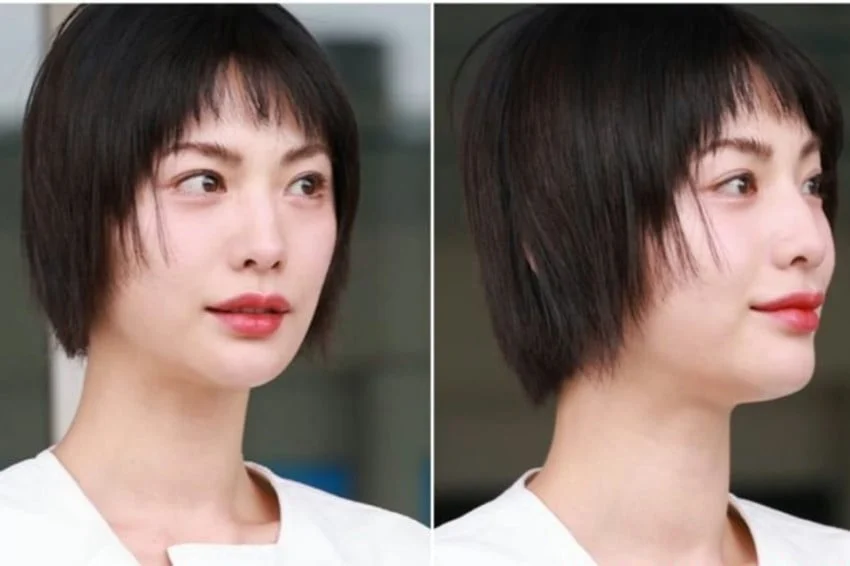
Im Jin-ah, widely known by her stage name Nana, has once again become the center of public discourse following her latest public appearance. The former After School member and celebrated actress, who has transitioned successfully into the K-drama industry, was recently spotted sporting a distinctively shorter, choppy hairstyle and noticeably thinner lips, a departure from the aesthetic she showcased during her recent project, the Netflix production The Scandal. This shift in appearance comes on the heels of significant online scrutiny regarding her physical presentation in the historical drama, sparking a broader conversation about beauty standards in South Korean entertainment and the intersection of modern aesthetics with period-accurate character portrayals.
The Chronology of the Controversy
The discourse surrounding Nana’s appearance began shortly after the release of the Netflix original series The Scandal. In the series, Nana portrays Hui Yeon, a character living during the Joseon Dynasty. While her performance received commendation for its emotional depth and range, a significant portion of the audience became fixated on her physical appearance, specifically her lips.
Viewers noted that her lips appeared unusually full, leading to widespread speculation on social media platforms and Korean community forums that the actress had undergone cosmetic procedures, specifically the injection of lip fillers. Critics argued that the volume of her lips appeared incongruent with the historical setting of the Joseon era, where such modern beauty markers are typically absent. The "distraction" caused by this aesthetic choice became a recurring theme in viewer reviews, with some fans suggesting it broke the immersion of the historical narrative.
Following the initial wave of criticism, Nana maintained a relatively low profile regarding the rumors. However, her recent public appearance—characterized by a return to thinner lip proportions and a bold, choppy haircut—has been interpreted by many observers as a direct or indirect response to the feedback received during the broadcast of The Scandal.
Navigating Aesthetics in K-Drama Casting
The scrutiny Nana faced highlights a unique challenge for actors in the South Korean industry, where the "visual" standard is exceptionally high and often strictly monitored by the public. In historical dramas, or Sageuk, there is an unspoken expectation for actors to maintain an appearance that aligns with the era depicted.
Historically, Korean entertainment has maintained a rigorous standard for "natural" beauty. When an actor appears to have utilized modern cosmetic enhancements, such as fillers or surgical alterations, it can lead to a disconnect between the audience and the character. In Nana’s case, the contrast between her perceived modern aesthetic and the traditional Joseon-era setting created a focal point that arguably overshadowed the character’s narrative arc.
Industry analysts suggest that this phenomenon is part of a larger trend where digital cinematography and high-definition screens amplify minute changes in an actor’s face. Unlike previous decades where lighting and film grain could mask subtle cosmetic interventions, modern 4K production values leave little room for such nuances, making actors more susceptible to public dissection of their features.
Background: Nana’s Career Trajectory
Nana’s transition from a K-pop idol to a critically acclaimed actress has been one of the most successful narratives in the Korean entertainment industry. Debuting as a member of After School in 2009, she quickly became known for her striking visuals, consistently topping "Most Beautiful Face" lists globally.
As she pivoted to acting, Nana proved that her talents extended beyond the stage. Her roles in critically successful dramas such as The Good Wife, Kill It, and Into the Ring earned her accolades and solidified her status as a versatile performer. By the time she was cast in The Scandal, she was considered a top-tier lead, capable of anchoring complex dramas.
The recent controversy is perhaps the first time in her acting career that her physical appearance has been cited as a detriment to a project’s reception. This represents a shift in how fans interact with their idols; while they formerly celebrated her "visuals" as a point of pride, the current climate has shifted toward a more critical, often intrusive, examination of whether those visuals serve the artistic integrity of the work.
Analysis of the Public Reaction
The reaction to Nana’s changing appearance has been polarized. On one side, there are those who defend her right to bodily autonomy. These supporters argue that the pressure to adhere to strict beauty standards is oppressive and that the criticism leveled against her is a form of harassment. They point out that actresses, unlike their male counterparts, are disproportionately judged for cosmetic changes.
Conversely, those who have critiqued her appearance argue that in the context of professional acting, physical choices can affect the believability of a character. From this perspective, if an actor’s appearance clashes with the historical period of a drama, it is a valid production concern. This side of the debate emphasizes that high-budget productions are collaborative efforts where the visual presentation must be cohesive.
The fact that Nana has now appeared with a look that aligns closer to her previous, less-voluminous style has led many to speculate whether her agency or the stylists involved in her recent projects have advised a return to a more "neutral" aesthetic.
The Role of Stylists and Agencies
In the South Korean entertainment ecosystem, the influence of agencies on an artist’s look cannot be overstated. Agencies often coordinate closely with stylists and beauty consultants to curate an image that fits specific roles or marketing cycles. The "choppy" haircut and the adjustment in lip volume could be part of a new image-building strategy intended to move past the The Scandal controversy and rebrand her for upcoming roles.
Industry insiders note that celebrities in South Korea often rotate through various "looks" to keep their brand fresh. Whether the changes are a result of surgical reversal, the dissolving of fillers, or simply a change in makeup technique—such as the use of lip liners or specific lipstick application methods—the public’s sensitivity to these changes underscores the immense pressure stars face.
Broader Implications for the Industry
The "Nana incident" serves as a case study for the evolving relationship between K-drama stars and their audience in the era of social media. The speed at which rumors regarding cosmetic procedures spread—and the subsequent impact on how a project is perceived—indicates that agencies must now factor in the "visual reception" of an actor as part of their risk management strategy.
Furthermore, this situation brings to light the ongoing debate regarding the use of cosmetic surgery in the entertainment industry. While Korea is often cited as a hub for aesthetic procedures, there remains a persistent societal tension between the normalization of these procedures and the public demand for "authentic" performances. When an actor’s appearance is perceived as "too artificial," it risks distancing the audience from the emotional reality of the story being told.
Conclusion
Nana remains one of the most bankable and recognizable faces in Korean entertainment. While the discourse surrounding her appearance in The Scandal and her subsequent change in style have dominated headlines, her career remains on an upward trajectory. The incident highlights the precarious balance actors must strike between maintaining their personal aesthetic preferences and meeting the expectations of a discerning, often hyper-critical audience.
As the industry continues to grow, the dialogue between performers and their viewers regarding beauty standards is likely to intensify. For Nana, the focus will undoubtedly shift back to her professional output in future projects, as she continues to navigate the complexities of fame and artistry in the spotlight. Whether this latest stylistic adjustment signals a permanent return to her previous look or is merely another phase in her evolving career, it is clear that every choice she makes will continue to be meticulously observed by fans and critics alike.
Moving forward, the industry may see more stringent considerations regarding period-accurate styling, as producers and agencies seek to mitigate the risk of "visual distractions" that can detract from the storytelling experience. Ultimately, Nana’s resilience in the face of such scrutiny remains a testament to her enduring presence in an industry that demands constant evolution.
