
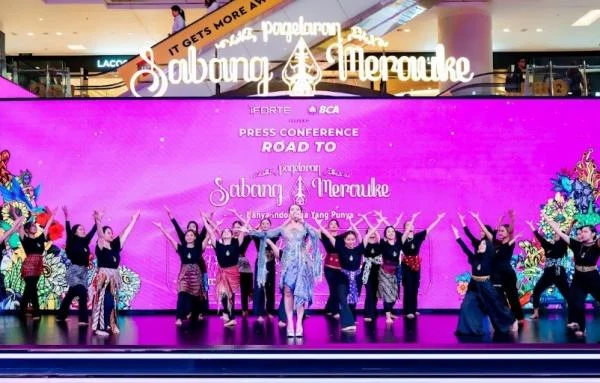
The Road to Pagelaran Sabang Merauke 2026 has officially commenced, marking a significant milestone in Indonesia’s ongoing efforts to preserve and promote its vast cultural heritage through the active participation of the younger generation. This national cultural series, which involves thousands of young people from various regions across the Indonesian archipelago, serves as a vital platform for students, academics, and professional dancers to express their creative talents while deepening their connection to the diverse traditions of the Nusantara. Unlike traditional arts festivals, this initiative is structured as a comprehensive journey of development, encompassing rigorous training, competitive auditions, and cross-regional collaborations that aim to bridge the gap between ancient traditions and modern creative expressions.
The 2026 series is designed to be more than just a sequence of performances; it is envisioned as a movement to cultivate a sense of national identity among Gen Z and Millennials. By providing a structured environment for cultural exploration, the organizers seek to ensure that the spirit of "Bhinneka Tunggal Ika" (Unity in Diversity) remains a living reality rather than a historical concept. The involvement of thousands of participants highlights a growing trend in Indonesia where the youth are increasingly reclaiming traditional arts, repositioning them within the contemporary global landscape.
A Strategic Chronology of Cultural Engagement
The core of this year’s "Road to" activities was concentrated in a high-impact two-day event held on April 25-26, 2026. This period featured three primary agendas that served as the pillars of the program: the grand final of the national-level dance competition, the grand final of the dancer auditions for the main show, and a massive cultural parade held in public spaces. These activities were strategically designed to maximize public engagement, allowing the event to transition from closed-door auditions to an inclusive celebration of Indonesian identity.
On the first day, the focus remained on the competitive aspect of the arts. The national dance competition grand final showcased the results of months of regional qualifiers. Participants from Sabang to Merauke brought their local narratives to the stage, blending traditional choreography with contemporary elements to appeal to a broader audience. This was followed by the dancer auditions, which sought to identify the "best of the best" to perform in the upcoming 2026 main event. The selection process was described by judges as one of the most rigorous in the event’s history, focusing not only on technical skill but also on the performers’ ability to convey the emotional and historical weight of the dances they represent.
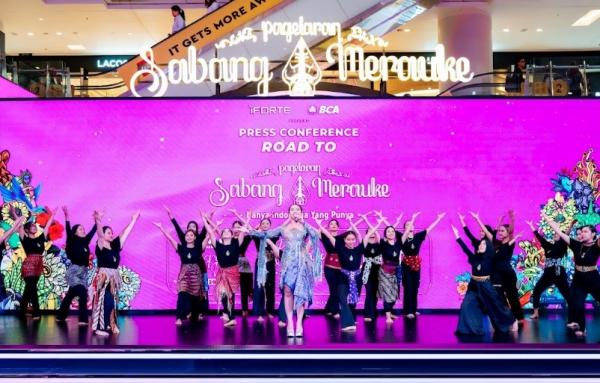
The second day shifted the focus toward public visibility through a large-scale cultural parade. By taking the performances into the streets and public squares, the Road to Pagelaran Sabang Merauke 2026 effectively democratized access to high-quality cultural displays. This move was intended to inspire the general public and foster a collective sense of pride, transforming the city into a living museum of Indonesian diversity.
Government Endorsement and the Vision for the Creative Economy
The significance of the Pagelaran Sabang Merauke series has not gone unnoticed by high-level government officials. During a press conference held on Friday, July 24, 2026, the Deputy Minister of Creative Economy (Wamenkraf), Irene Umar, expressed her profound appreciation for the consistency of the program. Her remarks underscored the government’s view that cultural preservation is a cornerstone of the nation’s creative economy.
"I highly appreciate the consistency of Pagelaran Sabang Merauke, which continues to exist as a vital space for the preservation of Indonesian culture," Irene Umar stated. She reflected on the emotional impact of the previous year’s performance, noting that it successfully channeled a powerful spirit of nationalism that resonated with viewers of all ages. According to the Deputy Minister, such events are essential for building a "creative brand" for Indonesia on the international stage, showing that the country’s traditional assets can be packaged into world-class entertainment.
The Ministry of Creative Economy views this initiative as a benchmark for how the private sector and cultural activists can collaborate to drive economic value through the arts. By involving thousands of young performers, the event also acts as an incubator for talent, providing participants with professional experience that can translate into careers within the broader creative industries, including theater, film, and tourism.
The Evolution of a Cultural Phenomenon
The journey toward the 2026 spectacle began years ago. Aming Santoso, the President Director and CEO of iForte, noted that the Pagelaran Sabang Merauke brand has seen exponential growth since its inception in 2022. Initially conceived as a specialized performance to celebrate Indonesian heritage, the project has evolved into a nationwide movement.

According to Santoso, the data collected since 2022 shows a steady increase in youth enthusiasm for traditional arts. This trend contradicts the common narrative that globalization and digitalization are eroding local cultures. Instead, the Road to Pagelaran Sabang Merauke suggests that when young people are given a modern, high-tech, and prestigious stage to showcase their heritage, they participate with immense passion. iForte’s involvement as a primary supporter highlights the role of corporate entities in providing the infrastructure—both digital and physical—necessary to bring these cultural visions to life.
"Since we first held this in 2022, we have seen that the enthusiasm of the younger generation toward culture continues to rise when they are provided with the appropriate space for expression," Santoso remarked. This observation is backed by the increasing number of digital interactions and social media engagement surrounding the event, where traditional dance clips and cultural tutorials have gained significant traction among younger demographics.
Socio-Economic Impact and Cultural Diplomacy
The enrichment of the Road to Pagelaran Sabang Merauke 2026 also carries significant implications for Indonesia’s cultural diplomacy. As the nation prepares for the main event in 2026, the "Road to" phase serves as a proof of concept for large-scale cultural management. Analysts suggest that the success of these events strengthens Indonesia’s "soft power," positioning the country as a global leader in cultural diversity management.
From an economic perspective, the involvement of thousands of participants and their families, along with the audiences attracted to the public parades, provides a boost to local hospitality and retail sectors. Furthermore, the emphasis on "coaching" and "mentorship" mentioned in the event’s mission statement indicates a long-term investment in human capital. Participants are not just learning steps; they are learning stage management, costume design, and the historical context of their craft, creating a specialized workforce for the performing arts sector.
Implications for the Future of Indonesian Arts
As the Road to Pagelaran Sabang Merauke 2026 continues its trajectory, the focus remains on sustainability. The organizers have emphasized that the goal is not merely to host a one-time show but to create a self-sustaining ecosystem for the arts. By integrating competitions and auditions into the "Road to" phase, they have created a pipeline of talent that ensures the continuity of the program for years to come.

The 2026 main event is expected to be the most ambitious yet, utilizing state-of-the-art stage technology, projection mapping, and orchestral arrangements to complement the traditional performances. This fusion of the "old" and the "new" is what defines the Sabang Merauke philosophy—honoring the past while fearlessly embracing the future.
In conclusion, the Road to Pagelaran Sabang Merauke 2026 represents a pivotal moment in Indonesia’s cultural calendar. It is a testament to the fact that tradition is not a static relic of the past but a dynamic force that can inspire, unite, and drive a nation forward. Through the collaboration of government bodies like the Ministry of Creative Economy, private sector leaders like iForte, and the tireless energy of thousands of young artists, Indonesia is successfully charting a course where culture remains the heartbeat of the national identity. The events of April 2026 have set a high standard, promising that the grand finale in 2026 will be a landmark celebration of the Indonesian spirit on the world stage.
