
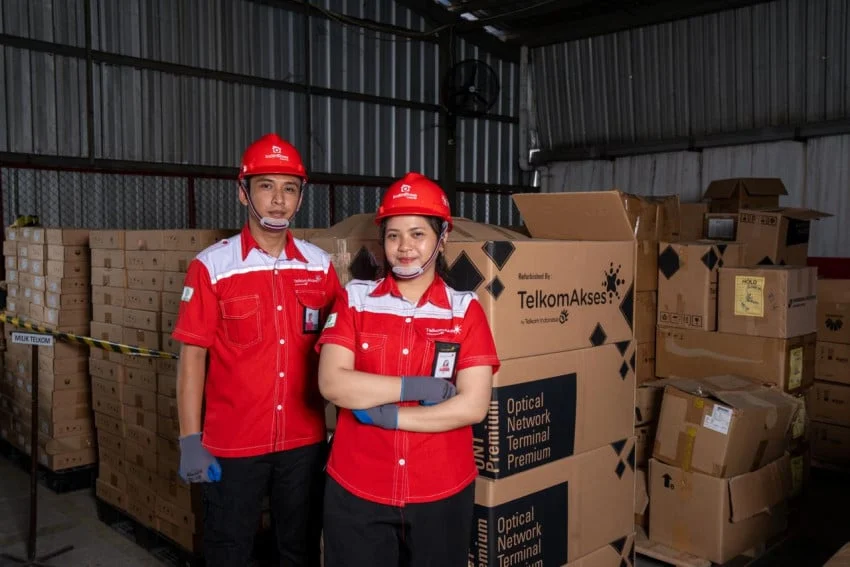
PT Telkom Indonesia (Persero) Tbk, the nation’s largest telecommunications provider, has officially initiated a pivotal phase in its corporate restructuring roadmap by announcing the planned merger of four of its key subsidiaries. This move represents a significant acceleration of the company’s "streamlining" program, a long-term initiative aimed at transforming Telkom from an operating holding company into a more agile and efficient strategic holding firm. Under this new structural mandate, PT Infrastruktur Telekomunikasi Indonesia, widely known as Telkominfra, will be integrated into PT Telkom Akses, while PT Nusantara Sukses Investasi (NSI) will be absorbed by PT Graha Sarana Duta (GSD).
These corporate actions, which have been formally disclosed in accordance with the Law on Limited Liability Companies, signify a major shift in how the state-owned enterprise manages its vast ecosystem of assets. The consolidation is not merely an administrative exercise but a fundamental component of the "TLKM 30" strategic initiative—a roadmap designed to sharpen the company’s focus, reduce operational complexity, and enhance shareholder value through the year 2030.
Chronology and the Path Toward Streamlining
The current restructuring efforts trace their roots back to the strategic directives issued by the Indonesian government, specifically through the Danantara Asset Management (Persero). As Telkom manages a sprawling portfolio comprising 68 subsidiaries, the sheer scale of the organization has historically presented challenges in terms of governance, resource allocation, and operational efficiency.
The journey toward this streamlining process began in earnest following a comprehensive review of the company’s internal health and market position. Realizing that a decentralized structure with dozens of overlapping entities created unnecessary bureaucratic layers, Telkom leadership began the consolidation process with a clear target: to reduce the total number of subsidiaries and affiliates by optimizing those that perform redundant functions.
To date, Telkom has successfully concluded the reorganization of 28 entities. With the latest announcement regarding Telkominfra, Telkom Akses, NSI, and GSD, the company is now tackling the remaining 22 entities. Management has set an ambitious but firm deadline, aiming to complete the entire restructuring program by the end of 2026. This timeline ensures that the transition is systematic, allowing for seamless integration of human resources, assets, and operational workflows without disrupting the core services provided to millions of Indonesian subscribers.
Strategic Rationale: Telkom Akses and the Infrastructure Mandate
The merger of Telkominfra into Telkom Akses is arguably the most significant aspect of this announcement. Telkom Akses has long served as the primary arm for the deployment and maintenance of the company’s fiber-optic and broadband infrastructure. By bringing Telkominfra—a firm specialized in supporting telecommunications infrastructure—under the same roof, Telkom is creating a singular, unified entity capable of managing the entire lifecycle of its physical network.
Industry analysts suggest that this integration will lead to improved economies of scale. By centralizing procurement, maintenance crews, and engineering expertise, Telkom Akses is expected to shorten the lead time for broadband installation and network repairs. In an era where high-speed internet is categorized as a primary utility, the ability to rapidly expand fiber-to-the-home (FTTH) coverage is a critical competitive advantage.
Simultaneously, the merger of NSI into GSD focuses on the management of non-core assets, specifically real estate and facility management. GSD, which oversees Telkom’s building portfolios and office infrastructure, will benefit from the asset base of NSI. This consolidation allows for better facility utilization, reduced overheads, and a more focused approach to managing the physical footprint of the TelkomGroup.
Leadership Perspective and Corporate Governance
Addressing the public and shareholders, Telkom President Director Nanang Hendarno emphasized that the streamlining process is governed by strict adherence to Good Corporate Governance (GCG). In a highly regulated environment, where state-owned assets are subject to public scrutiny, the company has prioritized transparency and objective validation.
"Streamlining is a mandate from our shareholders that we execute with a high sense of responsibility," Nanang stated. He noted that every decision to merge entities is supported by extensive feasibility studies and independent due diligence. These measures are designed to ensure that the consolidation does not adversely impact the company’s service delivery but rather strengthens its fiscal position.
The process involves a multi-layered approval system, beginning with internal audits, moving through independent financial and legal reviews, and culminating in the necessary approvals from the Board of Commissioners and the Ministry of State-Owned Enterprises (BUMN). This rigorous framework is intended to provide confidence to investors that the restructuring is being conducted in the best interest of long-term profitability rather than short-term gains.
Data-Driven Analysis of the Portfolio Transformation
To understand the scope of the transformation, one must consider the sheer scale of TelkomGroup. Before the current program commenced, the group maintained 68 distinct entities. Managing such a diverse portfolio—ranging from digital content providers and data center operators to physical infrastructure firms and investment vehicles—created significant "silo" effects.
By reducing the number of subsidiaries to a leaner, more focused group, Telkom aims to achieve three primary financial objectives:
- Cost Efficiency: Eliminating redundant back-office functions such as HR, legal, and accounting departments across multiple subsidiaries.
- Capital Allocation: Allowing the parent company to direct capital toward high-growth sectors, such as data centers and cloud services, rather than maintaining multiple entities that perform similar supporting roles.
- Agility: Enhancing the speed of decision-making by removing the layers of management that often exist between the parent company and the end-user service provider.
The target of completing the transformation of 50 entities by 2026 implies a continued, steady pace of mergers and acquisitions in the next 24 months. Investors and market observers are watching these moves closely, as they reflect a broader trend among Indonesian SOEs to optimize performance and reduce dependence on the state budget by fostering self-sustaining, efficient business units.
Market Implications and Future Outlook
The market reaction to Telkom’s streamlining efforts has been generally positive. Investors typically view such consolidation as a sign of management’s focus on operational discipline. By streamlining the structure, Telkom is positioning itself to be more competitive against private sector rivals and international players entering the Indonesian digital economy.
Furthermore, the transition to a "strategic holding" model suggests that Telkom will act more like a venture builder or an investment manager for its business units. This model is expected to provide individual units with more operational autonomy while ensuring they remain aligned with the group’s overarching digital transformation goals.
However, the process is not without its challenges. The human capital aspect of merging entities—integrating corporate cultures, harmonizing payroll structures, and managing organizational changes—requires significant focus. Telkom has indicated that it is prioritizing employee welfare throughout this process, aiming to retain talent while optimizing the workforce.
As Telkom enters the final stages of its restructuring, the focus will likely shift toward the synergies generated by these mergers. If the integration of Telkom Akses and Telkominfra proves successful in lowering operational costs and increasing fiber-deployment velocity, it will likely serve as a blueprint for the remaining 22 entities scheduled for restructuring.
Ultimately, the goal of this massive corporate reorganization is to ensure that Telkom remains the dominant player in Indonesia’s digital landscape. As the country moves toward a more digitized economy, supported by the national government’s vision of a "Digital Indonesia," Telkom’s ability to evolve its structure will be the determining factor in its long-term success. By 2026, the company expects to emerge as a leaner, more robust organization, capable of navigating the complexities of the global telecommunications market while maintaining its foundational role in supporting the nation’s digital infrastructure.
