
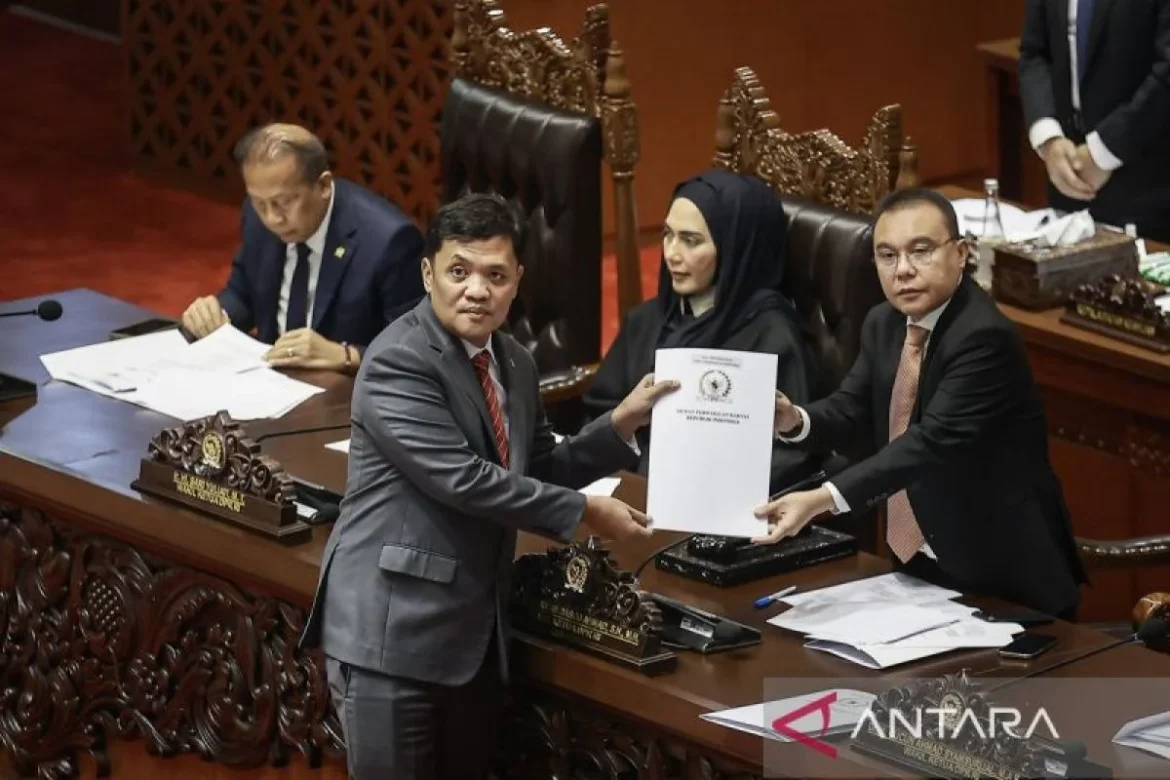
The landscape of human resource management within the Indonesian National Police (Polri) has undergone a significant transformation following the enactment of Law Number 5 of 2026. This legislation, which serves as the third amendment to Law Number 2 of 2002 concerning the Indonesian National Police, introduces a tiered retirement age structure that shifts away from the previously uniform threshold of 58 years. Effective as of June 17, 2026, the new mandate aims to optimize the deployment of personnel based on rank and operational necessity, though it has simultaneously ignited legal challenges and internal debates regarding institutional equity and career progression.
The Legislative Shift: From Uniformity to Tiered Retirement
Prior to the implementation of Law Number 5 of 2026, the retirement age for all police officers was set at a maximum of 58 years, a standard that had remained largely static for over two decades. The new regulatory framework acknowledges the evolving nature of policing, which increasingly requires a balance between youthful field agility and the specialized, high-level strategic experience typically held by senior officers.
Under the provisions of Article 30, paragraph (5), the retirement ages are now categorized as follows:
- Tamtama and Bintara (Enlisted and Non-Commissioned Officers): The mandatory retirement age is set at a maximum of 59 years.
- Perwira Pertama, Menengah, and Tinggi (Commissioned Officers from First Lieutenant/Inspector through General): The mandatory retirement age is set at a maximum of 60 years.
This tiered system reflects a broader trend in the Indonesian civil service and security apparatus, where the government seeks to retain institutional knowledge within the upper echelons of command while simultaneously managing the career pipeline for younger officers.
Specialized Provisions and Discretionary Extensions
The new law does not merely impose rigid age caps; it introduces a degree of flexibility designed to address specific operational requirements. Article 30, paragraph (7) provides a legal basis for extending the service period for individuals possessing rare, high-demand skills or those whose expertise is deemed critical for ongoing national security operations.
For these specific cases, a one-year extension may be granted upon the recommendation of the Chief of the National Police (Kapolri) or through a Presidential Decree. Crucially, the law specifies that this is not an automatic benefit. It is a discretionary measure subject to rigorous review to ensure that such extensions are based on objective necessity rather than administrative convenience.
Furthermore, a distinct category exists for officers serving in functional positions. These individuals are exempt from the standard retirement ages outlined in Article 30, paragraph (5). Instead, their retirement is governed by the specific regulatory frameworks applicable to functional experts in the state apparatus, ensuring that technical specialists—such as forensic scientists, cybersecurity experts, or legal analysts—can continue their service according to the requirements of their respective professional tracks.
For the highest-ranking officers, particularly those holding four-star General status, the law stipulates a retirement age of 60, with a potential one-year extension if deemed necessary by the President. This clause reinforces the executive authority over the top leadership of the police force, ensuring that the transition of command at the highest level remains synchronized with the political and security vision of the sitting government.
Transitional Arrangements and Operational Implementation
The introduction of such a major change inevitably creates friction for those currently serving near the threshold of retirement. To mitigate potential disruption to police operations and individual career planning, Law Number 5 of 2026 includes specific transitional clauses for those active at the time of the law’s enactment on June 17, 2026.
- Officers aged 56: These individuals are fully subject to the new retirement age provisions immediately.
- Officers aged 57: These personnel are granted a transitional extension of their service period, allowing them to remain active until age 59.
- Officers turning 58 in 2026: Those approaching the previous retirement limit within the calendar year of the law’s enactment are also permitted to extend their service until age 59, providing a soft landing for those who had previously planned their post-service lives based on the older statute.
These provisions are designed to prevent an abrupt "brain drain" or a sudden vacancy crisis in critical mid-to-senior level management roles while the organization adjusts to the new demographic realities of its workforce.
Legal Challenges at the Constitutional Court
Despite the legislative intent to modernize the force, the law has faced immediate pushback. On October 7, 2026, the Constitutional Court (Mahkamah Konstitusi) held its inaugural hearing for case number 362/PUU-XXIV/2026. The petition challenges the constitutionality of Article 30, paragraph (5), specifically questioning the legal basis for differentiating retirement ages based on rank.
The petitioners argue that the tiered system creates an unnecessary hierarchy of value for personnel and advocate for a return to a uniform retirement age of 58 for all ranks. During the initial hearing, the panel of judges highlighted several procedural gaps in the petition, granting the plaintiffs 14 working days to refine their arguments.
The proceedings at the Constitutional Court underscore the sensitivity of the issue. Legal experts suggest that the outcome of this case could set a significant precedent for how the state manages its security apparatus. While the government maintains that the law is a necessary update to reflect the increasing complexity of police work, critics fear that the extension of retirement ages—particularly for senior officers—might stifle career mobility for younger, qualified personnel, potentially leading to stagnation in leadership renewal.
Broader Implications and Institutional Analysis
The shift in the retirement age is part of a larger, ongoing effort to reform the Indonesian National Police. From an organizational development perspective, increasing the retirement age allows the police force to maximize the return on investment in training and experience. High-ranking officers often reach their peak professional effectiveness in their late 50s, a period when they possess the strategic foresight and institutional networks necessary to manage complex national security challenges.
However, the implications are two-fold:
- Retention of Talent: By allowing officers to serve longer, the institution retains critical experience, particularly in counter-terrorism, intelligence, and international cooperation.
- Career Progression Bottlenecks: The primary concern among the younger ranks is the potential "clogging" of the career path. If senior officers remain in their posts for longer, the promotional cycles for middle-ranking officers may slow down, which could negatively impact morale and long-term retention of high-potential mid-career staff.
Furthermore, the involvement of the Constitutional Court highlights the ongoing tension between legislative policy-making and the judicial review process. The government, through the Ministry of Law and Human Rights, has repeatedly emphasized that the formation of the law followed all constitutional requirements and was done in consultation with the DPR (House of Representatives). They argue that the law is not intended to create inequality, but rather to ensure that the police force can adapt to the rapid technological and social changes characterizing modern Indonesia.
The Road Ahead
As the police force navigates the initial months of this new regulation, the focus will remain on the interpretation of "special skills" and the criteria for the one-year extensions. Transparency in the application of these discretionary measures will be paramount to maintaining internal harmony.
The Constitutional Court’s upcoming ruling will be the ultimate arbiter of the policy’s longevity. If the court upholds the law, the tiered retirement system will become the definitive standard for the next generation of Indonesian law enforcement. If the court demands amendments, the government will be forced to revisit the statute, potentially leading to further debates on whether age-based retirement is the most effective metric for a modern, merit-based security force.
Ultimately, the revision of the retirement age in the 2026 Law is more than a mere administrative change; it is a reflection of how the Indonesian state perceives the role and longevity of its police force. As the country moves toward a more complex future, the balancing act between experience and renewal will remain a central pillar of its institutional strategy. For now, all eyes remain on the Constitutional Court and the administrative implementation of the new age brackets, as both the public and the police institution wait to see how these changes will manifest in the daily reality of the force.
