
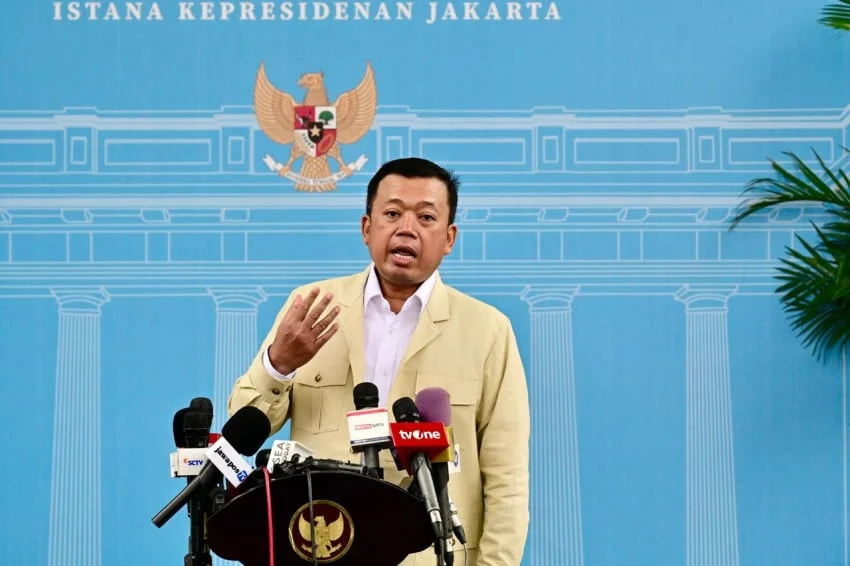
The Corruption Eradication Commission has officially addressed the possibility of summoning Minister of Agrarian Affairs and Spatial Planning/Head of the National Land Agency Nusron Wahid in connection with an ongoing investigation into alleged bribery and gratification involving land rights management in Bogor Regency, West Java. The high-profile corruption case has already ensnared four individuals identified as close associates and trusted aides of the minister, raising significant questions regarding administrative oversight, institutional accountability, and the systemic vulnerabilities plaguing Indonesia’s land administration sector.
The inquiry centers on the corrupt acquisition and expedited issuance of Hak Guna Bangunan titles—commonly known as HGB or Building Use Rights—within the rapidly developing jurisdiction of Bogor Regency. As investigators from Indonesia’s anti-graft agency delve deeper into the illicit transactional network, the spotlight has inevitably shifted toward the upper echelons of the ministry. While the leadership has maintained a posture of institutional cooperation, the legal jeopardy surrounding his inner circle has placed immense public scrutiny on the minister’s administrative sphere.
Potential Summoning Contingent on Investigative Necessity
Speaking on the legal trajectory of the case, the Acting Director of Investigation at the Corruption Eradication Commission, Achmad Taufik Husein, clarified the agency’s stance regarding a prospective interrogation of the incumbent minister. Taufik emphasized that any decision to summon the high-ranking official will be determined strictly by the investigative team’s operational requirements as the case progresses.
Whether the individual referred to as NW will be summoned depends entirely on the requirements of the investigative process moving forward, Taufik stated during a media briefing. He further elaborated that investigators retain full autonomy to evaluate whether additional testimonies are warranted based on evidentiary developments and the evolving disclosure of facts during interrogations.
According to the anti-graft agency, the determination of who needs to be questioned is never arbitrary. The investigative directorate continuously reviews case files, financial tracking reports, and witness statements to map out the complete chain of command and beneficiaries involved in the Bogor Regency bribery scheme. Whether the minister’s testimony is ultimately deemed necessary will depend on the ongoing updates and breakthroughs within the active investigative pipeline.
Chronology of the Bogor HGB Corruption Scandal
The unfolding legal crisis began to take shape through a series of intelligence operations, surveillance, and subsequent sting operations conducted by the anti-graft body. The investigation into the Bogor Regency HGB issuance exposed a sophisticated syndicate involving local bureaucratic actors, real estate middlemen, and high-level facilitators capable of bypassing regulatory frameworks for monetary incentives.
In the early stages of the probe, anti-corruption investigators identified systemic irregularities in how commercial and industrial land titles were processed across Bogor Regency. The region, situated on the southern fringe of Jakarta, has long been a hotspot for massive real estate developments, commercial complexes, and industrial estates. This high economic value makes it a prime environment for regulatory capture and illicit rent-seeking behavior.
Following extensive evidence gathering, the anti-corruption agency formally announced the elevation of the case status from preliminary inquiry to a full-scale investigation. At the core of the initial phase of arrests were four individuals who occupied trusted positions within the broader institutional circle of the Ministry of Agrarian Affairs and Spatial Planning, specifically operating in close proximity to Minister Nusron Wahid. The exposure of these key confidants as suspects sent shockwaves through the civil service, transforming a localized land dispute case into a major national governance scandal.
Institutional Engagement and Ministerial Preemption
In a proactive response to the escalating crisis, Minister Nusron Wahid previously made a high-profile visit to the anti-corruption headquarters. Spending approximately two hours inside the investigative facility, the minister engaged with senior officials to discuss structural vulnerabilities, bureaucratic bottlenecks, and systemic disease points within the Agrarian and Spatial Planning ministry that historically create fertile ground for corruption.
During the visit, leadership from both the ministry and the anti-graft body addressed the chronic challenges facing land administration in Indonesia. Issues such as bureaucratic opacity, manual record-keeping vulnerabilities, delayed certificate issuance, and discretionary power held by local land office officials were placed on the table. The minister framed his visit as a demonstration of institutional transparency and a commitment to internal reform, asserting that the ministry stands ready to purge compromised elements from its ranks.
However, legal analysts and governance watchdogs have pointed out that proactive institutional visits do not insulate administrative leaders from criminal liability if evidence demonstrates supervisory negligence, complicity, or direct benefit from systemic corruption within their jurisdiction. The tension between public relations outreach and rigorous criminal prosecution remains a defining characteristic of this high-stakes inquiry.
Systemic Vulnerabilities in Indonesia’s Land Sector
The allegations surrounding the Bogor Regency HGB processing highlight persistent, systemic vulnerabilities that have historically plagued the Indonesian land administration system. For decades, the National Land Agency has been cited by various governance watchdogs as one of the most corruption-prone public service institutions in the country.
Building Use Rights represent a critical legal instrument for commercial enterprises, allowing corporations to utilize state-owned or privately held land for commercial, industrial, or residential construction over extended periods. Because the economic stakes involving HGB titles are exceptionally high—often worth billions or trillions of rupiah—the temptation for bribery, illicit facilitation fees, and administrative manipulation is immense.
Common corruption vectors within the land sector include:
- Intentional bureaucratic delays designed to force applicants into paying illegal speed-up fees.
- Falsification or dual issuance of land certificates to favor specific corporate entities.
- Collusion between land office officials and external brokers to bypass environmental and spatial planning regulations.
- Lack of interoperability and transparency in digital land registries, which allows corrupt officials to manipulate physical documentation.
The involvement of individuals close to the minister underscores how patronage networks often bypass formal institutional controls, exploiting personal connections to influence bureaucratic decisions at the regional level.
Broader Economic and Political Implications
The unfolding investigation carries profound implications for the administration’s broader anti-corruption agenda and its stated goals of improving the ease of doing business in Indonesia. Land reform and bureaucratic certainty are foundational pillars for attracting foreign and domestic investment. When systemic corruption compromises land title integrity, investor confidence suffers, and property markets face severe legal and financial instability.
Economists and legal experts note that investor sentiment is heavily influenced by the predictability of regulatory institutions. If property developers and commercial enterprises believe that legitimate HGB procurement requires illicit facilitation payments, the overall cost of doing business escalates dramatically, disproportionately harming fair market competition.
Politically, the case serves as an early test for the administration’s commitment to clean governance. By allowing the anti-corruption agency unfettered access to investigate individuals closely associated with a sitting cabinet minister, the government aims to project an image of institutional independence. However, the political fallout will depend heavily on whether the investigation stops at the level of administrative subordinates or successfully traces the flow of illicit funds upward.
Future Trajectory of the Investigation
As the legal process moves forward, the anti-corruption agency is expected to summon additional witnesses, including regional land office officials from Bogor Regency, corporate representatives from real estate firms involved in the disputed HGB applications, and financial analysts tasked with tracing illicit asset flows.
The decision regarding whether to formally summon Minister Nusron Wahid will ultimately be dictated by the documentary evidence and the testimonies provided by the four detained suspects. If financial audit trails or sworn testimonies establish a direct link between the policy decisions, oversight failures, or illicit enrichment at the ministerial level and the actions of the indicted aides, a formal summons will likely become unavoidable.
In the interim, the public and civil society organizations continue to monitor the proceedings closely, demanding absolute transparency, rigorous adherence to due process, and a comprehensive overhaul of the land administration framework to prevent similar abuses from recurring in the future.
