
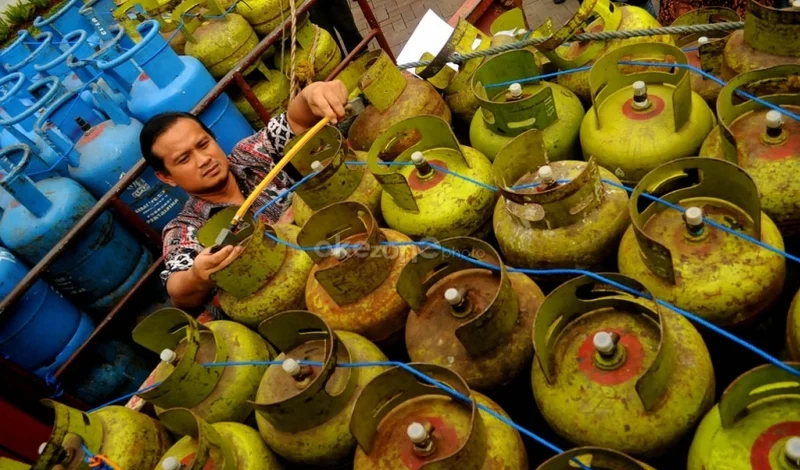
The stability of essential energy commodities remains a cornerstone of regional economic security, particularly in rapidly developing industrial hubs such as Balikpapan, East Kalimantan. In November 2015, PT Pertamina Marketing Operation Region (MOR) VI Kalimantan initiated a series of targeted market operations for the heavily subsidized 3-kilogram liquefied petroleum gas (LPG) cylinders. This intervention was deployed in direct response to circulating rumors and localized perceptions of supply shortages. While local authorities and state energy representatives quickly verified that total regional inventories remained robust, psychological factors such as panic buying and structural challenges within last-mile distribution networks created visible queues at various retail points. This comprehensive report examines the operational countermeasures implemented by Pertamina, the empirical realities of energy supply and demand in East Kalimantan during that period, and the broader socioeconomic implications of managing heavily subsidized energy commodities in emerging markets.
Background Context: The Dynamics of Subsidized Energy in Indonesia
To understand the events of November 2015 in Balikpapan, one must examine the broader historical framework of Indonesia’s energy subsidy policies. For decades, the Indonesian government has provided fiscal support for various petroleum products and LPG variants to alleviate the cost of living for low-income households and micro-enterprises. The 3-kilogram LPG cylinder—colloquially known as the "melon gas" due to its distinctive green color—was specifically designated for households and small businesses meeting stringent economic criteria.
However, managing a targeted subsidy system in a vast archipelago presents persistent logistical and regulatory challenges. Price disparities between the subsidized 3-kilogram cylinders and non-subsidized alternatives, such as the 12-kilogram cylinders or Bright Gas variants, frequently incentivize regulatory arbitrage. Middle-income consumers, commercial establishments ineligible for state assistance, and opportunistic intermediaries occasionally attempt to purchase subsidized fuel, putting pressure on retail supplies and triggering localized anxieties. In Balikpapan, a city serving as a vital industrial and logistical gateway for East Kalimantan, maintaining transparent communication between state-owned enterprises, municipal governments, and the public is vital to preventing speculative hoarding and artificial scarcity.
Chronology of Events: Rumors, Market Intervention, and Verification
The sequence of events leading to Pertamina’s proactive market intervention unfolded over several days in early November 2015. Rumors regarding potential fuel shortages began circulating among local residents, fueled by sporadic sightings of longer-than-usual queues at specific distribution points, known locally as pangkalan.
Recognizing the risk that consumer anxiety could rapidly transform perceived scarcity into a self-fulfilling prophecy through panic buying, PT Pertamina MOR VI Kalimantan mobilized its logistical teams. On Thursday, November 5, 2015, the state energy enterprise launched direct market operations in selected neighborhoods known for high population density and commercial activity.
The initial operational phase focused heavily on two critical administrative kelurahan (sub-districts) within Balikpapan: Gunung Sari and Karang Jati. Pertamina allocated an explicit volume of 150 subsidized 3-kilogram LPG cylinders to each of these designated intervention zones. The objective was clear: flood the immediate market with verified supply at official retail prices, thereby signaling to consumers that sufficient inventories existed and discouraging speculative hoarding.
As the afternoon progressed, real-time monitoring of these market operations yielded revealing logistical data. In Gunung Sari, out of the 150 allocated units, approximately 80 cylinders remained unsold by late afternoon, indicating that local demand was comfortably met and that initial anxieties had likely been overstated. Similarly, in Karang Jati, 50 cylinders remained available at the designated distribution point. Beyond these primary focal points, Pertamina expanded its stabilization efforts by coordinating directly with 15 auxiliary distribution agencies and sub-agents across the municipality to ensure that secondary and tertiary neighborhoods maintained steady inventory flows.
Official Responses and Logistical Analysis
Following the deployment of the market operations, key representatives from both the corporate and municipal sectors stepped forward to clarify the situation, emphasizing that the issue was one of distribution friction and consumer behavior rather than systemic supply depletion.

Andar Titi Lestari, who served as the Public Relations representative for Pertamina MOR VI at the time, issued explicit clarifications regarding the operational strategy. "This market operation was executed to anticipate the supply gaps that were rumored to have occurred. Each designated location was allocated an initial quota of 150 cylinders," Titi stated in Balikpapan on Thursday, November 5, 2015. She emphasized that the inventory levels managed by Pertamina throughout East Kalimantan remained well within safe operational parameters.
Furthermore, Pertamina addressed the behavioral dynamics driving the visible queues at local bases. Titi urged the public to exercise restraint, noting that purchasing behavior should align strictly with genuine household needs. Crucially, she reiterated established government guidelines regarding cross-tier consumption: "Because stock levels are entirely sufficient, we strongly appeal to members of the capable economic strata to purchase alternative LPG formats, such as the 12-kilogram cylinders or the Bright Gas variants, leaving the 3-kilogram cylinders exclusively for those legally entitled to the state subsidy."
Reinforcing these corporate assertions, municipal authorities provided a complementary administrative perspective. Arzeadi, then serving as the Head of Economic Affairs for the City Government of Balikpapan, categorically denied the existence of a genuine energy scarcity in the region. Drawing upon comprehensive data gathered from municipal monitoring channels and direct coordination with Pertamina, Arzeadi confirmed that regional reserves of subsidized LPG were secure.
Addressing the apparent paradox of long consumer queues existing alongside adequate warehouse inventories, Arzeadi offered a detailed behavioral analysis. He explained that visible lines at distribution bases did not equate to structural shortages. "If there are consumer queues at a distribution base, it does not mean the product is scarce. Typically, individual purchase limits are enforced, restricting buyers to a maximum of two cylinders per transaction to ensure equitable distribution," Arzeadi explained. He further identified a phenomenon known as "queue hopping," wherein individuals might repeatedly join lines across multiple separate bases to accumulate volumes exceeding established household quotas. This practice generated a false visual impression of a severe shortage, subsequently amplifying public panic through word-of-mouth and localized social circles.
Broader Impact and Implications for Subsidized Distribution Systems
The events surrounding the Balikpapan LPG market operations in November 2015 offer valuable case study insights into the complexities of administering state subsidies in developing economies. Several core themes emerge when analyzing the broader implications of this incident:
-
The Psychological Vulnerability of Energy Markets
Energy commodities occupy a uniquely sensitive position in the public consciousness. Because cooking gas is an indispensable daily necessity for households and small culinary enterprises, any rumor of interruption—regardless of its factual foundation—can trigger immediate behavioral changes. Panic buying and hoarding act as localized demand shocks that can temporarily overwhelm standard retail supply chains, even when upstream storage facilities are operating at full capacity. -
The Effectiveness of Proactive Interventions
Pertamina’s rapid deployment of targeted market operations demonstrated the value of swift administrative responses. By directly injecting visible supplies into high-traffic zones like Gunung Sari and Karang Jati, the enterprise effectively broke the psychological feedback loop of panic. The presence of unsold inventory remaining at the end of the operation day served as empirical proof to consumers that supplies were stable, thereby restoring market confidence without requiring drastic policy adjustments. -
The Persistent Challenge of Subsidy Misallocation
The episode underscored the ongoing structural difficulties associated with price-controlled, volume-limited subsidies. When a significant price gap exists between subsidized and non-subsidized goods, systemic incentives for diversion and multi-purchasing emerge. Arzeadi’s observation regarding consumers visiting multiple bases highlights the limitations of purely physical rationing systems in the absence of robust digital tracking or identity-verified distribution frameworks. -
Multi-Stakeholder Coordination
The successful mitigation of the Balikpapan incident highlighted the importance of coordinated communication between state-owned enterprises and local government bodies. By presenting a unified, data-backed narrative—confirming adequate stock while addressing operational bottlenecks—Pertamina and the municipal administration prevented misinformation from escalating into a prolonged economic disruption.
Conclusion
The market operations conducted by PT Pertamina MOR VI Kalimantan in Balikpapan in November 2015 illustrate the delicate balance required to maintain energy security in regional markets. Through a combination of targeted inventory injections, transparent public communications from corporate and municipal leaders, and empirical verification of robust upstream reserves, authorities successfully neutralized the threat of artificial scarcity driven by rumor and panic buying. While challenges inherent to the distribution of subsidized commodities remain an ongoing point of focus for policymakers and state enterprises, the episode demonstrates that proactive engagement and rigorous logistics management remain the most effective tools for maintaining public trust and economic stability.
