
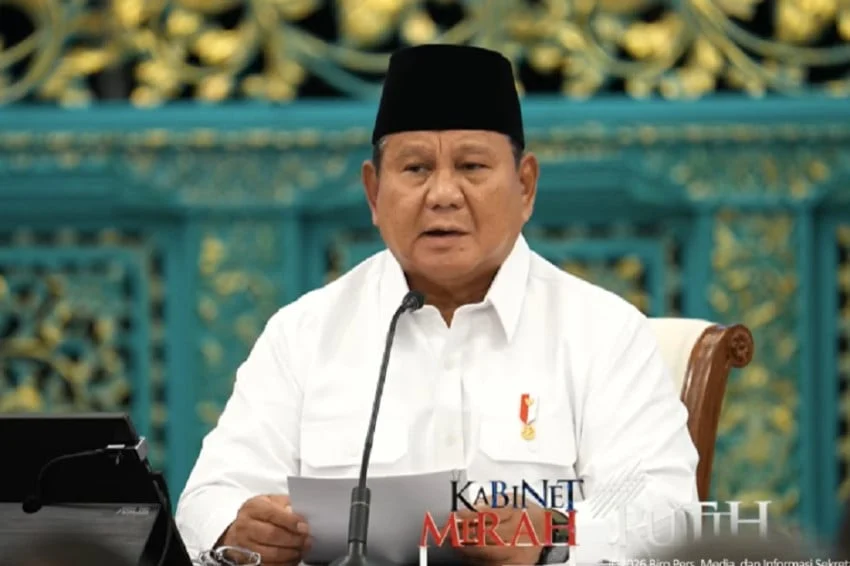
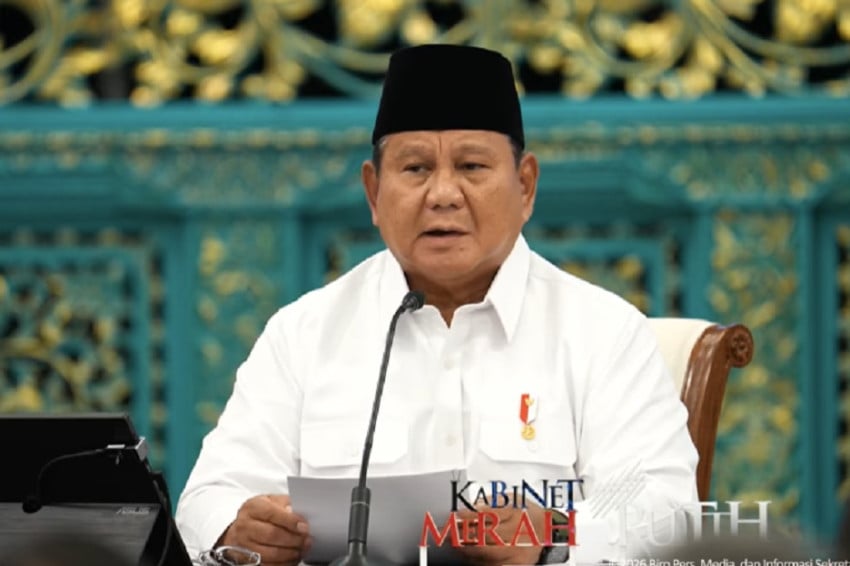
President Prabowo Subianto, addressing his assembled ministers, underscored the traditional significance of such mid-term evaluations, particularly in anticipation of the annual Independence Day address on August 17th. "Today, I have deliberately convened this mid-2026 cabinet plenary session ahead of August 17th," President Prabowo stated, initiating his remarks. "It has been a tradition for the President of the Republic of Indonesia to deliver an address several days before August 17th, to inform the entire nation and state about what has been accomplished during the past year of work." His words emphasized the accountability inherent in the presidential office and the necessity of transparent communication with the Indonesian populace regarding the government’s stewardship. The President further highlighted the rapid passage of time, noting that the administration was less than three months away from completing its second year in office since his inauguration on October 20, 2024. "This also signifies that we are less than three months from completing the second year of our mandate from the people. Without realizing it, time moves very quickly." This reflection on the swift progression of his term served as a poignant reminder of the urgency and gravity of the tasks at hand, urging ministers to reflect deeply on their achievements and the challenges that still lay ahead.
The Significance of the Two-Year Mark in Indonesian Governance
A cabinet plenary session, known as "Sidang Kabinet Paripurna" in Indonesia, represents the highest forum for policy discussion and decision-making within the executive branch. Chaired directly by the President, these sessions bring together all ministers and often other high-ranking officials to deliberate on critical national issues, review progress on key programs, and chart future strategies. The timing of this particular session, just shy of the two-year mark of President Prabowo’s administration, carries profound political and administrative weight. In Indonesia’s five-year presidential term, the halfway point is often seen as a crucial juncture for introspection and recalibration. It provides an opportunity to assess whether the initial vision and campaign promises are being met, to identify bottlenecks in policy implementation, and to adjust priorities in response to evolving domestic and global landscapes.
The lead-up to the August 17th Independence Day address further amplifies the importance of this evaluation. The President’s annual speech before the parliament is not merely a ceremonial event; it is a comprehensive report to the nation, detailing economic performance, social progress, and future policy directions. A robust and well-vetted internal evaluation, like the one conducted in this plenary session, is indispensable for shaping a credible and impactful Independence Day address that resonates with the public and instills confidence in the government’s trajectory. Furthermore, it allows the administration to consolidate its narrative, highlight successes, and transparently acknowledge areas requiring more effort, thereby managing public expectations and fostering a sense of shared national purpose.
A Look Back: The Road Traveled Since October 2024
President Prabowo Subianto’s inauguration on October 20, 2024, following a hard-fought election, set in motion an administration focused on continuity, accelerated development, and strengthening national resilience. His initial policy agenda prioritized several key pillars:
- Food Security: Emphasizing self-sufficiency in staple foods through agricultural modernization, land expansion for farming, and improved irrigation systems.
- Human Capital Development: Focusing on enhancing education quality, vocational training, and public health services, including initiatives for reducing stunting and improving maternal and child health.
- Infrastructure Development: Continuing and expanding the ambitious infrastructure drive, with an emphasis on connectivity, renewable energy projects, and supporting the new capital city, Nusantara.
- Defense Modernization: Reinforcing Indonesia’s military capabilities and strengthening its position in regional security architecture.
- Economic Growth and Stability: Maintaining macroeconomic stability, attracting foreign investment, and fostering a business-friendly environment while addressing income inequality.
Chronology of Key Policy Milestones (Hypothetical but Plausible):
- October 2024: Inauguration of President Prabowo Subianto. Formation of the "Cabinet of Progress and Resilience," with a blend of experienced technocrats and political appointees.
- November 2024: Launch of the "National Food Estate Acceleration Program," aiming to open up millions of hectares for sustainable agricultural production in Kalimantan and Papua.
- January 2025: Introduction of the "Indonesia Smart & Healthy Generation" initiative, a comprehensive package addressing early childhood education, school curriculum reform, and expanded health insurance coverage.
- March 2025: Passage of the "Omnibus Law on Green Economy," streamlining regulations for renewable energy projects, carbon trading, and sustainable resource management, attracting significant international investment interest.
- June 2025: Inauguration of several key infrastructure projects, including segments of the Trans-Sumatra toll road, new port facilities in eastern Indonesia, and the first phase of the Jakarta-Surabaya high-speed rail extension.
- September 2025: Successful hosting of a major international summit, elevating Indonesia’s diplomatic standing and fostering closer economic ties with key global partners.
- December 2025: Announcement of robust economic growth figures for 2025, exceeding initial projections despite global headwinds, primarily driven by strong domestic consumption and strategic export diversification.
- April 2026: Implementation of a new digital transformation roadmap, aiming to enhance government services, boost digital literacy, and support the growth of the digital economy across various sectors.
- July 2026: The current Cabinet Plenary Session, serving as a critical checkpoint before the Independence Day celebrations.
These milestones, both economic and social, form the backdrop against which the current performance evaluation is conducted. The two-year mark is thus not merely a ceremonial point but a practical opportunity to measure the effectiveness of these policies and their impact on the lives of ordinary Indonesians.
Economic Performance Review: Navigating Global Headwinds and Domestic Growth
The economic performance of Indonesia under President Prabowo’s administration has been a central focus of this cabinet evaluation. According to preliminary government reports presented during the session, Indonesia’s economy demonstrated remarkable resilience and growth, particularly through 2025 and into the first half of 2026. The Coordinating Minister for Economic Affairs, Dr. Retno Kencana, reportedly highlighted that GDP growth for 2025 reached an impressive 5.3%, exceeding initial forecasts of 5.1%, driven by robust domestic consumption, increased foreign direct investment (FDI), and a revitalized manufacturing sector. For the first half of 2026, growth is projected to maintain a steady pace at 5.2% annualized.
Inflation, a persistent concern globally, was effectively managed. The Minister of Finance, Dr. Hadi Purnomo, presented data showing that the annual inflation rate was successfully contained within the central bank’s target range, hovering around 2.8% to 3.2% throughout 2025 and the first half of 2026. This stability was attributed to prudent fiscal policies, effective monetary interventions, and successful supply chain management, particularly for staple goods.
Foreign Direct Investment (FDI) inflows saw a significant uptick, with a reported 18% increase in 2025 compared to the previous year, totaling approximately USD 42 billion. Key sectors attracting investment included renewable energy, digital infrastructure, manufacturing, and downstream processing of natural resources. The government’s efforts to streamline business permits and offer investment incentives, particularly through the "Omnibus Law on Green Economy," were credited for this surge. Exports, diversified beyond traditional commodities, also showed strong performance, with non-oil and gas exports growing by 15% in 2025, primarily due to value-added products and increased market access.
However, challenges remain. Global economic uncertainties, including geopolitical tensions and fluctuating commodity prices, continue to pose risks. The Minister of Finance reportedly emphasized the need for continued fiscal prudence and diversification of revenue streams to bolster economic resilience. He also pointed out that while urban employment figures were strong, rural employment and income disparity still required targeted interventions, particularly through agricultural modernization and support for micro, small, and medium enterprises (MSMEs). The cabinet discussed strategies to further enhance economic inclusivity, including expanding access to finance for MSMEs and strengthening social safety nets to protect vulnerable populations from economic shocks.
Social Development and Human Capital: Investing in Indonesia’s Future
The evaluation also delved into the government’s progress on social development and human capital initiatives, areas critical for Indonesia’s long-term prosperity. The Minister of National Development Planning (Bappenas), Dr. Sri Mulyati, presented encouraging data on various social indicators. The national poverty rate saw a marginal but consistent decline, dropping from 9.36% in 2024 to an estimated 8.9% by mid-2026. This reduction was attributed to a combination of sustained economic growth, targeted social assistance programs, and improved access to basic services.
One of the flagship programs, "Indonesia Smart & Healthy Generation," showed promising early results. The stunting prevalence rate among children under five reportedly decreased from 21.6% in 2024 to 19.8% by mid-2026, moving closer to the national target of 14% by 2030. This progress was the result of multi-sectoral interventions, including improved maternal nutrition, access to clean water and sanitation, and early childhood health education. Enrollment rates in vocational training programs increased by 12% in 2025, aligning with the government’s push to equip the workforce with skills relevant to the evolving job market.
Education sector reforms, focusing on curriculum modernization and teacher training, were also reviewed. While improvements in standardized test scores were still incremental, the emphasis on digital literacy and critical thinking skills was beginning to show positive trends in pilot schools. The Minister of Education and Culture, Prof. Budi Santoso, outlined plans to scale up successful pilot programs and address disparities in educational access between urban and rural areas.
Despite these gains, the cabinet acknowledged persistent challenges. The quality of public health services, particularly in remote regions, still requires significant investment. Access to specialized medical care and the equitable distribution of healthcare professionals remain areas for improvement. Furthermore, ensuring that economic growth translates into broadly shared prosperity and reduced income inequality across all segments of society continues to be a priority. The session deliberated on proposals to strengthen the social protection system, including refining the targeting mechanisms for aid programs and exploring innovative approaches to empower local communities.
Infrastructure and Connectivity: Paving the Way for Growth
Infrastructure development has been a cornerstone of successive Indonesian administrations, and President Prabowo’s term has continued this ambitious trajectory. The Minister of Public Works and Housing, Ir. Bambang Susanto, presented a detailed report on the progress of key infrastructure projects across the archipelago. The first half of 2026 saw the completion of an additional 350 kilometers of toll roads, bringing the total under the current administration to over 800 kilometers, significantly enhancing inter-island connectivity and reducing logistics costs.
The development of the new capital city, Nusantara, was a major agenda item. Construction progress, particularly in government core areas, residential zones, and basic utilities, was reported to be on schedule, with substantial portions expected to be ready for phased relocation of government offices by early 2027. This mega-project, while ambitious, is seen as a long-term investment in equitable development and a symbol of Indonesia’s future-oriented vision.
In the energy sector, significant strides were made in promoting renewable energy. Several large-scale solar and geothermal power plants were brought online, adding an estimated 1.5 GW to the national grid in 2025-2026. This aligns with Indonesia’s commitment to reduce carbon emissions and transition towards a greener economy. Digital infrastructure also received substantial investment, with expanded fiber optic networks reaching more remote areas, improving internet penetration and supporting the burgeoning digital economy. The Minister of Communication and Informatics, Dr. Lena Suryani, highlighted that internet penetration had reached 82% of the population by mid-2026, up from 78% in 2024, facilitating e-commerce, online education, and digital public services.
However, challenges persist in ensuring equitable access to infrastructure, particularly in the outer islands and remote regions. Maintenance of existing infrastructure, resilience against natural disasters, and sustainable financing models for future projects were discussed as key areas requiring continued attention. The cabinet deliberated on strategies to accelerate private sector participation in infrastructure financing and to leverage technology for more efficient project management and maintenance.
Expert Perspectives and Broader Implications
Political analysts and economists have closely watched the Prabowo administration’s trajectory. Dr. Kartika Dewi, a political observer from the University of Indonesia, commented, "The two-year mark is a critical psychological and practical benchmark for any administration. President Prabowo’s decision to hold this comprehensive plenary session well before the Independence Day address signals a commitment to thorough internal review and strategic realignment. It’s an opportunity to consolidate public support and demonstrate effective governance." She added that the timing also allows the administration to preemptively address any criticisms and articulate a clear path forward for the remaining three years.
Economist Dr. Surya Atmaja of the Institute for Economic and Social Research (LPEM FEB UI) noted, "The reported economic stability and growth figures are commendable, especially given the turbulent global environment. The focus on domestic consumption and strategic investments, particularly in green economy and digital sectors, appears to be yielding positive results. However, the government must remain vigilant about global inflationary pressures and continue to implement policies that ensure equitable distribution of economic benefits to prevent widening income gaps." He suggested that continued reforms in ease of doing business and strengthening legal certainty would be crucial for sustaining foreign investment inflows.
The implications of this evaluation extend beyond policy adjustments. A strong performance review can bolster public confidence, strengthen the President’s mandate, and provide momentum for the implementation of more ambitious reforms. Conversely, any perceived shortcomings could invite increased scrutiny from the opposition and civil society, potentially impacting the government’s legislative agenda. The detailed evaluation presented in this plenary session will undoubtedly form the backbone of President Prabowo’s Independence Day address, shaping the national discourse and setting the tone for the second half of his presidential term. The ability of the administration to translate these evaluations into tangible improvements in policy implementation and public services will ultimately define its legacy and impact on Indonesia’s future. The commitment to self-assessment and strategic planning, as demonstrated by this crucial cabinet meeting, underscores a proactive approach to governance aimed at delivering on the promises made to the Indonesian people.
