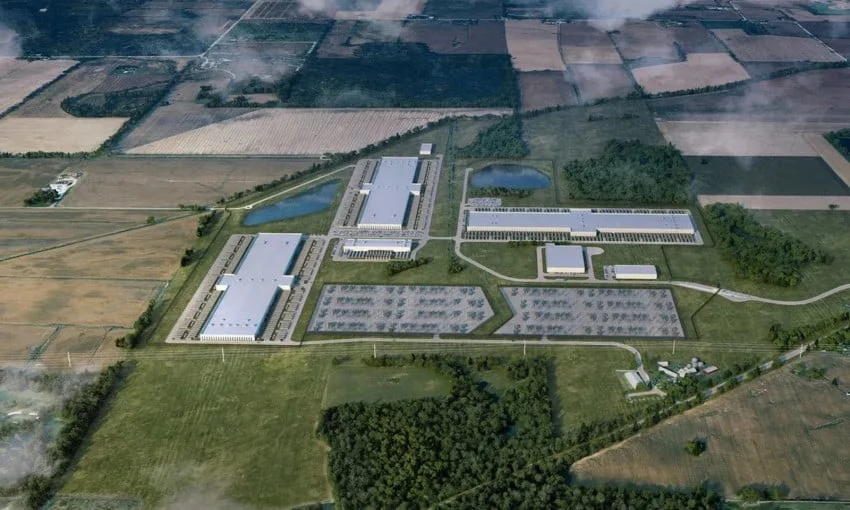
For the residents of Dowagiac, a quiet city of approximately 5,700 people nestled in the southwestern corner of Michigan, the transition of a local industrial site into a hyperscale data center was meant to signify economic modernization. Instead, the community has found itself embroiled in a grueling, two-year struggle against an invisible, relentless adversary: a high-pitched, persistent drone that has fundamentally altered their quality of life. On May 26, this simmering frustration reached a judicial tipping point when two residents filed a class action lawsuit in the U.S. District Court for the Western District of Michigan against the operators of the facility. Represented by the Detroit-based law firm Liddle Sheets P.C., the plaintiffs represent a staggering 1,300 residential properties situated within a one-mile radius of the site, marking a landmark case that could set a legal precedent for the regulation of noise pollution emanating from the booming data center industry.
A Chronology of Escalating Tensions
The origins of the current dispute trace back to 2018, when the site in question was first earmarked for development. Initially viewed as a potential catalyst for local growth, the facility underwent a transformation in 2021 when it began operations as a cryptocurrency mining hub. At the time, the transition seemed standard for a small-town industrial zone. However, the operational nature of cryptocurrency mining—which requires vast arrays of high-powered computing hardware running 24 hours a day—demands intensive cooling systems.
While the facility was initially tolerated, the acoustic environment of the neighborhood shifted dramatically by early 2022. Residents began reporting a constant, high-frequency hum that permeated their homes, yards, and public spaces. By 2024, the noise had become the subject of widespread public outcry. As the sound continued unabated, the patience of the community evaporated, leading to the involvement of local government and, ultimately, the filing of the federal lawsuit.
The Human Toll: Life Under Constant Acoustic Siege
The descriptions provided by residents offer a haunting glimpse into the psychological impact of living under a constant, high-frequency assault. Lindy Valenzuela, who resides directly across from the facility, provided a vivid analogy to WXYZ-TV, stating, "It sounds like someone has a vacuum cleaner running in your living room, but the filter is clogged, creating that piercing, high-pitched shriek. Then, they just walk away and leave it running forever."
For others, the experience has been more traumatic. Billy Finn, another local resident, compared the auditory environment to psychological torture tactics seen in cinematic depictions of confinement. The human ear is not designed to ignore persistent, high-frequency tones, which are known to trigger the body’s stress response, elevate cortisol levels, and disrupt sleep patterns. Over a two-year period, this constant auditory stimulation can lead to chronic fatigue, irritability, and anxiety. The class action suit highlights that for 1,300 property owners, this noise is not merely a nuisance; it is an infringement on their right to the quiet enjoyment of their homes, effectively devaluing their real estate and deteriorating their mental well-being.
Regulatory Friction and the Local Response
The City of Dowagiac has not remained idle in the face of these complaints. The municipal government has an existing industrial noise ordinance designed to balance the needs of commercial operations with the comfort of residential areas. These regulations cap noise levels at 65 decibels during daylight hours and 55 decibels during nighttime hours.
In an effort to enforce these standards, the city has issued warnings and fines to the facility’s operators. However, Hyperscale Data has consistently contested these findings. The company has challenged the methodologies used by city officials to measure the noise, questioning whether the equipment used was calibrated correctly and whether the environmental factors—such as wind direction, humidity, and the time of day—were adequately accounted for in the city’s reports. This technical disagreement has created a stalemate, where the city maintains that the noise exceeds legal thresholds, while the operator argues that the current measurements are fundamentally flawed.
Data Center Cooling: The Source of the Noise
To understand the legal battle, one must understand the mechanical nature of the noise. Data centers, whether used for cloud computing or cryptocurrency mining, generate immense amounts of heat. To keep hardware from failing, these facilities utilize massive banks of industrial cooling fans.
In many configurations, these fans are mounted on the exterior of the building or housed in rooftop units that lack adequate sound dampening. When thousands of these fans spin at high revolutions simultaneously, they create a phenomenon known as "tonal noise." Unlike broad-spectrum white noise, which is relatively easy for the human brain to filter out, tonal noise—specifically the high-pitched "whine" described by Dowagiac residents—is inherently jarring. As the industry scales up, the size of these cooling banks has grown, often outpacing the noise-mitigation technology installed at older sites.
The Legal Landscape and National Implications
The Dowagiac lawsuit is widely considered the first of its kind in the United States, positioning it as a bellwether for the data center industry. As the demand for artificial intelligence, blockchain processing, and cloud infrastructure skyrockets, the footprint of hyperscale facilities is expanding rapidly into suburban and rural areas across the country.
Legal experts suggest that this case will likely turn on the "nuisance" doctrine in property law. To succeed, the plaintiffs must prove that the noise is "unreasonable" and causes "substantial interference" with the use and enjoyment of their land. The outcome of the litigation could force data center operators to invest in significantly more robust acoustic barriers, subterranean cooling systems, or sound-deadening architectural designs. If the plaintiffs prevail, it could trigger a wave of similar litigation in other jurisdictions where residents are currently battling the hum of server farms.
The Economic vs. Social Dilemma
The Dowagiac situation encapsulates a broader national tension between technological progress and community preservation. Data centers provide tax revenue and occasional job opportunities, but they also bring industrial-scale infrastructure into residential backyards. Economists often note that while these facilities are essential for the digital economy, they are frequently poorly integrated into the surrounding social fabric.
Hyperscale Data has faced criticism for failing to engage in meaningful community mitigation strategies. In similar disputes in other parts of the world, operators have successfully mitigated noise by installing custom-built acoustic louvers or by retrofitting existing buildings with sound-absorbing materials. The question for the Dowagiac court will be whether the facility’s operators acted with "due care" in managing the acoustic footprint of their operations.
Looking Toward the Future
As the litigation proceeds, the residents of Dowagiac remain in a state of suspended animation. The court will need to evaluate independent acoustic studies to determine the validity of the city’s previous assessments. Should the court find in favor of the residents, it could mandate a court-enforced injunction, requiring the facility to either cease operations at night or undergo a multi-million dollar acoustic overhaul.
The broader implications of this case are already being felt in the planning departments of cities across the Midwest. Local governments are increasingly looking at the Dowagiac case as a warning to strengthen their zoning ordinances before new data center developments are approved. The reliance on legacy industrial zoning for high-tech, high-noise infrastructure is clearly failing to protect residential interests.
Ultimately, the Dowagiac class action is a reminder that the digital revolution has a physical weight. While the cloud may appear weightless and silent, the hardware that sustains it is often loud, hot, and disruptive. For the 1,300 homeowners in Dowagiac, the fight is not just about the decibels; it is about the right to exist in their own homes without the constant, high-pitched reminder that their town has been transformed into an unwilling host for the machinery of the 21st century. As the federal court prepares to hear the arguments, the case serves as a critical junction for corporate accountability, urban planning, and the fundamental right to peace in one’s own residence. Whether through a legal settlement or a court-ordered remedy, the residents are seeking a return to the quiet that existed before the hum began.