
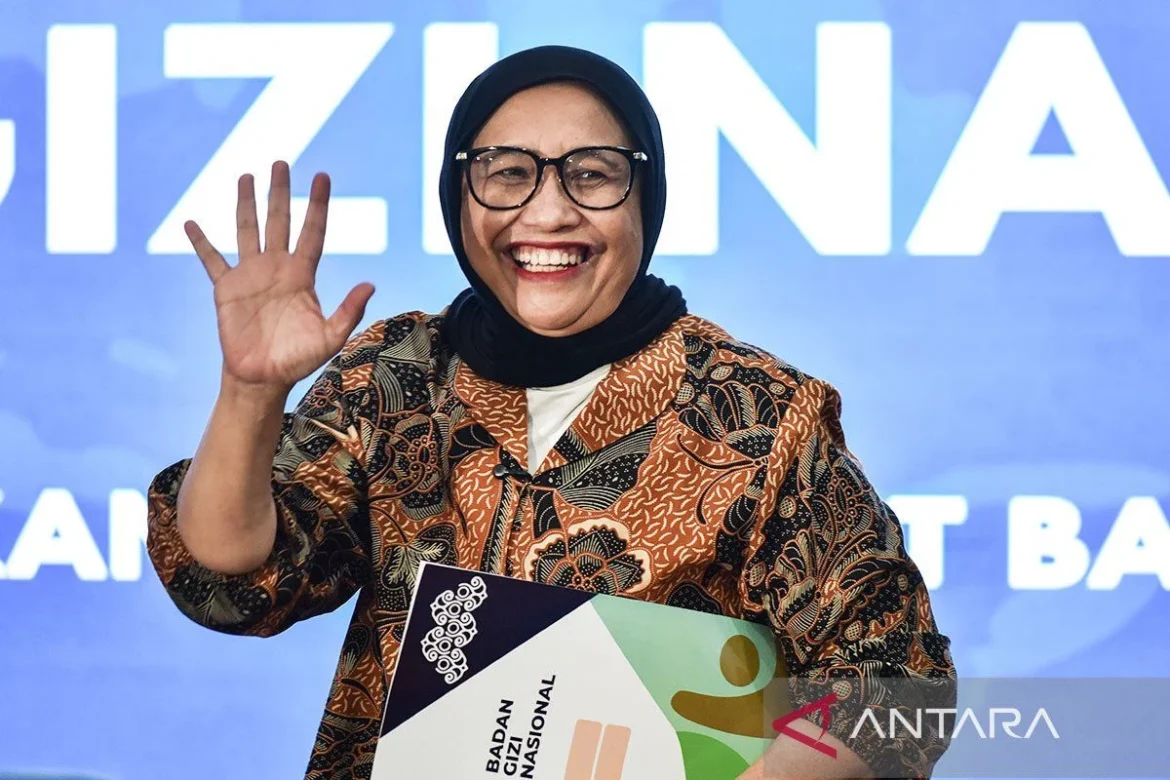
Jakarta, Indonesia – Nanik Sudaryati Deyang has tendered her resignation as the head of the National Nutrition Agency (BGN), a pivotal government body overseeing critical public health initiatives, including the flagship Free Nutritious Meals (MBG) program. The decision, conveyed directly to President Prabowo Subianto, was driven by pressing health concerns, specifically the need to undergo extensive heart treatment abroad. President Prabowo, expressing empathy for her condition, accepted her departure while reportedly requesting her continued oversight of the agency’s work, potentially through a new supervisory role.
The announcement, confirmed by Dirgayuza Setiawan, Special Assistant to the President for Communication and Policy, underscores a significant transition within a key agency central to the new administration’s public health agenda. Nanik Sudaryati Deyang’s tenure, though brief at approximately one and a half months, was marked by an immediate and rigorous evaluation of the MBG program’s implementation across the archipelago. Her resignation for health reasons highlights the demanding nature of high-level public service positions and the personal sacrifices often entailed, particularly when tasked with executing ambitious national programs.
The Genesis and Significance of the National Nutrition Agency
The National Nutrition Agency (BGN) plays a crucial role in Indonesia’s strategic efforts to combat malnutrition and improve public health outcomes. Established to streamline and centralize the government’s approach to nutritional welfare, the BGN is tasked with designing, coordinating, and executing programs aimed at ensuring food security and adequate nutritional intake for all segments of society, with a particular focus on vulnerable populations such as children and pregnant mothers. Its mandate extends beyond mere food distribution to encompass education, research, and policy formulation to foster sustainable dietary practices and nutritional awareness nationwide.
The agency’s prominence has soared under the administration of President Prabowo Subianto, who made the fight against stunting and food insecurity a cornerstone of his presidential campaign. Prabowo’s vision for a "Golden Indonesia 2045" heavily relies on the premise of a healthy, intelligent, and productive populace, a goal inextricably linked to robust nutritional foundations laid from early childhood. The BGN, therefore, stands at the forefront of translating this ambitious vision into tangible policies and programs, making the leadership of its head a position of immense strategic importance.
The Flagship Free Nutritious Meals (MBG) Program
Central to the BGN’s mission, and indeed to President Prabowo’s electoral promises, is the Free Nutritious Meals (MBG) program. This ambitious initiative aims to provide daily nutritious meals to millions of school children, pregnant women, and other vulnerable groups across Indonesia. The program is designed not only to alleviate immediate hunger but, more critically, to address chronic malnutrition, reduce stunting rates, and improve cognitive development and overall health outcomes among beneficiaries.
Indonesia, despite its economic growth, continues to grapple with significant challenges in public health, particularly regarding child nutrition. According to data from the Ministry of Health, stunting—a condition of impaired growth and development due due to poor nutrition, repeated infection, and inadequate psychosocial stimulation—affects approximately one in five Indonesian children under five. This figure, though showing improvement in recent years, remains a critical concern with long-term implications for national productivity and human capital development. The MBG program is envisioned as a powerful intervention to accelerate the reduction of stunting and improve the nutritional status of future generations.
The scale of the MBG program is monumental, requiring extensive logistical coordination, supply chain management, and quality control. It involves mobilizing thousands of local kitchens, known as Satuan Pelayanan Pemenuhan Gizi (SPPG) or Nutritional Fulfillment Service Units, and ensuring the consistent delivery of balanced, locally sourced meals that meet national nutritional standards. The program’s anticipated budget, running into trillions of rupiah, underscores its strategic importance and the significant commitment of resources by the government.
Nanik Sudaryati Deyang’s Brief Yet Impactful Tenure
Nanik Sudaryati Deyang was appointed to lead the BGN at a crucial juncture, tasked with operationalizing the MBG program and establishing the agency’s foundational frameworks. Despite the brevity of her tenure, lasting approximately one and a half months, she wasted no time in initiating a comprehensive internal review and evaluation of the MBG program’s preparatory stages and early implementation mechanisms. Her leadership style quickly became evident through a hands-on approach to identifying bottlenecks and ensuring quality standards.
During her short time, Nanik embarked on an extensive review of nearly 28,000 SPPGs across the country. This meticulous process involved:
- Grouping thousands of kitchens based on quality standards: Aiming to categorize and standardize operations to ensure consistent meal quality and hygiene.
- Halting the expansion of kitchens in certain regions: A strategic decision to consolidate resources and address issues in existing units before further scaling the program, reflecting a cautious and quality-focused approach.
- Identifying hundreds of problematic SPPGs: Through rigorous inspection, numerous service units were flagged for failing to meet operational or nutritional standards, indicating a proactive stance on accountability and quality assurance.
These actions, though preliminary, laid important groundwork for future improvements and demonstrated a commitment to transparency and effectiveness. Nanik’s immediate focus on internal auditing and quality control signaled the new administration’s seriousness about the MBG program’s success and its determination to avoid inefficiencies or compromises in nutritional delivery. Her efforts were geared towards ensuring that the massive undertaking would be executed with precision and impact, laying a robust foundation for a program designed to uplift millions.
The Personal Toll: Resignation Due to Health
The decision to resign, as articulated by Nanik herself and corroborated by presidential aide Dirgayuza Setiawan, stemmed from a critical personal health situation. She revealed that she needs to undergo intensive heart treatment, necessitating her travel abroad to seek specialized medical care and obtain additional medical opinions (second opinions). "Today, Ibu Nanik Deyang bid farewell to President Prabowo to undergo heart treatment and simultaneously resigned as Head of the National Nutrition Agency," Yuza stated from Jakarta on Wednesday, confirming the details.
In her personal statement, Nanik expressed profound regret to President Prabowo for having to step down from such a vital role at a critical time for the nation’s nutrition agenda. She emphasized that her resignation was solely due to health considerations, dispelling any speculation of political maneuvering or policy disagreements. "I conveyed to the President with thousands of apologies that it seems I must step down as Head of BGN for my health. And because the President was concerned and sympathetic, he agreed, but asked me to continue overseeing BGN," Nanik shared in her statement, highlighting the President’s understanding and compassion. This personal decision underscores the often-unseen pressures and demands placed upon high-ranking public officials, where personal well-being can sometimes conflict with professional duties.
Continuity and Future Oversight: A New Role for Nanik?
Despite her resignation from the top leadership position, Nanik Sudaryati Deyang indicated that her commitment to the BGN and its mission remains steadfast. She revealed that President Prabowo had requested her continued involvement in an oversight capacity, suggesting the possibility of a new role within a supervisory framework. "I was asked to remain involved in overseeing BGN," she stated, adding that there is a potential for the establishment of a BGN Supervisory Board, in which she might play a part. This arrangement would allow her to contribute her expertise and insights gained during her intensive evaluation period, ensuring continuity and institutional memory, even as she focuses on her recovery.
This proposed supervisory role reflects President Prabowo’s confidence in Nanik’s capabilities and her dedication to the program, despite her inability to continue in an executive capacity. It also signifies an innovative approach to leveraging experienced personnel, even after their formal resignation, for the greater good of national programs. The establishment of a supervisory board could provide an additional layer of checks and balances, ensuring the MBG program remains on track and adheres to its intended objectives and quality standards.
Implications for the National Nutrition Agenda and Leadership Transition
Nanik Sudaryati Deyang’s resignation creates a leadership vacuum at a critical juncture for the National Nutrition Agency and the Free Nutritious Meals program. The new administration is still in its early stages, and the BGN head position requires robust leadership to steer such an ambitious and complex national initiative. The swift transition will demand immediate action to appoint a successor who can maintain momentum, address the challenges identified by Nanik, and effectively implement the program’s expansion.
Initial reports and speculation, including those referenced in linked articles, point towards Sudaryono, currently serving as Deputy Minister of Agriculture, as a potential candidate to take the helm of the BGN. Sudaryono’s background and experience in agriculture could be seen as beneficial, given the intrinsic link between food production, supply chains, and nutritional outcomes. A swift and competent appointment will be crucial to prevent any disruption to the MBG program, which is not only a key policy but also a symbol of the new government’s commitment to public welfare.
The broader implications of this transition extend to public confidence in the program’s continuity and the government’s ability to deliver on its promises. Any perceived instability in leadership could raise questions about the program’s future trajectory. Therefore, the new BGN head will face the immediate challenge of reassuring stakeholders, consolidating the reforms initiated by Nanik, and driving the program forward with renewed vigor.
Health experts and civil society organizations monitoring public health initiatives will be keenly observing this transition. They emphasize the importance of stable leadership and a consistent policy framework to effectively tackle complex issues like stunting and malnutrition. The BGN’s role is not merely administrative but deeply intertwined with the social determinants of health, requiring a leader with both administrative acumen and a profound understanding of public health challenges.
Conclusion
Nanik Sudaryati Deyang’s resignation as the Head of the National Nutrition Agency marks a significant moment for Indonesia’s public health landscape. While her departure due to health reasons is a personal challenge, it brings into sharp focus the demanding nature of public service and the critical importance of leadership stability in implementing national strategic programs. Her brief but impactful tenure, characterized by rigorous evaluation and a commitment to quality, has laid important groundwork for the Free Nutritious Meals program.
As the government moves to appoint a successor, the focus will remain on ensuring the seamless continuity and effective expansion of the MBG program. President Prabowo’s request for Nanik’s continued advisory role underscores the value of her insights and highlights a pragmatic approach to leveraging expertise even after formal leadership changes. The nation watches as the BGN navigates this transition, hopeful that the momentum gained in the fight against malnutrition will be sustained, ultimately contributing to a healthier, stronger, and more prosperous Indonesia.
