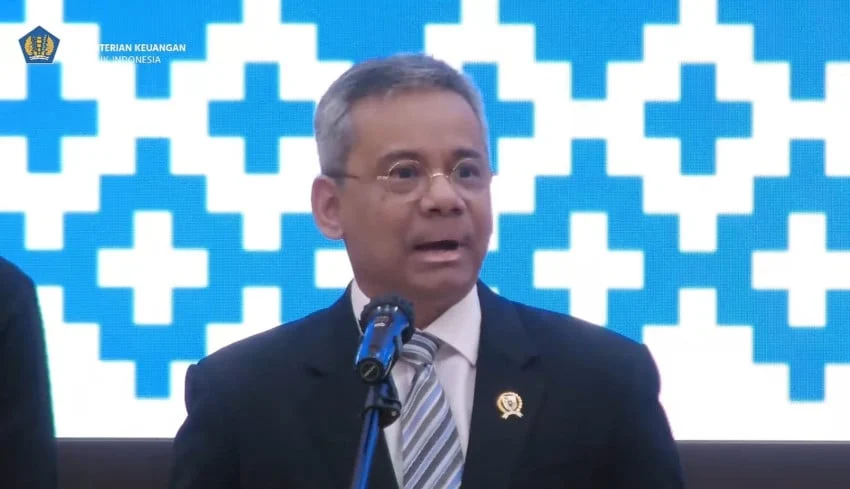
JAKARTA — The transition of leadership at Indonesia’s Ministry of Finance has sparked widespread discussion across political, economic, and social spheres following President Prabowo Subianto’s decision to replace the sitting Minister of Finance, Purbaya Yudhi Sadewa, with Suahasil Nazara. Amid various interpretations and market reactions, the volunteer group known as Relawan Pejuang Negeri Maju (Penemu) has stepped forward to urge the public and financial observers not to overreact to the high-level cabinet shake-up.
The organization emphasized that the appointment of Suahasil Nazara is a strategic move orchestrated by President Prabowo Subianto purely in the best interest of the nation’s economic stability and long-term development. As Indonesia navigates complex domestic and global economic challenges, the administration’s decision aims to ensure continuity, fiscal prudence, and effective governance within the country’s supreme financial institution.
A Strategic Cabinet Adjustment for National Interests
Speaking in Jakarta on Wednesday, September 16, 2026, the Chairperson of the West Java chapter of Penemu, Yayi Nurhayati, stressed that cabinet reshuffles are a prerogative right of the president designed to optimize government performance. She noted that public anxiety or skepticism regarding changes in the economic leadership team is unnecessary.
"President Prabowo Subianto carried out a cabinet reshuffle in the position of Minister of Finance solely for the sake of Indonesia, so it does not need to be responded to with excessive concern," Yayi stated. She underscored that President Prabowo’s administration remains focused on steering the national economy toward sustainable growth, poverty alleviation, and fiscal resilience.
The reshuffle of the Ministry of Finance is part of a broader series of evaluations within the Red and White Cabinet (Kabinet Merah Putih). The transition comes at a critical juncture when Indonesia faces external headwinds, including global inflationary pressures, fluctuating commodity prices, and shifting monetary policies by major global central banks. Consequently, maintaining confidence in the nation’s fiscal management is of paramount importance.
Familiarity and Continuity: The Profile of Suahasil Nazara
One of the primary arguments presented by Penemu to calm public apprehension is the deep institutional familiarity that Suahasil Nazara possesses. Unlike external appointees who might require an extensive learning curve to understand the inner workings of the ministry, Suahasil is a seasoned veteran within the fiscal bureaucracy.
Suahasil Nazara is not a new face within the corridors of the Ministry of Finance. He previously served as the Deputy Minister of Finance across multiple administrations, working closely under prominent ministers, including Sri Mulyani Indrawati and his immediate predecessor, Purbaya Yudhi Sadewa. This extensive tenure as deputy has allowed him to build a comprehensive understanding of Indonesia’s state budget (APBN) architecture, tax reform initiatives, and treasury management.
"Therefore, the work of the Minister of Finance, the environment of the Ministry of Finance, and the employees within the ministry are all well-known to him. He will continue policies that have proven effective and make necessary improvements where adjustments are required," Yayi explained.
This continuity is expected to reassure domestic and international investors that Indonesia’s fiscal policy will remain predictable, prudent, and aligned with the government’s medium-term fiscal framework. Market analysts have pointed out that administrative stability in the Ministry of Finance is vital for maintaining investor confidence, sovereign credit ratings, and macroeconomic stability.
Academic Excellence and Extensive Public Sector Experience
Beyond his institutional tenure at the Ministry of Finance, Suahasil Nazara brings a robust academic background and diverse public sector experience to his new role. His credentials span academia, policy formulation, and high-level advisory positions, making him exceptionally well-prepared to lead the nation’s economic apparatus.
Before entering the upper echelons of government service, Suahasil built a distinguished career as an academic. He served as a lecturer and researcher at the Faculty of Economics and Business at the University of Indonesia (FEB UI), one of the country’s leading institutions for economic thought. His academic background has heavily influenced his policy perspectives, grounding them in empirical research and rigorous economic theory.
In addition to his academic pursuits, Suahasil has contributed significantly to strategic national policy initiatives. He has served in various pivotal roles, including:
- National Team for the Acceleration of Poverty Reduction (TNP2K): Where he played an active role in designing and evaluating social protection programs aimed at lifting vulnerable populations out of poverty.
- National Economic Committee (KEN): Serving as a member to advise the government on macroeconomic strategies and industrial competitiveness.
- Head of the Fiscal Policy Agency (BKF) at the Ministry of Finance: Where he oversaw revenue projections, tax policy analysis, macroeconomic forecasting, and international financial cooperation.
With this extensive resume, supporters and economic observers argue that Suahasil possesses a rare combination of theoretical expertise and practical governance experience. His deep involvement in fiscal policy formulation ensures that he can seamlessly transition into the ministerial role without disrupting ongoing budgetary execution.
Academic and Expert Reactions to the Reshuffle
The decision to appoint Suahasil Nazara has drawn varied responses from academic circles and economic analysts. Many economists have responded positively to the transition, viewing it as a pragmatic choice that prioritizes institutional stability over political experimentation.
Academic institutions and think tanks have highlighted that Suahasil’s familiarity with structural reforms—particularly in taxation, customs, and state expenditure efficiency—will be crucial as Indonesia attempts to expand its tax base and optimize state revenues. Several economists noted that while Purbaya Yudhi Sadewa brought a specific dynamic to the ministry during his tenure, bringing in a technocrat of Suahasil’s caliber ensures that long-term fiscal consolidation targets remain on track.
Furthermore, labor organizations and business associations have expressed cautious optimism. Representatives from the Indonesian Chamber of Commerce and Industry (KADIN) and the Indonesian Employers Association (APINDO) emphasized the importance of maintaining open dialogue between the Ministry of Finance and the private sector, expressing confidence that Suahasil’s approachable demeanor and deep understanding of business dynamics will facilitate constructive collaboration.
Broader Implications for the Red and White Cabinet
The appointment of Suahasil Nazara marks the latest chapter in President Prabowo Subianto’s ongoing evaluations of the Red and White Cabinet. Since taking office, the administration has demonstrated a willingness to make strategic personnel adjustments to ensure that every ministry operates at peak efficiency in delivering campaign promises and national strategic programs.
The Ministry of Finance holds a central position in the realization of these programs, ranging from downstream industrialization and food security initiatives to large-scale infrastructure development and human capital enhancement. Any friction or uncertainty at the top of the fiscal hierarchy could potentially ripple through other sectors, making a smooth and well-received transition essential.
By appointing a figure with deep institutional roots and widespread respect among bureaucrats and economists alike, the administration aims to project an image of steady hand-steering. The endorsement from volunteer organizations like Penemu reflects a broader concerted effort by government supporters to manage public perceptions, mitigate speculative market jitters, and reinforce confidence in the nation’s economic trajectory.
As Suahasil Nazara formally assumes his responsibilities as Minister of Finance, all eyes will be on the upcoming fiscal quarters to evaluate how the ministry adapts to evolving global economic conditions under his leadership. Stakeholders across the political and economic spectrum will be closely watching the execution of the state budget, the progression of tax reforms, and the government’s fiscal deficit management strategies in the months ahead.