
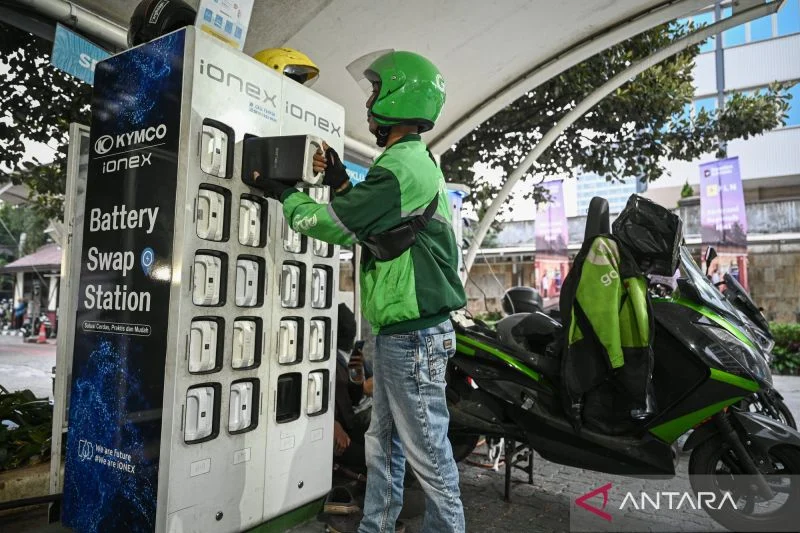
The Indonesian electric vehicle ecosystem is undergoing a significant structural transformation, driven by innovative ownership models designed to lower the barriers to entry for everyday consumers. As the government aggressively pushes for green mobility, zero-emission targets, and the reduction of fuel imports, the automotive market has increasingly embraced the battery-as-a-service (BaaS) concept. Traditionally, the acquisition cost of an electric motorcycle has been heavily inflated by the inclusion of the lithium-ion battery pack—the single most expensive component of the vehicle. By decoupling the battery from the initial purchase price through structured monthly rental or subscription schemes, manufacturers are successfully democratizing access to sustainable transportation. Based on market data updated through September 2026, monthly battery rental tariffs across prominent brands in Indonesia range from Rp84,000 to Rp250,000, offering consumers flexible financial pathways tailored to their daily commuting needs.
The emergence of this rental model is not an isolated market phenomenon but the result of a multi-year regulatory and industrial evolution. Over the past several years, the Indonesian government has rolled out various financial incentives, infrastructure enhancements, and regulatory frameworks to bolster the adoption of battery-based electric motor vehicles (KBLBB). Ministries such as the Ministry of Industry and the Ministry of Education, Science, and Technology have consistently emphasized the urgency of expanding the domestic EV population—which recently surpassed 280,000 units—to curb carbon emissions and reduce reliance on subsidized fossil fuels. Furthermore, legislative bodies like the House of Representatives (DPR RI) have continually urged the acceleration of the national battery industry to ensure domestic supply chain security. Despite these macro-level advancements, high upfront retail prices remained a primary deterrent for prospective buyers. The introduction of battery subscription models by major original equipment manufacturers (OEMs) directly addresses this financial friction, allowing consumers to purchase the vehicle chassis at a fraction of the traditional cost while leasing the energy storage unit on a recurring basis.
A closer examination of the market reveals diverse implementation strategies among leading automotive brands operating within Indonesia. Vietnamese electric vehicle manufacturer VinFast has positioned itself as one of the most economically accessible options in the domestic market. VinFast offers a targeted battery subscription service for three of its popular electric motorcycle models: the Evo, the Feliz II, and the Viper. Under this framework, consumers who purchase the vehicle unit without the battery can subscribe to a single-battery plan priced at a competitive Rp84,000 per month. For models requiring higher energy output or dual configurations, the two-battery plan is available at Rp144,000 per month. All three models feature dual battery slots strategically positioned beneath the seat, fully optimized to support both direct charging and rapid battery-swapping infrastructure. This aggressive pricing strategy has allowed VinFast to capture substantial consumer interest, particularly among urban commuters seeking low operational overhead.
Domestically, prominent electronics and automotive brand Polytron has established a robust footprint with its diverse lineup of electric scooters, offering tailored battery rental programs designed to maximize consumer peace of mind. For the Polytron Fox 200, the monthly battery lease is fixed at Rp125,000. Meanwhile, the higher-performance Polytron Fox 500 and the widely adopted Fox R incur a monthly subscription fee of Rp200,000. Beyond mitigating initial purchase shock, Polytron has integrated a consumer-centric guarantee into its program: the company explicitly commits to replacing the leased battery free of charge if its operational capacity degrades below 85 percent under normal usage conditions. This policy effectively mitigates one of the most common consumer anxieties regarding long-term EV ownership—namely, the degradation and eventual replacement cost of aging lithium-ion cells.
Another major player shaping the Indonesian market is ALVA, which offers its proprietary BEBAS (Berlangganan Baterai Sewa) program for its flagship N3 and CERVO models. For the ALVA N3, consumers can choose between a single-battery configuration priced at Rp150,000 per month or a dual-battery setup requiring a monthly commitment of Rp250,000. The sporty and high-capacity ALVA CERVO, which operates exclusively on a dual-battery system, is also tied to the Rp250,000 monthly tier. Notably, ALVA’s structured pricing is inclusive of applicable taxes, streamlining the billing process for subscribers. By embedding the battery into a continuous service agreement, ALVA ensures that vehicle owners are shielded from the capital expenditures associated with eventual battery obsolescence or failure.
While the appeal of lower initial retail prices is undeniable, automotive analysts and industry stakeholders emphasize that consumers must evaluate the total cost of ownership (TCO) before committing to a battery subscription model. The monthly fees charged by brands such as VinFast, Polytron, and ALVA represent strictly the leasing cost of the energy storage unit and do not encompass the entirety of vehicle operational expenses. Owners must continue to factor in routine parameters such as the amortization of the motorcycle chassis, domestic electricity tariffs for home charging or public swapping station fees, regular mechanical maintenance, annual vehicle registration taxes, and insurance. Consequently, prospective buyers are advised to calculate their projected monthly mileage and compare the cumulative subscription costs over a multi-year period against the traditional outright purchase of a battery-integrated electric motorcycle.
The broader implications of the battery rental model extend far beyond individual household budgets, playing a pivotal role in shaping Indonesia’s national green economy. By lowering the financial entry barrier, these schemes accelerate the mass adoption of electric motorcycles, directly supporting the Ministry of Industry’s target of expanding the national EV fleet. A larger operational fleet translates to reduced urban air pollution, lower acoustic footprints in densely populated metropolitan areas, and a accelerated transition away from imported fossil fuels toward domestically generated renewable energy. Furthermore, the concentration of battery ownership in the hands of manufacturers and fleet operators facilitates better end-of-life recycling and circular economy practices. Rather than leaving degraded batteries to be improperly discarded by individual consumers, centralized lease management ensures that lithium, cobalt, and nickel components are systematically recovered, repurposed, or recycled through the nascent national battery industry infrastructure currently being fast-tracked by government and industrial stakeholders.
As the Indonesian electric vehicle market matures toward the latter half of the decade, the battery rental ecosystem is expected to experience further refinement. Increased competition among OEMs will likely drive price adjustments, enhance service level agreements, and expand the availability of interoperable swapping networks. Regulatory bodies will also need to monitor consumer protection standards, ensuring contract transparency regarding battery degradation thresholds, maintenance responsibilities, and termination clauses. Ultimately, with monthly tariffs spanning from Rp84,000 to Rp250,000, the battery-as-a-service model has transitioned from a novel experiment into a cornerstone of Indonesia’s transportation strategy. For consumers willing to weigh the long-term subscription commitments against upfront savings, these flexible ownership schemes offer a pragmatic, economically viable pathway into the future of sustainable personal mobility.
