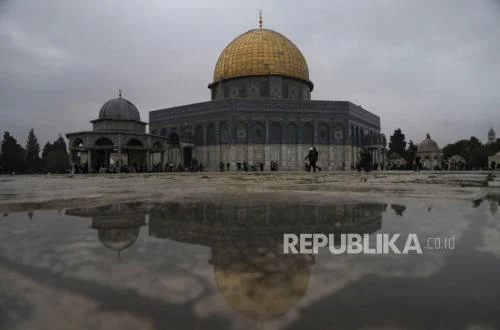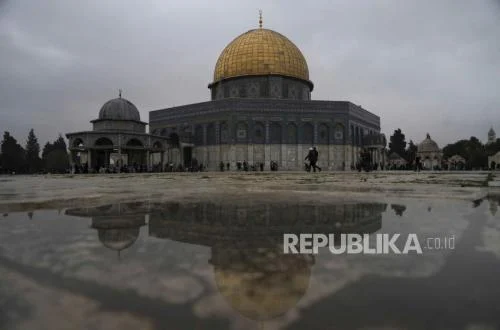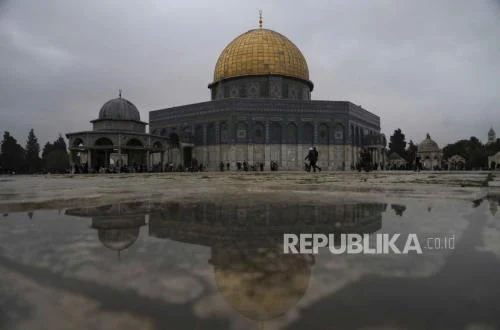
The majestic golden dome of the Masjid al-Sakhrah, or the Dome of the Rock, reflected vividly in the pools of rainwater collecting across the limestone courtyards of the Al-Aqsa Mosque complex on a recent chilly Friday. Despite the biting cold and the persistent drizzle that swept across the Old City of Jerusalem, thousands of worshippers gathered with steadfast devotion for the congregational Friday prayers. This scene, while common for the local Palestinian population, represents a lifelong dream for millions of Muslims worldwide, particularly those from Indonesia. For many Indonesian pilgrims, the journey to the two holy cities of Mecca and Medina is increasingly being supplemented by a third destination: Jerusalem. This "Umrah Plus" itinerary allows pilgrims to visit the third holiest site in Islam, but as travel experts warn, the spiritual journey requires a complex and lengthy administrative preparation that must be managed with precision.
As the global travel industry stabilizes following years of pandemic-related disruptions, the demand for religious tourism to Jerusalem has seen a significant resurgence. However, the unique geopolitical status of the region means that visiting Al-Aqsa is not as straightforward as obtaining a standard tourist visa. Travel agencies specializing in Islamic tours emphasize that the logistical hurdles, particularly regarding visa procurement through Israeli authorities, require a minimum of two months of forward planning to ensure a seamless experience.
The 40-Day Visa Mandate: A Critical Timeline
According to Syam Resfiadi Amirysah, the President Director of Patuna Syam Resfiadi, the administrative process for entering the territory controlled by Israel—where the Al-Aqsa Mosque is situated—is a rigorous exercise in patience and documentation. Speaking on the intricacies of the "Umrah Plus Al-Aqsa" packages, Amirysah noted that the visa processing time is a fixed constraint that cannot be bypassed. The Israeli authorities, who control all entry and exit points to Jerusalem, typically require a minimum of 40 working days to process group visa applications for Indonesian citizens.
"If a pilgrim intends to continue their Umrah journey to Al-Aqsa, they must understand that the visa process takes 40 working days. In practical terms, this means travelers must register at least two months before their scheduled departure date," Amirysah explained. This timeline is essential because it allows the local travel partners in the region—usually based in Jordan or Egypt—to submit the necessary "manifest" or data set to the Israeli Ministry of Interior.
The required documentation is extensive. Beyond the standard passport scans, applicants must provide detailed personal information, including the names and phone numbers of their parents. This level of scrutiny is part of a broader security screening process conducted by the Israeli authorities for visitors from countries that do not have formal diplomatic relations with the State of Israel, such as Indonesia.
Geopolitical Realities and Entry Points
The necessity of obtaining an Israeli visa stems from the fact that the Palestinian Authority does not exercise control over its own borders. For an Indonesian citizen to enter the West Bank or Jerusalem, they must pass through Israeli-controlled checkpoints. Consequently, there is no such thing as a "Palestinian Visa" for international tourists; entry is entirely at the discretion of Israeli immigration services.
Most Indonesian pilgrims access Jerusalem via the King Hussein Bridge (also known as the Allenby Bridge), which connects Jordan with the West Bank. This route is preferred for those combining Umrah with Al-Aqsa because it allows pilgrims to fly from Saudi Arabia to Amman, Jordan, before traveling overland to Jerusalem. Alternatively, some groups enter through the Taba border crossing from the Sinai Peninsula in Egypt, particularly those who are also visiting historical sites related to Prophet Musa (Moses) or Mount Sinai.
Amirysah stresses that the 40-day window is not a suggestion but a strict operational requirement. "The 40-day process is literal. If a group is scheduled to depart on the 10th of the month, we usually receive confirmation regarding visa approval by the 5th or 7th. It is a high-stakes process, and we advise against last-minute registrations. It is far better to have the manifest submitted by our partners in Jordan or Egypt well in advance to avoid the risk of denial at the eleventh hour," he added.
The Spiritual Significance of the "Three Mosques" Journey
The drive to visit Al-Aqsa is rooted in Islamic theology. A well-known Hadith (saying of the Prophet Muhammad) encourages believers to undertake journeys specifically to three mosques: Al-Masjid al-Haram in Mecca, Al-Masjid an-Nabawi in Medina, and Al-Masjid al-Aqsa in Jerusalem. For Indonesian Muslims, who represent the world’s largest Muslim population, completing this "triple" visitation is often viewed as the pinnacle of religious travel.
Al-Aqsa is not merely a single building but a 35-acre compound known as Al-Haram ash-Sharif (The Noble Sanctuary). It holds immense historical value as the first Qibla (direction of prayer) for Muslims before it was changed to the Kaaba in Mecca. Furthermore, it is the site associated with the Isra and Mi’raj—the miraculous night journey and ascension of the Prophet Muhammad.
Beyond the religious obligation, many pilgrims feel a sense of solidarity with the Palestinian people. Visiting the site provides an opportunity to support the local economy in East Jerusalem, which relies heavily on religious tourism. The presence of international pilgrims also serves as a reminder of the global Muslim community’s connection to the site amid ongoing political tensions.
Detailed Chronology of a Typical Umrah Plus Al-Aqsa Trip
To understand the complexity of this journey, one must look at the standard chronology followed by reputable travel agencies:
- Phase 1: Registration (Day 60-70 before departure): The pilgrim submits their passport, parental data, and down payment. The agency begins grouping pilgrims to meet the "group visa" requirements.
- Phase 2: Document Submission (Day 50-60): The Indonesian agency sends the manifest to regional partners in Amman or Cairo.
- Phase 3: Security Vetting (Day 10-50): The Israeli Ministry of Interior conducts background checks. During this period, there is often no communication regarding the status of the visa.
- Phase 4: Visa Issuance (Day 3-7 before departure): A group visa (often a separate sheet of paper rather than a stamp in the passport) is issued. This "paper visa" is crucial for Indonesian travelers as it prevents complications when visiting other Arab nations that may not permit entry to those with Israeli stamps in their passports.
- Phase 5: The Journey: Typically, pilgrims perform their Umrah in Saudi Arabia first for 9 to 12 days, then fly to Amman. From Amman, they cross the border, spend 2 to 3 nights in Jerusalem, and return via Jordan.
Challenges and Border Logistics
Even with a visa in hand, the experience of crossing the border into Jerusalem can be daunting. Travelers are often subjected to secondary screenings and lengthy interviews by border officials. Travel agencies emphasize that pilgrims must remain patient and composed during these checks, which are a standard part of the security protocol in the region.
The weather is another factor that requires preparation. As seen in the recent reports from January 2023, Jerusalem can be quite cold, with temperatures dropping significantly during the winter months. Unlike the desert heat of Mecca and Medina, Jerusalem’s Mediterranean climate brings rain and even occasional snow. Pilgrims are advised to pack heavy coats, thermal wear, and sturdy walking shoes suitable for the ancient, slippery stone paths of the Old City.
Furthermore, the financial aspect of the trip is distinct. While Saudi Arabia uses the Riyal, Jerusalem operates on the Israeli New Shekel (ILS), though US Dollars and Jordanian Dinars are also widely accepted in tourist areas. Travel agencies usually provide orientation sessions to help pilgrims navigate these multi-currency environments.
Broader Impact and Implications for Religious Tourism
The trend of visiting Al-Aqsa during Umrah has broader implications for the travel industry and regional diplomacy. For Indonesian travel agencies, offering these packages is a way to differentiate themselves in a highly competitive market. However, it also requires a higher level of expertise and more robust partnerships with Middle Eastern counterparts.
From a geopolitical perspective, the continued flow of Indonesian pilgrims to Jerusalem, despite the lack of formal ties between Jakarta and Tel Aviv, highlights the power of religious tourism to transcend political boundaries. It creates a "de facto" channel of movement that is managed through third-party intermediaries in Jordan and Egypt.
However, the volatility of the region remains a constant variable. Any escalation in local tensions can lead to sudden border closures or the suspension of visa issuances. This is why travel experts like Syam Resfiadi Amirysah stress the importance of using established agencies that have the contingency plans and insurance necessary to protect pilgrims in the event of unforeseen disruptions.
Conclusion: A Journey of Faith and Fortitude
Visiting the Al-Aqsa Mosque as part of an Umrah trip is a profound spiritual undertaking that offers a unique perspective on Islamic history and the contemporary realities of the Middle East. While the 40-day visa requirement and the two-month preparation window may seem formidable, they are essential safeguards to ensure that the journey is as smooth as possible.
For the pilgrim standing in the rain-slicked courtyards of Al-Haram ash-Sharif, the administrative hurdles of the preceding months often fade into insignificance. The opportunity to pray in the footsteps of prophets and to witness the architectural and spiritual grandeur of Jerusalem is, for many, worth every day of the 40-day wait. As the travel industry continues to evolve, the "Umrah Plus Al-Aqsa" itinerary stands as a testament to the enduring desire of the faithful to connect with their heritage, regardless of the logistical complexities involved.