The spiritual journey of Umrah, often referred to as the "minor pilgrimage," has increasingly evolved into a broader experience of Islamic heritage for many Indonesian Muslims. In recent years, the "Umrah Plus Al-Aqsa" package has surged in popularity, offering pilgrims the opportunity to visit the three holiest sites in Islam within a single itinerary: the Masjid al-Haram in Makkah, the Masjid an-Nabawi in Madinah, and the Masjid Al-Aqsa in Jerusalem. However, the inclusion of Jerusalem—a city at the heart of complex geopolitical dynamics—introduces a layer of logistical intricacy that requires meticulous planning and a deep understanding of international travel protocols. For Indonesian citizens, who belong to a nation without formal diplomatic ties with Israel, the process of visiting Al-Aqsa is uniquely challenging, primarily due to the stringent visa requirements and the lengthy administrative timelines mandated by the authorities controlling the border crossings.
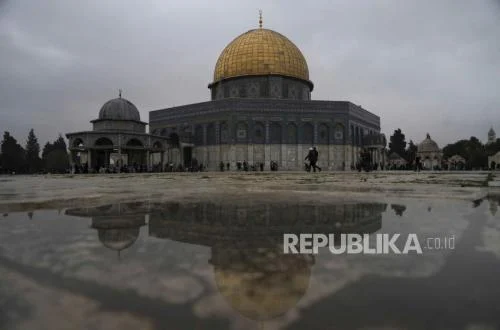
For many pilgrims, the sight of the Dome of the Rock reflected in rainwater on a cold winter afternoon is a bucket-list spiritual experience. Yet, the path to the Al-Aqsa compound, located within the Old City of Jerusalem, begins months before the traveler ever sets foot in an airport. According to industry experts and travel organizers, the success of such a journey hinges entirely on the "visa manifest" process. Syam Resfiadi Amirysah, the President Director of Patuna Syam Resfiadi, a prominent travel agency specializing in Islamic tours, emphasizes that the window for preparation is much wider than a standard Umrah trip. While a standard Umrah visa can often be processed within a week or two under the current Saudi Arabian "Vision 2030" digital systems, the addition of Al-Aqsa extends the preparation phase to a minimum of two months.
The primary hurdle lies in the fact that Palestine does not maintain an independent visa system for foreign tourists entering through the borders it shares with Jordan or Israel. Consequently, Indonesian pilgrims must apply for an Israeli entry permit, even though Indonesia and Israel do not have an official diplomatic relationship. This permit is typically processed through specialized land-bridge operators in neighboring countries, such as Jordan or Egypt. Mr. Amirysah notes that the processing time for this specific visa is strictly 40 working days. When weekends and public holidays are factored in, this period effectively spans nearly two full months. This timeline is non-negotiable, as the security screenings conducted by the issuing authorities are exhaustive and involve multi-agency verification.
To facilitate this process, travel agencies require a comprehensive set of data from the prospective pilgrim long before the departure date. Unlike standard tourist visas that might only require a passport copy and a photograph, the Al-Aqsa manifest requires "deep-dive" information. This includes the full names of the traveler’s parents, their occupations, and detailed contact information. These requirements are part of a broader security protocol designed to vet visitors entering the sensitive Jerusalem area. The submission of these documents must be done at least 60 days in advance to ensure that the manifest is submitted to the regional coordinators in Amman or Cairo, who then liaise with the border control authorities.
The chronology of a typical Umrah Plus Al-Aqsa trip usually involves a flight from Indonesia to either Amman, Jordan, or Cairo, Egypt. From these hubs, pilgrims travel by land toward the border crossings. The most common entry point for Indonesians is the King Hussein Bridge (also known as the Allenby Bridge) which connects Jordan with the West Bank. The logistics of crossing this bridge are legendary for their complexity. Pilgrims must often wait for hours as manifests are checked against pre-approved lists. If a visa has not been secured well in advance—ideally five to seven days before the group arrives at the border—the entire group risks being turned back, leading to significant financial losses and emotional distress. This is why seasoned travel agents like Mr. Amirysah advise against "last-minute" registrations, stressing that a "safe" buffer of several days is essential to confirm that the names on the manifest have been cleared for entry.
The significance of Al-Aqsa in the Islamic faith provides the motivation for pilgrims to endure these bureaucratic hurdles. As the first Qibla (direction of prayer) for Muslims and the site of the Prophet Muhammad’s (PBUH) Night Journey (Isra’ Mi’raj), the Al-Aqsa compound holds a status that transcends modern political boundaries. For Indonesian pilgrims, visiting the site is an act of solidarity and a fulfillment of a religious longing to pray in the mosque mentioned in the Quran. The compound, known to Muslims as Al-Haram ash-Sharif, includes not only the silver-domed Al-Aqsa Mosque but also the iconic gold-domed Dome of the Rock and various other oratories and historical monuments.
However, the environment in Jerusalem can be unpredictable. Weather conditions in the Levant during the winter months, such as January and February, can be surprisingly harsh. Pilgrims often encounter cold winds, heavy rain, and occasionally snow. This necessitates additional physical preparation. Travel agencies now include health briefings in their pre-departure programs, advising pilgrims—many of whom are elderly—to pack thermal clothing and maintain their physical stamina for the walking tours required within the Old City’s cobblestone streets. The contrast between the scorching heat of Makkah and the biting cold of Jerusalem in the winter is a factor that many first-time travelers overlook.
Beyond the individual pilgrim’s experience, the "Umrah Plus" industry represents a significant sector of the Indonesian travel market. As the world’s most populous Muslim-majority nation, Indonesia sends hundreds of thousands of pilgrims to Saudi Arabia annually. The diversification of these trips to include Jerusalem, Istanbul, or Cairo reflects a growing middle-class demand for "Halal Tourism." This trend has economic implications for the region, as Indonesian tourist groups are known for their high spending power in local markets and gift shops. For the local Palestinian economy in East Jerusalem, the arrival of Indonesian groups provides a vital source of income, supporting hotels, restaurants, and local artisans in the Old City.
From an analytical perspective, the reliance on a 40-day visa process underscores the fragile nature of religious tourism in the region. The process is subject to the whims of geopolitical tensions. If security situations escalate at the border or within the city, the processing of manifests can be suspended without notice. Therefore, the role of the travel agency evolves from a mere ticket-booker to a crisis manager and diplomatic liaison. Agencies must maintain constant communication with their partners in Jordan to monitor the status of the "security clearance" which serves as the de facto visa for Indonesian passport holders.
In conclusion, while the dream of praying at Masjid Al-Aqsa is a powerful motivator for Indonesian pilgrims, the reality of the journey is one of high-stakes logistics. The advice provided by industry veterans like Syam Resfiadi Amirysah serves as a crucial blueprint for success. Potential pilgrims must shift their mindset from "spontaneous travel" to "strategic planning," ensuring that they register at least two months in advance and provide meticulous documentation. By navigating the 40-day visa manifest with patience and professional guidance, pilgrims can ensure that their spiritual journey is not derailed by administrative oversights. The sight of the sun rising over the Dome of the Rock or the sound of the Adhan echoing through the ancient stones of Jerusalem remains a profound reward, but it is a reward that is earned through months of careful preparation and a deep respect for the complexities of the modern Middle East. As the tourism industry continues to recover and expand post-pandemic, the demand for these "tri-holy-site" journeys is expected to grow, making the clarity of visa protocols more essential than ever for the Indonesian faithful.